
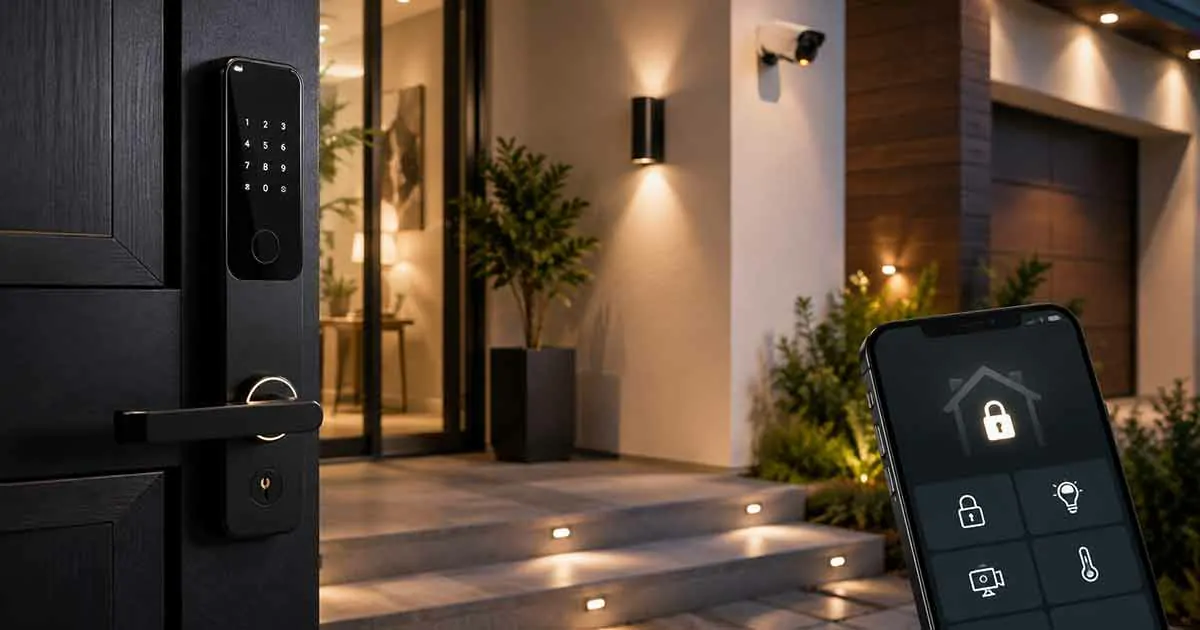
Smart door locks have become an important part of modern home security systems. Unlike traditional locks that require physical keys, smart locks allow homeowners to control access using smartphones, digital codes, fingerprints, and other advanced technologies.
For homeowners looking to improve security, convenience, and control, smart door locks offer a practical solution. They can help manage who enters your home, provide activity notifications, and integrate with other smart home devices.
This guide explains the benefits of smart door locks, important features to consider, different types available, installation options, and how to choose the right smart lock for your home.
Why Smart Door Locks Matter
Traditional keys can be lost, copied, or forgotten. Smart door locks provide a more flexible way to secure your home by replacing or improving traditional locking systems.
A smart lock allows homeowners to control access without always carrying physical keys. Whether you want to give temporary access to guests, monitor entry activity, or lock your door remotely, smart locks provide additional convenience and security.
Smart door locks are especially useful for:
- Families managing multiple users
- Homeowners who want remote access
- Rental property owners
- People who frequently lose keys
- Smart home enthusiasts
When combined with other security solutions such as cameras and alarms, smart locks can become an important part of a complete home security strategy.
Benefits of Smart Door Locks
Smart door locks offer several advantages compared with traditional locks.
Keyless Entry
One of the biggest benefits of smart locks is the ability to unlock your door without a traditional key.
Common access methods include:
- Smartphone apps
- Keypad codes
- Fingerprint recognition
- Smart cards
- Voice commands
Keyless entry makes everyday access easier while reducing dependence on physical keys.
Remote Access Control
Many smart locks allow homeowners to control their doors from anywhere through a mobile application.
Remote access features can help you:
- Lock your door after leaving home
- Unlock the door for family members
- Allow access to guests
- Monitor entry activity
This feature is especially valuable for people who travel frequently or manage multiple properties.
Improved Home Security
Smart locks can provide better visibility compared with traditional locks.
Many models include:
- Entry notifications
- Access history logs
- Automatic locking
- Tamper alerts
These features help homeowners understand who enters and leaves their property.
Convenience for Families and Guests
Managing access becomes easier when multiple people need to enter a home.
Instead of making duplicate keys, homeowners can create unique access codes for:
- Family members
- House cleaners
- Maintenance workers
- Temporary guests
Codes can be changed or removed whenever necessary.
Types of Smart Door Locks
There are several types of smart door locks available, each designed for different needs.
Keypad Smart Locks
Keypad locks use numerical codes instead of traditional keys.
Benefits include:
- Simple operation
- Multiple user codes
- No need for physical keys
They are a popular choice for families because each person can have their own access code.
Fingerprint Smart Locks
Fingerprint locks use biometric technology to identify users.
Advantages include:
- Fast access
- No passwords to remember
- Personalized security
They are often used by homeowners who want a highly convenient entry method.
Smartphone-Controlled Smart Locks
These locks connect to mobile apps and allow users to control their doors through smartphones.
Features may include:
- Remote locking and unlocking
- Activity notifications
- User management
- Integration with smart home systems
Wi-Fi Smart Locks
Wi-Fi smart locks connect directly to your home’s wireless network.
Benefits:
- Remote access without additional equipment
- Easy smartphone control
- Real-time notifications
However, they may use more battery power compared with other connection types.
Bluetooth Smart Locks
Bluetooth smart locks connect directly to nearby smartphones.
Advantages include:
- Lower energy consumption
- Reliable local connection
- Simple setup
The main limitation is that remote access may require an additional hub.
Important Features to Consider
Before choosing a smart door lock, consider the features that matter most for your home.
Security and Encryption
Security should be the first priority when selecting a smart lock.
Look for features such as:
- Strong encryption
- Secure authentication
- Tamper detection
- Automatic locking
A smart lock should improve security without creating new vulnerabilities.
Battery Life
Most smart locks operate using batteries, so battery performance is important.
Consider:
- Battery lifespan
- Low battery alerts
- Emergency power options
A reliable battery system helps prevent unexpected lockouts.
Smart Home Compatibility
If you already use smart home devices, choose a lock that works with your existing ecosystem.
Many smart locks support platforms such as:
- Voice assistants
- Smart hubs
- Home automation systems
Compatibility makes it easier to create a connected home.
Installation Requirements
Some smart locks are designed for simple DIY installation, while others may require professional help.
Before buying, check:
- Door compatibility
- Lock type
- Required tools
- Installation instructions
A properly installed smart lock is essential for reliable performance.
Smart Door Locks vs Traditional Locks
Both smart and traditional locks have advantages.
Traditional locks are:
- Simple
- Affordable
- Easy to maintain
Smart locks provide:
- Keyless access
- Remote control
- Activity tracking
- Smart home integration
For homeowners who want more control and convenience, smart locks offer significant advantages.
Are Smart Door Locks Safe?
Smart door locks are generally safe when properly installed and maintained.
To improve security:
- Use strong passwords
- Keep software updated
- Enable additional security features
- Choose reputable products
Like any connected device, smart locks should be managed carefully to maintain security.
Best Places to Use Smart Door Locks
Smart locks can be installed in many residential settings.
Common applications include:
Main Entrance Doors
The front door is the most common location because it provides the primary access point to the home.
Home Offices
Smart locks can help protect private workspaces and valuable equipment.
Rental Properties
Property owners can manage guest access without needing to exchange physical keys.
Garages and Secondary Entrances
Additional entry points can also benefit from improved access control.
Common Smart Door Lock Mistakes to Avoid
Avoid these common mistakes when choosing or installing a smart lock.
Choosing the Wrong Lock Type
Not every smart lock fits every door. Always check compatibility before purchasing.
Ignoring Battery Maintenance
A dead battery can prevent access, so monitor battery levels regularly.
Using Weak Passwords
Strong passwords and secure settings are essential for connected devices.
Focusing Only on Price
The cheapest option may not provide the reliability and security features needed for long-term use.
Frequently Asked Questions
Are smart door locks worth it?
Smart door locks can be worth it for homeowners who want easier access control, remote management, and improved convenience.
Can smart door locks be hacked?
Like any connected device, smart locks require proper security practices. Choosing reputable products and using strong security settings can reduce risks.
Do smart locks work without Wi-Fi?
Some smart locks work through Bluetooth or local connections without Wi-Fi, while others require internet access for remote features.
Can I install a smart door lock myself?
Many smart locks are designed for DIY installation, but professional installation may be better for complex systems or unusual doors.
Do smart locks work with home security systems?
Many smart locks can integrate with cameras, alarms, and other smart home security devices.
Final Thoughts
Smart door locks provide homeowners with a modern way to improve security, convenience, and access control. With features such as keyless entry, remote management, and smart home integration, they have become an important addition to modern living spaces.
The best smart door lock depends on your home’s needs, security goals, and preferred technology. When combined with other solutions like security cameras and alarm systems, smart locks can help create a safer and more connected home.