
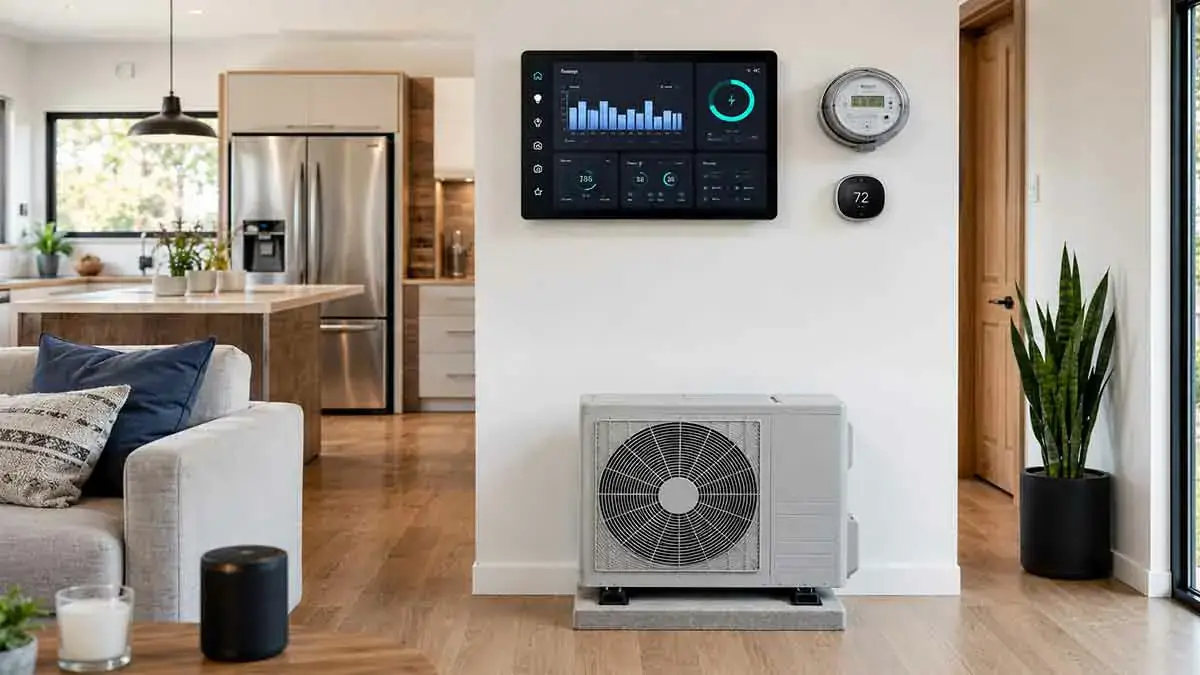
Understanding how to read your home energy usage can help you identify unusual consumption, understand utility bills, control energy costs, and make better decisions about home efficiency improvements.
Many homeowners know how much they pay for electricity each month, but the total bill does not always explain how much energy the home actually used or which systems caused changes in consumption.
Reading home energy usage involves looking beyond the dollar amount. You need to understand kilowatt-hours (kWh), billing periods, electricity rates, daily consumption, seasonal patterns, weather conditions, and the major systems that use energy in your home.
Once you understand these numbers, your utility bill, smart-meter data, and energy-monitoring information become much more useful.
Table of Contents
What Does Home Energy Usage Mean?
Home energy usage is the amount of energy consumed by your household during a specific period.
For electricity, consumption is normally measured in kilowatt-hours (kWh).
Your utility may provide energy-use information by:
- Day
- Week
- Billing period
- Month
- Year
Other energy sources use different units. Natural gas, propane, and heating oil may be measured separately from electricity.
When evaluating household electricity consumption, kWh is usually more useful than the total dollar amount, because the bill can change when electricity rates, taxes, or other charges change.
What Is a Kilowatt-Hour?
A kilowatt-hour is a unit of electrical energy.
A simple calculation is:
Power in kilowatts × Operating time in hours = Energy used in kWh
For example, a 1-kilowatt appliance operating continuously for 3 hours would use approximately:
1 kW × 3 hours = 3 kWh
Actual consumption can be lower than the maximum rated power because many appliances cycle on and off during operation.
For example, an air conditioner may have a relatively high electrical demand while operating but may cycle rather than run continuously.
How to Read an Electricity Bill
Most electricity bills contain several pieces of information that can help you understand household energy use.
Look for:
- Previous meter reading
- Current meter reading
- Total kWh consumed
- Billing period
- Number of billing days
- Electricity rate
- Energy charges
- Fixed service charges
- Taxes and fees
- Total amount due
The exact layout depends on the utility provider.
For energy analysis, start with the total kWh consumed and the number of days in the billing period.
1. Find Your Total Electricity Consumption
Locate the total electricity consumption on your bill.
It may be listed as:
Energy Used: 850 kWh
This means the home consumed approximately 850 kilowatt-hours during the billing period.
Do not confuse energy consumption with the total amount of the bill.
A higher bill does not necessarily mean the home used proportionally more electricity because electricity rates and additional charges can change.
2. Check the Billing Period
Always check the dates covered by the bill.
One billing period may cover 28 days, while another may cover 34 days.
Comparing only the total kWh can therefore be misleading.
For more useful comparisons, calculate average daily consumption:
Total kWh ÷ Number of Billing Days = Average Daily kWh
This creates a more consistent measurement between billing periods of different lengths.
3. Calculate Average Daily Energy Use
Average daily consumption provides a simple way to compare energy use.
For example:
900 kWh ÷ 30 days = 30 kWh per day
If another bill shows 930 kWh over 31 days:
930 kWh ÷ 31 days = 30 kWh per day
Although the second bill contains more total kWh, the average daily consumption is essentially the same.
Daily consumption is therefore often more useful than simply comparing monthly totals.
4. Compare Month-to-Month Usage
Keep a record of your household’s electricity consumption throughout the year.
| Month | kWh Used | Cost |
|---|---|---|
| January | — | — |
| February | — | — |
| March | — | — |
| April | — | — |
| May | — | — |
| June | — | — |
| July | — | — |
| August | — | — |
| September | — | — |
| October | — | — |
| November | — | — |
| December | — | — |
Tracking at least 12 months provides a useful baseline for identifying seasonal patterns and long-term changes.
5. Compare the Same Month From Previous Years
Year-over-year comparisons are often more meaningful than comparisons between different seasons.
For example:
July 2026 vs. July 2025
is generally more useful than:
July 2026 vs. June 2026
because outdoor temperatures and HVAC demand can vary significantly between months.
When comparing years, also consider changes in:
- Household occupancy
- Appliances
- HVAC equipment
- Thermostat settings
- Home size
- Electric vehicle charging
- Solar panels
- Work-from-home patterns
6. Consider Outdoor Temperature
Weather can have a major effect on household energy consumption.
Hot weather may increase electricity use because of:
- Air conditioning
- Heat pump cooling
- Dehumidification
Cold weather may increase consumption because of:
- Electric heating
- Heat pump heating
- Supplemental heating
- Increased water-heating demand
A higher-energy month is therefore not automatically evidence of poor efficiency.
The important question is whether consumption is reasonable for the conditions.
7. Compare Energy Use With HVAC Demand
Heating and cooling are often among the largest energy loads in a home.
If electricity consumption increases sharply during periods of extreme heat, air conditioning may be responsible.
Look for relationships between:
Outdoor temperature → HVAC runtime → Total electricity consumption
If energy use remains unusually high even under similar weather conditions, investigate thermostat settings, insulation, air leakage, ductwork, maintenance, and equipment performance.
8. Understand Your Electricity Rate
The electricity rate determines how much your consumption costs.
Depending on the utility, you may have:
- Flat-rate pricing
- Time-of-use pricing
- Tiered rates
- Seasonal rates
- Demand-based charges
Understanding your rate structure is important because two homes using the same amount of electricity can have different bills if they are on different pricing plans.
9. Separate Energy Charges From Fixed Charges
Not every charge on your utility bill is directly related to electricity consumption.
Your bill may include:
- Energy charges
- Service charges
- Connection fees
- Taxes
- Administrative fees
- Other utility charges
When evaluating the financial effect of an energy-efficiency improvement, focus on the portion of the bill that changes with energy consumption.
10. Understand Time-of-Use Pricing
Some utilities charge different electricity rates at different times.
Under a time-of-use plan, electricity may cost more during periods of high demand and less during other periods.
If you have this type of rate, pay attention to when major loads operate.
Potential flexible loads may include:
- Electric vehicle charging
- Laundry
- Dishwashers
- Water heating
- Pool equipment
Moving flexible electricity use to lower-cost periods may reduce the bill without necessarily reducing total kWh consumption.
11. Look for Energy Spikes
A sudden increase in electricity consumption deserves investigation.
Possible causes include:
- Extreme weather
- HVAC operation
- A new appliance
- Electric vehicle charging
- Increased occupancy
- Water-heater use
- Extended cooking
- Changes in household habits
Do not automatically assume that a spike represents wasted energy.
First identify what changed during that period.
12. Look for Gradual Increases
Slow increases can be harder to notice than sudden spikes.
For example, annual electricity consumption may gradually increase over several years.
Possible causes include:
- Aging HVAC equipment
- Additional electronics
- New appliances
- Increased occupancy
- Longer cooling periods
- Higher thermostat settings
- Electric vehicle charging
- Changes in household routines
Keeping historical records makes gradual changes easier to identify.
13. Identify Your Largest Energy Consumers
Different homes have different energy profiles.
Common major electricity consumers include:
- Air conditioners
- Electric heating systems
- Heat pumps
- Electric water heaters
- Clothes dryers
- Electric vehicle chargers
- Ovens
- Pool equipment
When looking for meaningful savings, start with major loads rather than spending excessive time on very small appliances.
14. Understand Power vs. Energy
Power and energy are related but not the same.
Power describes how quickly electricity is being consumed and is commonly measured in:
- Watts
- Kilowatts
Energy describes how much electricity is consumed over a period and is commonly measured in:
- Kilowatt-hours
An appliance can have high power but relatively low total energy consumption if it operates for only a short period.
Conversely, a lower-power device that operates continuously can consume significant energy over time.
15. Estimate Appliance Energy Use
A basic estimate can be calculated using:
Power in kW × Operating Hours = Energy Used in kWh
For example, a 2-kilowatt appliance operating for 1.5 hours would use approximately:
2 kW × 1.5 hours = 3 kWh
This is an estimate because many appliances cycle during operation.
For more accurate information, use a suitable energy monitor or the appliance’s measured consumption data.
16. Estimate Appliance Operating Costs
Once you know the energy consumed, you can estimate the electricity cost.
Use:
Energy Used × Electricity Rate = Energy Cost
For example:
10 kWh × $0.15/kWh = $1.50
This is a simplified calculation. The actual amount on your utility bill may differ because of fixed charges, taxes, time-based rates, or other fees.
17. Read Smart Meter Data
A smart meter may provide more detailed information than a traditional monthly bill.
Depending on your utility, you may be able to access:
- Hourly consumption
- Daily consumption
- Historical usage
- Peak periods
- Interval data
This information can help you identify when electricity consumption increases and connect those changes with household activities.
18. Use a Home Energy Monitor
A home energy monitor can provide more detailed information about electricity consumption.
Depending on the system, it may display:
- Real-time electricity use
- Daily consumption
- Historical trends
- Estimated energy costs
- Usage alerts
- Circuit-level information
A monitor is particularly useful when the utility bill shows that consumption is high but does not reveal which systems are responsible.
19. Monitor Individual Circuits
Circuit-level monitoring can provide more detailed information about major electrical loads.
It may help track systems such as:
- HVAC equipment
- Electric water heaters
- EV chargers
- Kitchen circuits
- Laundry equipment
This can help determine which systems contribute most to total electricity consumption.
Because circuit-level monitoring may require access to the electrical panel, installation should follow applicable electrical requirements and manufacturer instructions.
20. Track Energy During Vacations
A mostly unoccupied home provides an opportunity to understand how much electricity is being consumed by continuous or essential loads.
If consumption remains unexpectedly high while nobody is home, investigate possible sources such as:
- Refrigeration
- HVAC
- Water heating
- Pumps
- Network equipment
- Security systems
Do not disconnect equipment simply because it consumes electricity. Some systems are intended to operate continuously or provide important safety and protection functions.
21. Identify Standby Energy
Some electronic devices consume electricity even when they appear to be switched off.
Potential examples include:
- Televisions
- Computers
- Game consoles
- Chargers
- Network equipment
- Smart-home devices
The amount of standby consumption varies significantly.
Measure these loads before making major changes. A small standby load may have little impact on total household consumption.
22. Understand Seasonal Energy Patterns
Most homes experience some degree of seasonal energy variation.
For example:
Winter: heating and water heating may become major loads.
Summer: air conditioning and cooling may dominate electricity consumption.
Spring and fall: energy use may decline when less heating and cooling is required.
Understanding these patterns prevents normal seasonal changes from being mistaken for energy waste.
23. Calculate Annual Energy Consumption
Add your monthly electricity consumption to estimate annual usage.
The calculation is:
January + February + March + … + December = Annual kWh
Annual consumption provides a useful benchmark for comparing:
- Different years
- Energy-efficiency improvements
- Changes in household behavior
- Major equipment replacements
Annual data is usually more informative than looking at one isolated month.
24. Calculate Average Monthly Consumption
Once you know annual consumption, you can calculate average monthly use:
Annual kWh ÷ 12 = Average Monthly kWh
For example, if a home uses 12,000 kWh in one year:
12,000 ÷ 12 = 1,000 kWh per month
Remember that this is only an average. Actual monthly consumption may vary substantially between seasons.
25. Compare Energy Use Per Day
Daily consumption is useful when comparing bills with different billing periods.
Use:
Total kWh ÷ Billing Days = Average Daily kWh
You can then compare daily usage across different periods.
This can be especially useful when one bill covers significantly more days than another.
26. Compare Energy Use Per Person Carefully
Energy consumption per occupant can provide additional context, but it should not be treated as a definitive efficiency measurement.
A simple calculation is:
Total Energy Consumption ÷ Number of Occupants
However, household energy use also depends on:
- Home size
- Climate
- Heating system
- Cooling system
- Water heating
- Appliances
- Occupancy patterns
- Electric vehicle charging
A larger household may share certain energy loads, while a smaller household may still consume substantial electricity because of a large home or energy-intensive equipment.
27. Consider Home Size
Home size can influence electricity consumption because larger homes generally require more:
- Heating
- Cooling
- Lighting
- Ventilation
- Water heating
- Appliance operation
Energy use per square foot can provide additional context.
However, it should not be used alone to judge efficiency because climate, insulation, equipment, occupancy, and building design also matter.
28. Compare Before and After Energy Improvements
Energy-use data becomes especially valuable after making an efficiency improvement.
You can compare consumption before and after:
- Attic insulation
- Air sealing
- HVAC replacement
- Heat pump installation
- Smart thermostat installation
- Window improvements
- Efficient appliances
For the most meaningful comparison, use similar weather and occupancy conditions whenever possible.
A single bill may not provide enough information to determine whether an improvement produced significant savings.
29. Account for Occupancy Changes
Changes in household occupancy can significantly affect energy consumption.
Examples include:
- Someone starting to work from home
- Additional family members
- Extended guests
- Children leaving home
- Long vacations
- Changes in daily schedules
Consider these factors before concluding that an increase or decrease in energy use is caused by equipment efficiency.
30. Track Electric Vehicle Charging Separately
Home EV charging can become a significant electricity load.
If possible, track EV charging separately from other household consumption.
This makes it easier to distinguish increased transportation-related electricity use from changes in:
- HVAC consumption
- Appliance usage
- Water heating
- General household electricity use
If your utility offers time-of-use pricing, charging data can also help evaluate whether changing charging times could reduce electricity costs.
31. Track Solar Energy Separately
Homes with solar panels require a slightly different approach to energy analysis.
Distinguish between:
- Electricity generated by the solar system
- Electricity consumed by the home
- Electricity imported from the grid
- Electricity exported to the grid
Grid electricity consumption alone may not represent the home’s total electricity demand.
32. Understand Net Metering
Some solar-electricity arrangements allow exported electricity to offset electricity imported from the grid under specific billing rules.
The exact treatment depends on the utility, location, and applicable program.
When analyzing a solar home’s energy use, understand how the utility measures and bills:
Grid imports + Solar generation + Grid exports
This prevents misleading conclusions about total household consumption.
33. Watch for Unusual Overnight Consumption
Overnight electricity use can reveal continuous or unexpected loads.
Potential sources include:
- Refrigerators
- Freezers
- HVAC systems
- Water heaters
- Pumps
- Network equipment
- Security systems
Some overnight consumption is completely normal.
The goal is to identify patterns that are significantly different from your home’s normal nighttime usage.
34. Use Energy Alerts
If your smart meter or energy-monitoring system supports alerts, use them for meaningful events.
Examples include:
- Unusually high daily consumption
- Unexpected overnight usage
- Continuous energy consumption
- Extended HVAC operation
- Significant changes from normal usage
Avoid creating too many alerts. A small number of useful notifications is easier to manage than constant warnings.
35. Use Energy Data to Prioritize Improvements
Energy data should help determine where efficiency investments are most worthwhile.
For example, if HVAC equipment accounts for a large portion of electricity consumption, investigate:
- Insulation
- Air sealing
- Ductwork
- HVAC maintenance
- Thermostat settings
- Equipment efficiency
If water heating is a major load, investigate water-heating efficiency instead.
The goal is to address the largest practical opportunities rather than making changes based only on assumptions.
36. Consider a Home Energy Audit
If your home’s energy use is consistently higher than expected and the cause is unclear, a professional energy audit may help.
An energy audit can evaluate areas such as:
- Attic insulation
- Air leakage
- Windows
- Doors
- HVAC equipment
- Ductwork
- Moisture
- Building-envelope performance
The results can connect energy-consumption patterns with physical conditions in the home.
Home Energy Usage Reading Checklist
Utility Bill
- Find total kWh
- Check billing dates
- Check the number of billing days
- Review the electricity rate
- Separate energy charges from fixed charges
- Record the total cost
Energy Analysis
- Calculate average daily kWh
- Track monthly consumption
- Compare similar months
- Compare seasons
- Compare year-over-year usage
- Check weather conditions
- Identify energy spikes
- Look for gradual increases
Major Energy Loads
- Heating
- Cooling
- Water heating
- EV charging
- Appliances
- Pumps
- Electronics
Efficiency Improvements
- Establish a baseline
- Record improvement dates
- Compare before and after usage
- Account for weather
- Account for occupancy
- Measure results over several months
Common Mistakes When Reading Home Energy Usage
Looking Only at the Dollar Amount
The total bill can change because electricity rates, taxes, and fees change.
Look at kWh consumption as well as cost.
Ignoring the Billing Period
A 35-day bill will normally contain more total consumption than a 25-day bill under similar conditions.
Use average daily consumption when comparing different billing periods.
Ignoring Weather
Heating and cooling demand can dramatically affect electricity use.
Always consider outdoor temperature when analyzing major changes.
Comparing Different Seasons
January and July are usually not directly comparable because heating and cooling requirements can be very different.
Assuming Every Increase Is Energy Waste
Higher consumption may result from extreme weather, increased occupancy, EV charging, or other legitimate changes.
Focusing Only on Small Appliances
Small appliances may matter less than major loads such as HVAC systems, electric water heaters, and EV chargers.
Confusing Power With Energy
A high-wattage appliance does not necessarily consume the most electricity over a month.
Operating time matters.
Making Conclusions From One Bill
One billing period rarely provides enough information to identify a long-term trend.
Use several months or a full year whenever possible.
How to Read Your Energy Usage More Accurately
Use the following process:
Step 1: Find the kWh
Identify the total electricity consumption on your utility bill.
Step 2: Check the Billing Period
Determine the exact number of days covered by the bill.
Step 3: Calculate Daily Usage
Divide total kWh by the number of billing days.
Step 4: Review Historical Data
Compare the result with previous months and similar periods from previous years.
Step 5: Check Weather and Occupancy
Consider temperature, household occupancy, vacations, and changes in daily routines.
Step 6: Identify Major Loads
Determine whether HVAC, water heating, EV charging, appliances, or another system is responsible for a significant share of consumption.
Step 7: Investigate Unusual Patterns
Look for sudden spikes, gradual increases, or unexpected overnight consumption.
Step 8: Prioritize Improvements
Focus on the largest practical sources of energy consumption.
Step 9: Measure Again
After making an improvement, continue monitoring to determine whether consumption changes under comparable conditions.
What Is Considered High Home Energy Usage?
There is no single kWh number that is automatically considered high for every home.
Energy consumption depends on:
- Home size
- Climate
- Number of occupants
- Heating system
- Cooling system
- Water heater
- Appliances
- Insulation
- Air leakage
- Electric vehicle charging
- Solar generation
- Household habits
A better approach is to compare your current usage with your own historical data and with similar homes under similar conditions.
For example, unusually high electricity consumption during an extreme heat wave may be expected. High consumption during mild weather may deserve closer investigation.
Final Thoughts
Learning how to read your home energy usage gives you a clearer understanding of where electricity is going and why your utility costs change.
Start by finding the kWh consumed, checking the billing period, calculating average daily usage, and comparing the results over time. Then consider weather, occupancy, HVAC demand, electricity rates, and major household loads.
Smart-meter data and home energy monitors can provide additional detail when a utility bill does not explain why consumption is high.
The goal is not simply to reduce every kilowatt-hour possible. Instead, use energy data to understand your home’s consumption patterns, identify meaningful opportunities, and determine whether efficiency improvements are actually producing results.
By combining accurate energy tracking with practical improvements to insulation, air sealing, HVAC performance, appliances, and household habits, you can make more informed decisions about energy use and long-term home operating costs.