
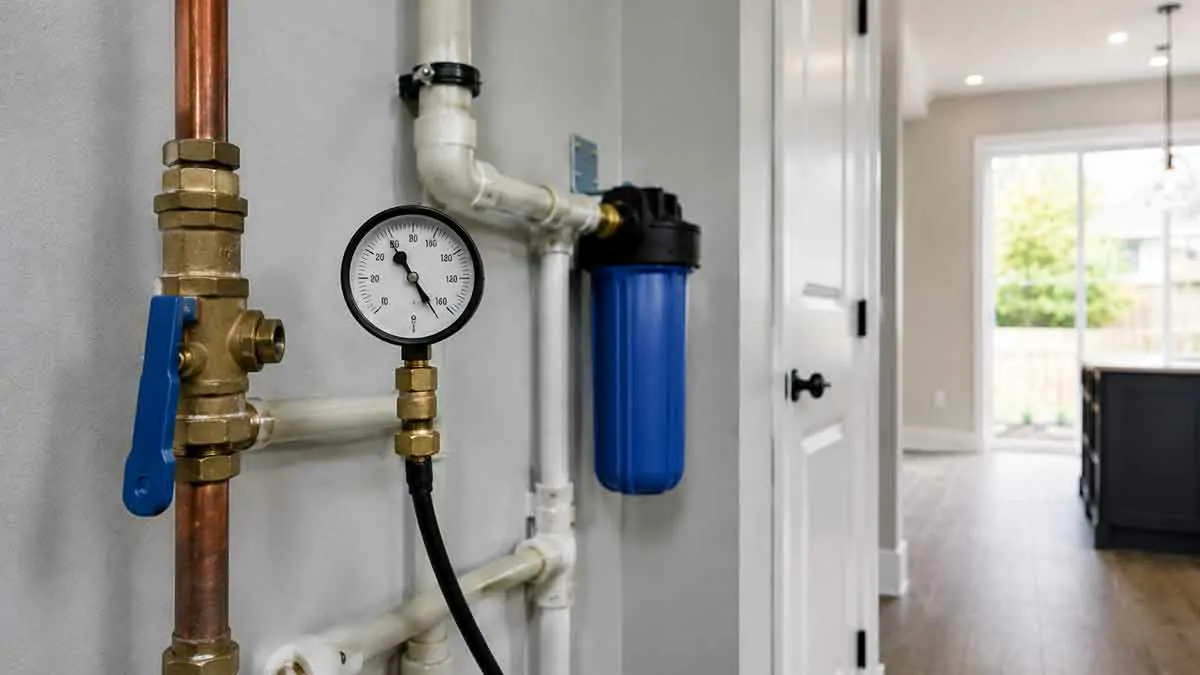
Low water pressure can make everyday tasks frustrating. A weak shower, slow-filling toilet, or faucet that produces only a small stream may indicate a simple fixture problem—or a larger issue with the home’s plumbing system.
Low pressure can be caused by a clogged aerator, partially closed valve, dirty filter, faulty pressure regulator, restricted pipes, plumbing leaks, inadequate municipal supply, or problems with a private well system. The correct solution depends on whether the problem affects one fixture or the entire house.
This guide explains the most common causes of low water pressure, how to diagnose the problem, practical solutions, common mistakes to avoid, and when professional plumbing help is necessary.
Table of Contents
What Is Water Pressure?
Water pressure is the force that pushes water through the plumbing system.
It affects the performance of:
- Faucets
- Showers
- Toilets
- Washing machines
- Dishwashers
- Outdoor faucets
- Irrigation systems
Water pressure is commonly measured in pounds per square inch, or PSI.
However, pressure is only part of the equation. A home can have reasonable static pressure while still experiencing poor water flow because of a clogged fixture, restricted pipe, dirty filter, or inadequate pipe capacity.
Understanding the difference between pressure and flow is therefore important when diagnosing plumbing problems.
What Is Normal Water Pressure in a Home?
Many residential plumbing systems operate at approximately 40 to 60 PSI, although the appropriate pressure varies depending on the plumbing system, fixtures, appliances, local requirements, and water supply.
Pressure that is too low can result in:
- Weak showers
- Slow faucets
- Poor appliance performance
- Slow toilet filling
Pressure that is too high can place unnecessary stress on:
- Pipes
- Faucets
- Valves
- Water heaters
- Appliances
- Plumbing connections
The objective is not to achieve the highest possible pressure. It is to maintain pressure appropriate for the home’s plumbing system.
Low Water Pressure vs. Low Water Flow
Low pressure and low flow are related but not identical.
Water pressure is the force pushing water through the plumbing.
Water flow is the amount of water moving through the system over a given period.
For example, a clogged faucet aerator can severely reduce flow from one faucet while the home’s overall water pressure remains normal.
Similarly, a restricted pipe may allow reasonable pressure when no water is flowing but cause a significant drop in performance when several fixtures are used.
This distinction can prevent unnecessary plumbing repairs.
Signs of Low Water Pressure
Common signs include:
- Weak shower performance
- Slow-running faucets
- Slow-filling toilets
- Washing machines taking longer to fill
- Weak outdoor water flow
- Poor flow from multiple fixtures
- Pressure dropping when another fixture is used
- Noticeable differences between hot and cold water flow
Pay attention to whether the problem affects one fixture or the entire house.
If only one faucet or shower is affected, the cause is more likely to be localized.
If several fixtures suddenly lose pressure, investigate the main plumbing system or incoming water supply.
Common Causes of Low Water Pressure
1. Partially Closed Main Shutoff Valve
The main shutoff valve controls water entering the home.
If it is partially closed, it can restrict water flow throughout the house.
Check whether the valve is fully open if it is designed to operate that way.
Do not force a valve that is stuck, damaged, or heavily corroded. Older valves can break or begin leaking when excessive force is applied.
2. Partially Closed Fixture Valve
If only one fixture has weak flow, inspect its local shutoff valve.
Valves beneath sinks and behind toilets may have been partially closed during previous maintenance.
Returning a properly functioning valve to the appropriate open position may restore normal flow.
3. Clogged Faucet Aerator
Faucet aerators contain small screens that can collect:
- Mineral deposits
- Sediment
- Rust
- Debris
This can significantly reduce water flow.
If only one faucet is affected, remove and inspect the aerator. Cleaning or replacing it may solve the problem without any major plumbing work.
4. Clogged Showerhead
Mineral deposits can accumulate inside showerhead openings and restrict water flow.
If the shower is weak while other fixtures operate normally, inspect the showerhead first.
Cleaning or replacing a heavily clogged showerhead may restore normal performance.
5. Dirty Whole-House Water Filter
Whole-house filters can restrict water flow as their cartridges become clogged.
A gradual reduction in pressure or flow may occur when a filter has not been replaced for an extended period.
Check the filter according to the manufacturer’s instructions and replace it with a compatible cartridge when necessary.
6. Clogged Water Softener or Treatment Equipment
Water softeners and filtration systems can sometimes restrict flow when they develop internal blockages or malfunctions.
If the pressure problem started after installing or servicing water-treatment equipment, inspect that equipment as part of the diagnosis.
7. Faulty Pressure Regulator
Some homes use a pressure-reducing valve or pressure regulator to control incoming water pressure.
A malfunctioning regulator can cause:
- Low pressure
- Fluctuating pressure
- Unusually high pressure
- Poor flow throughout the home
A pressure gauge can help determine whether the regulator is functioning correctly.
Adjustment or replacement should be performed carefully because incorrect pressure settings can damage plumbing components.
8. Corroded or Restricted Pipes
Older plumbing pipes can become restricted internally due to corrosion, mineral buildup, or sediment.
Galvanized steel pipes are particularly susceptible to internal corrosion as they age.
As the usable opening inside a pipe becomes smaller, water flow can gradually decline.
Possible warning signs include:
- Gradually worsening pressure
- Rust-colored water
- Weak flow at multiple fixtures
- Older plumbing materials
- Significant pressure loss when multiple fixtures operate
Severely restricted pipes may eventually require replacement.
9. Undersized Supply Pipes
A home’s supply piping may be too small to provide adequate flow for modern water demand.
This becomes especially noticeable when several fixtures operate simultaneously.
For example, shower performance may decrease when:
- Another shower is running
- A washing machine is filling
- A dishwasher is operating
- Several faucets are open
In these situations, the issue may be inadequate flow capacity rather than simply low static pressure.
10. Plumbing Leaks
A significant leak can reduce available water and may affect pressure or flow.
Look for:
- Damp walls
- Wet floors
- Water stains
- Mold
- Unexplained puddles
- Sounds of running water
- Unexpected increases in water usage
A hidden leak should be investigated promptly because it can cause both plumbing and structural damage.
11. Municipal Water Supply Problems
The problem may originate outside the home.
Municipal water pressure can change because of:
- Water-main repairs
- Utility maintenance
- Infrastructure changes
- High neighborhood demand
- Pressure-zone changes
Ask nearby homeowners whether they are experiencing similar problems.
If multiple properties are affected, contact the local water utility.
12. Water Meter or Supply Valve Restrictions
Restrictions near the water meter or incoming supply can affect household flow.
Depending on the property and utility arrangement, some components may belong to the homeowner while others belong to the water provider.
Do not alter utility-owned equipment without authorization.
13. Elevation and Multi-Story Homes
Water pressure decreases as water has to travel upward.
This can make pressure problems more noticeable in:
- Two-story homes
- Multi-story houses
- Hillside properties
- Homes located at higher elevations within a pressure zone
The higher a fixture is above the incoming water supply, the more pressure is required to maintain adequate flow.
14. Well Pump Problems
Homes supplied by private wells can experience low water pressure because of problems with:
- Well pumps
- Pressure tanks
- Pressure switches
- Filtration equipment
- Supply piping
A failing pump may struggle to maintain the required pressure, particularly when several fixtures are operating.
15. Well Pressure Tank Problems
A pressure tank helps maintain more consistent water pressure in many well systems.
Problems may include:
- Incorrect air charge
- Failed bladder
- Waterlogged tank
- Pressure-switch problems
Because well systems involve pressurized and electrical equipment, persistent problems should be evaluated by a qualified professional.
16. Faulty Pressure Switch
A pressure switch controls when a well pump starts and stops.
A malfunctioning switch can contribute to:
- Low pressure
- Pressure fluctuations
- Frequent pump cycling
- Failure to maintain pressure
Do not adjust pressure-switch settings without understanding the well system and its safety limits.
17. Main Water Supply Line Problems
The main supply line delivers water to the home.
It can develop:
- Corrosion
- Leaks
- Mineral buildup
- Physical damage
- Underground deterioration
- Flow restrictions
- Undersized piping
If pressure is low throughout the house despite adequate incoming pressure, the main supply line may require inspection.
How to Diagnose Low Water Pressure
Before replacing equipment or increasing pressure, determine where the problem originates.
Step 1: Determine Whether One or All Fixtures Are Affected
Test several fixtures, such as:
- Kitchen faucet
- Bathroom faucet
- Shower
- Toilet
- Outdoor faucet
If only one fixture is affected, begin with that fixture.
If multiple fixtures are affected, investigate the larger plumbing system.
Step 2: Check the Shutoff Valves
Check the main shutoff valve and the local valves serving affected fixtures.
Make sure they are appropriately open.
Do not force a valve that is stuck or damaged.
Step 3: Inspect Fixtures and Filters
Clean or inspect:
- Faucet aerators
- Showerheads
- Whole-house filters
- Water-treatment equipment
These components can restrict flow without there being a problem with the home’s main water supply.
Step 4: Check for Leaks
Inspect visible plumbing and look for:
- Moisture
- Corrosion
- Water stains
- Mold
- Damp cabinets
- Wet floors
Also check whether the water meter registers usage when all fixtures are turned off.
Step 5: Measure the Water Pressure
A pressure gauge provides a more reliable diagnosis than judging pressure by how a shower feels.
A suitable gauge can often be connected to an outdoor hose bib or another appropriate threaded connection.
Measure the pressure when no water is being used and record the result.
Step 6: Test Pressure Under Demand
Open a shower or faucet and observe the pressure.
Then operate another fixture at the same time.
A significant pressure drop can indicate:
- Restricted piping
- Undersized supply lines
- Low incoming pressure
- A clogged filter
- A pressure-regulator problem
How to Measure Water Pressure
A basic pressure gauge can help homeowners determine whether pressure is actually low.
For a simple test:
- Turn off water-using fixtures.
- Connect the gauge to a suitable connection.
- Open the connection if necessary.
- Read the pressure with no water flowing.
- Record the static pressure.
- Turn on a fixture.
- Observe the pressure while water is flowing.
- Compare the two readings.
If the pressure is unusually low or changes dramatically during normal water use, further investigation may be necessary.
Static vs. Dynamic Water Pressure
Two measurements are especially useful.
Static Pressure
Static pressure is measured when no water is flowing.
It shows the pressure available when the plumbing system is at rest.
Dynamic Pressure
Dynamic pressure is measured while water is flowing.
A home may have acceptable static pressure but experience a large pressure drop when water demand increases.
This can indicate a restriction or insufficient flow capacity.
Test Pressure While Multiple Fixtures Are Running
Testing under real household demand can reveal problems that a static measurement misses.
For example, run a shower and open another faucet.
If the shower becomes noticeably weaker, possible causes include:
- Undersized piping
- Restricted pipes
- Low incoming pressure
- Clogged filtration equipment
- Pressure-regulator problems
How to Fix Low Water Pressure
The correct solution depends on the cause.
Clean or Replace Faucet Aerators
If only one faucet has poor flow, remove the aerator and inspect it for mineral deposits and debris.
Clean it thoroughly or replace it if necessary.
Clean or Replace the Showerhead
A clogged showerhead can make a normal-pressure system feel weak.
Cleaning mineral deposits or replacing a damaged showerhead may restore better flow.
Replace a Clogged Filter
If a whole-house filter is restricting flow, replace the cartridge according to the manufacturer’s recommendations.
Always use a compatible replacement.
Open a Partially Closed Valve
If a properly functioning valve is partially closed, returning it to the appropriate position may restore flow.
Do not force a damaged or corroded valve.
Repair or Replace a Faulty Pressure Regulator
If testing indicates that the pressure regulator is malfunctioning, it may require adjustment or replacement.
Because regulator settings affect the entire plumbing system, professional service is recommended when the cause is uncertain.
Repair Plumbing Leaks
If a leak is responsible for pressure loss, repair the leak rather than trying to compensate by increasing pressure.
Hidden leaks may require specialized detection equipment.
Replace Severely Restricted Pipes
When old pipes are severely corroded or restricted, cleaning may not provide a lasting solution.
Replacing affected sections may offer a more reliable long-term improvement.
Improve the Main Supply Line
An undersized or damaged main supply line may limit household flow.
A plumbing professional can evaluate:
- Pipe size
- Pipe length
- Incoming pressure
- Number of fixtures
- Building size
- Expected simultaneous demand
- Local plumbing requirements
Upgrading the supply line may be appropriate in some homes.
Install a Water Pressure Booster
A booster pump can improve pressure when the incoming supply is consistently inadequate and the system is suitable for a booster.
It may be useful in situations involving:
- Low municipal pressure
- Multi-story homes
- Long supply lines
- Certain well-system configurations
The pump must be correctly sized for the home’s actual demand.
A booster pump should not be used as a substitute for repairing leaks, removing restrictions, or replacing severely damaged plumbing.
Use a Booster Pump With a Pressure Tank
Some systems combine a booster pump with a pressure tank to provide more consistent pressure under changing demand.
This can be useful when water demand varies significantly.
A professional should determine the correct equipment size, pressure settings, and system configuration.
Low Water Pressure in Different Areas of the Home
Low Water Pressure in a Shower
If only the shower is affected, inspect:
- Showerhead
- Shower valve
- Local supply
- Flow-control components
- Hot and cold water performance
If all fixtures have weak flow, investigate the main plumbing system instead.
Low Water Pressure in the Kitchen
If the kitchen faucet has weak flow:
- Clean the aerator.
- Check the shutoff valves.
- Inspect the supply hoses.
- Check the faucet cartridge.
- Compare hot and cold flow.
If other fixtures work normally, the problem is probably localized.
Low Water Pressure in a Two-Story Home
Upper floors naturally experience some pressure loss because water must travel upward.
Potential solutions include:
- Checking incoming pressure
- Removing restrictions
- Inspecting supply piping
- Correctly servicing the pressure regulator
- Considering a properly designed booster system
Do not simply increase pressure without testing the system.
Low Water Pressure in a Large Home
Large homes can experience pressure or flow problems because of:
- Long pipe runs
- Multiple bathrooms
- High simultaneous demand
- Undersized supply piping
- Inadequate incoming pressure
A plumbing assessment can determine whether the issue is pressure, flow capacity, or both.
Low Hot Water Pressure
If only hot water has weak flow, investigate the hot-water system.
Possible causes include:
- Restricted hot-water piping
- Water-heater valve restrictions
- Mixing-valve problems
- Sediment
- Faucet cartridge problems
If hot and cold water are both weak throughout the house, investigate the broader plumbing system.
Low Cold Water Pressure
If only cold water is affected, inspect:
- Supply valves
- Filters
- Faucet components
- Pressure regulator
- Main supply piping
The location of the problem helps determine the likely cause.
Can a Pressure Booster Solve Low Water Pressure?
A pressure booster can solve certain low-pressure problems, but it is not a universal solution.
It may help when incoming water pressure is consistently inadequate.
It will not necessarily solve problems caused by:
- Clogged pipes
- Plumbing leaks
- Partially closed valves
- Clogged fixtures
- Blocked filters
- Severely corroded pipes
- Faulty plumbing components
The underlying cause should be identified before installing a booster.
Can Larger Pipes Increase Water Pressure?
Larger pipes can reduce friction losses and improve available flow under certain conditions.
However, larger pipes do not create additional incoming pressure.
If municipal or well pressure is already inadequate, simply replacing interior pipes may not solve the problem.
Pipe replacement should therefore be based on a complete assessment of the supply system.
Can a New Faucet Fix Low Water Pressure?
A new faucet may improve performance if the existing faucet is clogged, damaged, or restricting flow.
However, replacing a faucet will not solve a whole-house pressure problem.
Always determine whether the problem is localized before replacing fixtures.
Should You Adjust the Pressure Regulator Yourself?
Adjusting a pressure regulator without first measuring actual pressure can create problems.
Excessive pressure can stress:
- Pipes
- Fixtures
- Water heaters
- Appliances
- Plumbing connections
If you are unsure about the regulator or the appropriate pressure setting, have the system inspected by a qualified plumber.
How to Prevent Low Water Pressure Problems
Regular maintenance can help prevent restrictions and identify problems early.
Clean Faucet Aerators
Remove mineral deposits and debris periodically.
Maintain Showerheads
Clean or replace clogged showerheads when necessary.
Replace Filters on Schedule
Follow the manufacturer’s recommended replacement interval.
Inspect Visible Plumbing
Look for:
- Corrosion
- Moisture
- Leaks
- Damaged connections
Monitor Water Pressure
Periodic pressure testing can help identify significant changes before they become major problems.
Repair Leaks Quickly
Do not ignore unexplained water usage or moisture.
Maintain Well Equipment
If the home uses a private well, follow recommended maintenance procedures for the pump, pressure tank, pressure switch, and filtration equipment.
Common Mistakes When Fixing Low Water Pressure
Increasing Pressure Without Testing
Do not increase pressure simply because the shower feels weak.
Measure actual pressure first.
Replacing Pipes Too Quickly
Check fixtures, valves, filters, regulators, leaks, and incoming pressure before committing to major pipe replacement.
Installing an Oversized Booster Pump
A larger pump is not automatically better.
Oversized equipment can create unnecessary pressure and operating problems.
The booster should be selected according to the home’s demand and plumbing design.
Ignoring Leaks
A leak may be the underlying reason for poor pressure or unexplained water consumption.
Repair the leak instead of attempting to compensate by increasing pressure.
Treating Low Flow as Low Pressure
A clogged aerator, showerhead, or filter can reduce flow even when the home’s pressure is normal.
Ignoring Well Equipment
For homes supplied by private wells, the pump, pressure tank, pressure switch, or filtration system may be responsible.
When to Call a Plumber
Professional help is recommended when:
- Low pressure affects the entire house
- Pressure fluctuates significantly
- A pressure regulator may be faulty
- A hidden leak is suspected
- Pipes are severely corroded
- The main supply line may be damaged
- A well pump is malfunctioning
- A pressure tank has problems
- A booster system is required
- Several fixtures lose pressure simultaneously
- Water pressure is unusually high
- The cause cannot be identified
A plumber can measure pressure, evaluate flow restrictions, inspect the supply system, and determine the appropriate repair.
When Low Water Pressure Requires Urgent Attention
Low water pressure alone is not necessarily an emergency.
However, act quickly when it occurs together with:
- A burst pipe
- Significant flooding
- A major leak
- Sewage backup
- Sudden loss of water
- Water near electrical equipment
If it is safe to do so, shut off the appropriate water supply and seek professional assistance.
Low Water Pressure Troubleshooting Checklist
Use this checklist when diagnosing a pressure problem:
- Determine whether one or all fixtures are affected
- Check the main shutoff valve
- Check fixture shutoff valves
- Clean faucet aerators
- Clean showerheads
- Check whole-house filters
- Inspect water-treatment equipment
- Check for visible leaks
- Test the water meter for unexplained usage
- Measure static pressure
- Measure dynamic pressure
- Test pressure while multiple fixtures operate
- Inspect the pressure regulator
- Check municipal water conditions
- Evaluate the main supply line
- Inspect well equipment if applicable
- Consider a properly sized booster system
- Avoid excessive pressure
- Contact a plumber when the cause is unclear
Final Thoughts
Low water pressure can have many causes, and identifying the source is more important than simply trying to increase pressure.
Start with simple possibilities such as clogged faucet aerators, showerheads, filters, and partially closed valves. If the problem affects multiple fixtures, measure the actual water pressure and compare static and dynamic readings.
Persistent low pressure may be caused by a faulty pressure regulator, restricted or undersized pipes, plumbing leaks, inadequate municipal supply, or problems with a private well system. In some homes, a properly designed booster pump may improve performance, while other situations require plumbing repairs or supply-line upgrades.
The safest approach is to diagnose the cause before increasing pressure. Maintaining appropriate water pressure protects plumbing components, improves fixture performance, and helps avoid unnecessary repairs and water waste.