
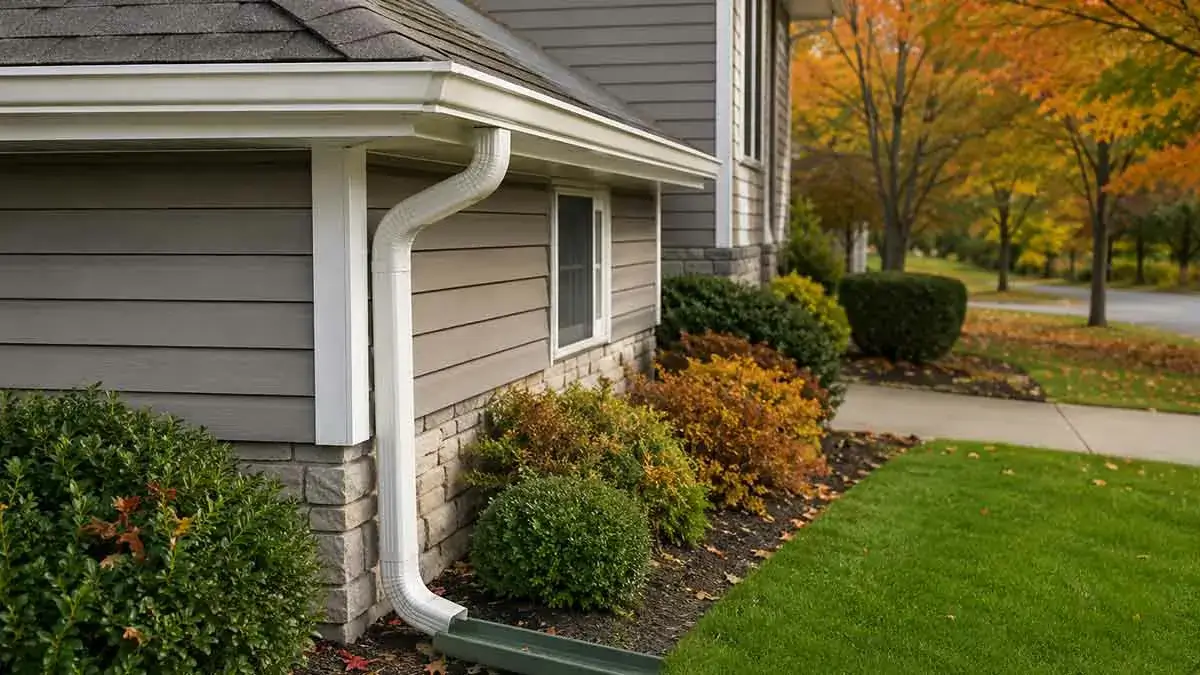
Gutters are an important part of your home’s drainage system. They collect rainwater from the roof and direct it through downspouts and away from the foundation.
When gutters become clogged, damaged, loose, or improperly positioned, water can overflow and contribute to problems around the roof edge, fascia, siding, foundation, landscaping, basement, or crawl space.
Regular gutter maintenance helps keep the drainage system working properly and makes it easier to identify small problems before they become expensive repairs.
This gutter maintenance guide explains how often to clean gutters, what to inspect, how to maintain downspouts, common gutter problems, seasonal maintenance tasks, gutter guards, and when professional service may be necessary.
Table of Contents
Why Gutter Maintenance Is Important
Gutters help control where rainwater goes after it reaches the roof.
Without proper drainage, water can collect along roof edges or near the foundation. Over time, uncontrolled water can contribute to soil erosion, exterior staining, moisture intrusion, and other property problems.
Regular gutter maintenance can help:
- Prevent gutter overflow
- Protect the foundation
- Reduce soil erosion
- Protect siding and exterior walls
- Reduce water exposure around roof edges
- Keep drainage paths clear
- Extend gutter service life
- Identify leaks and damage early
Gutter maintenance becomes particularly important for homes surrounded by trees or located in areas with frequent or heavy rainfall.
How a Gutter System Works
A typical residential gutter system may include:
- Gutters
- Downspouts
- End caps
- Inside and outside corners
- Hangers
- Fasteners
- Fascia
- Downspout extensions
Rainwater flows from the roof into the gutters, then through the downspouts and away from the home’s foundation.
The entire system needs to function properly. A clean gutter can still overflow if a downspout is blocked, the gutter has an incorrect slope, or the drainage extension discharges water in an unsuitable location.
How Often Should You Clean Your Gutters?
There is no single cleaning schedule that works for every home.
The ideal frequency depends on:
- Number and type of nearby trees
- Roofing design
- Local rainfall
- Wind exposure
- Gutter guard installation
- Amount of debris entering the system
Many homes benefit from inspections in spring and fall, with additional checks after major storms or periods of heavy leaf drop.
Homes surrounded by mature trees may need several cleanings each year.
Rather than relying only on a calendar, pay attention to how quickly debris accumulates and whether gutters overflow during rainfall.
Inspect Gutters Before Cleaning
Before removing debris, inspect the entire visible gutter system.
Look for:
- Sagging sections
- Loose fasteners
- Cracks
- Holes
- Rust or corrosion
- Detached sections
- Damaged corners
- Water stains
- Overflow marks
Cleaning a damaged gutter without identifying the underlying problem may leave the drainage system unable to function correctly.
Remove Leaves and Debris
Leaves are one of the most common causes of gutter blockages.
Other debris can include:
- Twigs
- Seeds
- Pine needles
- Dirt
- Roof granules
- Nesting materials
Remove accumulated debris carefully and dispose of it appropriately.
Avoid pushing large amounts of debris into downspouts because this can create or worsen blockages.
If debris is difficult to access safely, professional cleaning may be the better option.
Check the Downspouts
Downspouts are essential because they carry collected water away from the gutter and foundation.
After cleaning the gutters, check that water can flow freely through each downspout.
Possible signs of a blockage include:
- Water backing up in the gutter
- Overflow during rain
- Slow drainage
- Water escaping from joints
- Water pooling around the base of the downspout
Clear blockages using a method appropriate for the system.
If a downspout repeatedly becomes blocked, investigate whether its design, size, or surrounding drainage is contributing to the problem.
Inspect Downspout Extensions
Downspout extensions help move water away from the foundation.
Inspect them for:
- Disconnection
- Cracks
- Blockages
- Collapsed sections
- Poor positioning
Make sure water is not repeatedly discharged directly against the foundation.
The appropriate discharge location depends on the home’s grading, drainage design, local conditions, and applicable requirements.
Check Gutter Slope
Gutters need an appropriate slope so water moves toward the downspouts instead of remaining in the gutter.
Signs of a possible slope problem include:
- Standing water
- Water remaining after rainfall
- Repeated overflow
- Water collecting in low spots
If a gutter consistently holds water after rain, it may require adjustment or professional repair.
Look for Sagging Gutters
Sagging gutters can create low spots where water and debris accumulate.
Common causes include:
- Loose hangers
- Failed fasteners
- Excessive debris
- Damaged fascia
- Aging materials
- Improper installation
If the fascia behind the gutter is deteriorated, simply tightening a hanger may not provide a lasting repair.
Inspect Hangers and Fasteners
Visible gutter hangers and fasteners should be checked periodically.
Look for:
- Loose components
- Corrosion
- Missing fasteners
- Separation from the fascia
- Damaged mounting points
A damaged mounting surface may need to be repaired before the gutter can be securely reattached.
Check the Fascia
Many gutter systems are attached to or supported near the fascia.
Inspect visible fascia for:
- Rot
- Soft areas
- Water stains
- Cracks
- Peeling paint
- Deterioration
Fascia damage can indicate prolonged moisture exposure or drainage problems.
If the fascia is deteriorated, address the underlying water issue rather than treating the visible damage alone.
Inspect Gutter Seams
Seamed gutters can develop leaks at joints and connections.
Look for:
- Dripping joints
- Failed sealant
- Visible gaps
- Corrosion
- Water stains beneath connections
Small leaks may sometimes be repairable, but repeated leakage may indicate that a section or connection needs replacement.
Check for Holes and Cracks
Inspect gutters for openings that allow water to escape before reaching the downspout.
Look for:
- Small holes
- Cracks
- Corrosion
- Deteriorated sections
- Damaged corners
The appropriate repair depends on the gutter material and the extent of the damage.
Extensive corrosion or widespread cracking may make replacement more practical than repeated patching.
Watch for Gutter Overflow
Overflowing gutters are an important warning sign.
Possible causes include:
- Clogged gutters
- Blocked downspouts
- Incorrect gutter slope
- Insufficient drainage capacity
- Concentrated roof runoff
- Damaged or poorly positioned components
If gutters repeatedly overflow after cleaning, do not assume the problem is simply debris.
The drainage system may need to be evaluated as a whole.
Inspect Roof-to-Gutter Drainage
The roof and gutter system should work together to move water efficiently.
Pay particular attention to areas where large amounts of runoff enter the gutter, such as:
- Roof valleys
- Steep roof sections
- Low roof areas
- Concentrated drainage points
If water repeatedly overshoots the gutter or overwhelms one section, the system may require a drainage improvement rather than routine cleaning alone.
How to Clean Gutters Safely
Gutter cleaning frequently involves ladders and elevated work, which can create serious fall hazards.
If cleaning gutters yourself:
- Use a stable ladder on firm, level ground.
- Keep the ladder positioned correctly.
- Avoid excessive sideways reaching.
- Wear suitable gloves and eye protection.
- Keep tools secure.
- Stay away from electrical lines.
- Avoid working during strong winds, heavy rain, or icy conditions.
Do not climb onto the roof simply to clean gutters.
For multi-story, steep, or difficult-to-access homes, professional gutter cleaning is often the safer choice.
Should You Use a Pressure Washer?
Pressure washing can remove stubborn debris, but excessive pressure may damage gutter seams, coatings, fasteners, or nearby materials.
If a pressure washer is used, follow the manufacturer’s recommendations for the gutter material and equipment.
For routine maintenance, manual debris removal followed by controlled rinsing is often sufficient.
Should You Install Gutter Guards?
Gutter guards can reduce the amount of leaves and debris entering a gutter system, but they do not eliminate maintenance.
Depending on the design, gutter guards may still allow:
- Small leaves
- Seeds
- Pine needles
- Dirt
- Roof granules
to accumulate.
Gutter guards should therefore be treated as a maintenance aid rather than a maintenance-free solution.
Inspect both the guards and the gutters periodically.
Types of Gutter Guards
Common gutter guard designs include:
- Mesh screens
- Micro-mesh systems
- Reverse-curve systems
- Brush inserts
- Foam inserts
The appropriate option depends on factors such as:
- Roof design
- Gutter type
- Nearby vegetation
- Local climate
- Type of debris
- Installation requirements
No gutter guard system is equally effective for every property.
Spring Gutter Maintenance
Spring is a useful time to inspect gutters after winter.
Check for:
- Winter damage
- Loose fasteners
- Cracks
- Detached sections
- Accumulated debris
- Blocked downspouts
Clean the system and verify that water can move through the gutters and downspouts properly.
Summer Gutter Maintenance
Summer storms can deliver large amounts of rain in a short period.
After significant storms, inspect accessible areas for:
- Loose gutter sections
- Overflow
- Storm debris
- Damaged downspouts
- Detached extensions
Pay attention to areas where heavy roof runoff repeatedly overwhelms the gutter system.
Fall Gutter Maintenance
Fall is often the busiest season for gutter maintenance because falling leaves can quickly fill the system.
During autumn:
- Inspect gutters frequently.
- Remove accumulated leaves.
- Check downspouts.
- Inspect gutter guards.
- Check fascia and mounting points.
- Watch for overflow during rainfall.
Homes surrounded by deciduous trees may need multiple cleanings throughout the season.
Winter Gutter Maintenance
In cold climates, gutters may be affected by:
- Ice
- Snow
- Frozen water
- Ice dams
Do not climb onto icy roofs or gutters.
Instead, monitor visible drainage problems when weather conditions allow safe inspection.
If ice-related problems occur repeatedly, investigate the broader roof, attic insulation, ventilation, and drainage conditions.
Gutter Maintenance for Heavy Rain
Homes in areas with frequent or intense rainfall may require more than routine cleaning.
If gutters repeatedly overflow despite being clean, consider whether the system can handle the volume and concentration of roof runoff.
Possible improvements may include:
- Larger downspouts
- Additional downspouts
- Improved extensions
- Better grading
- Additional drainage solutions
- Appropriately sized gutter components
Recurring drainage problems may require evaluation by a qualified drainage or gutter professional.
Gutter Maintenance for Homes With Trees
Nearby trees can significantly increase gutter maintenance requirements.
Monitor for:
- Leaves
- Pine needles
- Seeds
- Small branches
- Organic debris
Trim vegetation appropriately when necessary, while maintaining safe clearance from the roof and electrical lines.
Do not remove or heavily trim trees without considering their health, structure, and local requirements.
Signs Your Gutters Need Repair
Your gutters may need repair if you notice:
- Persistent leaks
- Sagging
- Separation
- Rust or corrosion
- Cracks
- Loose sections
- Damaged corners
- Water stains
- Repeated overflow
- Damaged fascia
Address these problems promptly because gutter failures can allow water to affect other parts of the home.
When Should You Replace Gutters?
Repair is not always the best long-term solution.
Gutter replacement may be worth considering when the system has:
- Extensive corrosion
- Widespread cracking
- Severe storm damage
- Significant deformation
- Repeated leaks
- Persistent sagging
- Frequent repair requirements
- Poor overall drainage performance
Consider the gutter system’s age, material, condition, installation quality, and maintenance history before deciding between repair and replacement.
Gutter Maintenance and Foundation Protection
One of the most important reasons to maintain gutters is to control water around the foundation.
When downspouts discharge water too close to the home, repeated saturation can contribute to:
- Soil erosion
- Basement moisture
- Crawl-space moisture
- Poor foundation drainage
- Landscape erosion
Make sure downspouts direct water toward an appropriate drainage area rather than allowing it to collect beside the foundation.
Common Gutter Maintenance Mistakes
Cleaning the Gutters but Ignoring Downspouts
A blocked downspout can still cause the entire system to overflow even when the gutters themselves are clean.
Ignoring Sagging Gutters
Sagging creates low points where water and debris can accumulate.
Discharging Water Next to the Foundation
Poor downspout placement can undermine one of the main purposes of a gutter system.
Relying Completely on Gutter Guards
Gutter guards can reduce debris but still require inspection and maintenance.
Using Excessive Pressure
Aggressive pressure washing may damage some gutter materials and connections.
Cleaning Gutters in Unsafe Conditions
Wet, windy, icy, or elevated work can create serious fall hazards.
Repairing the Gutter Without Checking the Fascia
If the mounting surface is damaged, a new fastener may not provide a reliable repair.
Ignoring Repeated Overflow
Recurring overflow can indicate a capacity, slope, downspout, or roof-runoff problem rather than simple debris accumulation.
DIY vs. Professional Gutter Maintenance
Some homeowners can safely perform basic gutter maintenance when the system is low and easily accessible.
DIY tasks may include:
- Ground-level visual inspections
- Removing accessible debris
- Checking downspout extensions
- Monitoring water flow
- Inspecting visible components
Professional help is recommended for:
- Multi-story homes
- Steep or difficult access
- Major gutter damage
- Fascia repairs
- Complex drainage problems
- Work near electrical lines
- Extensive gutter replacement
Safety should take priority over attempting to save money on elevated work.
How to Create a Gutter Maintenance Schedule
A simple seasonal schedule can help prevent maintenance from being overlooked.
Spring
Inspect for winter damage, remove debris, and check downspouts.
Summer
Inspect the system after major storms and monitor recurring overflow.
Fall
Check gutters frequently as leaves accumulate and clean them as needed.
Winter
In freezing climates, monitor for ice-related problems without performing unsafe elevated work.
Additional inspections should be performed after major storms or when drainage problems become noticeable.
Simple Gutter Maintenance Checklist
Use this checklist during routine gutter maintenance:
- Inspect the gutters
- Remove leaves and debris
- Check downspouts
- Clear blockages
- Inspect downspout extensions
- Check gutter slope
- Look for sagging
- Inspect hangers and fasteners
- Check the fascia
- Inspect seams
- Look for holes and cracks
- Monitor overflow
- Check roof-to-gutter drainage
- Inspect gutter guards
- Monitor drainage near the foundation
- Inspect after severe storms
- Perform seasonal maintenance
- Repair damaged components
- Replace severely deteriorated sections when necessary
- Keep maintenance records
Final Thoughts
Gutter maintenance is a simple but important part of protecting your home from water damage. A properly maintained system helps collect roof runoff, move water through downspouts, and direct it away from the foundation.
Regularly remove debris, inspect gutters and downspouts, check for sagging and leaks, and make sure water is discharged in an appropriate location. Homes surrounded by trees or exposed to heavy rainfall may require more frequent attention.
Do not focus only on cleaning. Recurring overflow, standing water, damaged fascia, sagging gutters, and repeated leaks can indicate underlying problems that require repair or a broader drainage assessment.
Most importantly, prioritize safety. If gutters are high, difficult to access, near electrical lines, or require extensive repairs, professional gutter maintenance may be the safest and most practical option.