
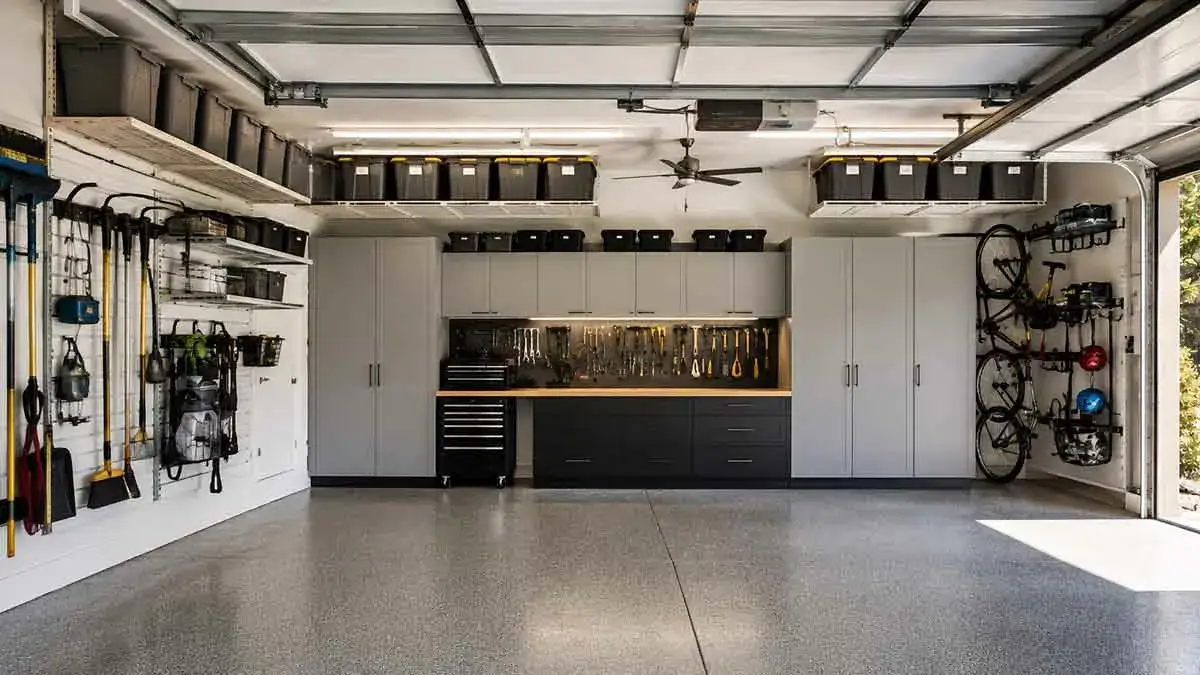
A well-organized garage can make everyday life easier by reducing clutter, improving storage capacity, and making tools, equipment, and household items easier to find. Whether your garage is mainly used for parking, storage, hobbies, or home projects, a thoughtful organization system can help you make better use of the available space.
Garage organization does not always require an expensive renovation or custom storage system. Decluttering, creating dedicated zones, using vertical space, and choosing the right combination of shelves, cabinets, hooks, and storage bins can make a significant difference.
The key is to organize the garage around how you actually use it. Frequently used items should remain easy to access, while seasonal and rarely used belongings can be stored in less accessible areas.
This guide explains practical garage organization ideas for small and large garages, including tool storage, wall and ceiling systems, sports equipment, gardening supplies, seasonal items, workspaces, and budget-friendly solutions.
Table of Contents
Why Organize Your Garage?
An organized garage is easier to use, clean, and maintain.
A good organization system can help:
- Reduce clutter
- Increase usable storage capacity
- Make tools and equipment easier to find
- Preserve clear parking areas
- Improve safety
- Create room for hobbies and projects
- Make cleaning easier
- Reduce wasted vertical space
- Protect stored belongings
- Improve the overall appearance of the garage
The objective should not simply be to fit more belongings into the garage. The goal is to create a system that makes everyday activities more convenient.
Start by Decluttering the Garage
Before installing shelves or buying storage products, remove items that no longer serve a purpose.
Sort belongings into categories such as:
- Keep
- Donate
- Sell
- Recycle
- Dispose
Be realistic about items that have not been used for years. If something has little practical or sentimental value, storing it indefinitely may simply consume space that could be used more effectively.
Decluttering first can significantly reduce the amount of storage you need.
Sort Items Into Categories
Once unnecessary belongings have been removed, group the remaining items by purpose.
Common garage categories include:
- Hand tools
- Power tools
- Gardening equipment
- Automotive supplies
- Sports equipment
- Camping gear
- Seasonal decorations
- Cleaning supplies
- Household storage
- Outdoor equipment
Keeping similar items together makes it easier to create storage zones and return belongings to the correct location.
Create Garage Storage Zones
Dividing the garage into dedicated zones is one of the most effective garage organization ideas.
Depending on your needs, you might create areas for:
- Tools
- Gardening
- Automotive supplies
- Sports equipment
- Seasonal storage
- Household items
- Workshop activities
- Outdoor equipment
For example, garden tools can be stored along one wall while automotive supplies remain near the parking area.
A zoning system reduces random storage and makes it easier for everyone in the household to know where things belong.
Use Vertical Wall Storage
Garage walls often provide valuable storage space that is left unused.
Vertical storage options include:
- Shelving
- Wall-mounted cabinets
- Pegboards
- Slatwall panels
- Hooks
- Tool racks
- Sports equipment organizers
Moving suitable items off the floor can make the garage feel larger while preserving space for vehicles and walking paths.
Store frequently used items at accessible heights and place less frequently used belongings higher up.
Install Garage Shelving
Shelving is a simple way to increase storage capacity without taking over the entire garage.
Common options include:
- Freestanding shelving
- Wall-mounted shelves
- Heavy-duty metal racks
- Adjustable shelves
- Modular storage systems
Select shelves based on the size and weight of the items you intend to store.
Heavy items are generally better placed on lower shelves where possible. Shelving should also be securely installed or positioned according to the manufacturer’s instructions.
Add Garage Cabinets
Garage cabinets provide enclosed storage and can make the space appear cleaner and less cluttered.
They are useful for storing:
- Tools
- Hardware
- Cleaning supplies
- Household products
- Small equipment
- Workshop materials
Tall cabinets make efficient use of vertical space, while wall-mounted cabinets can preserve floor area.
Position cabinets carefully so they do not interfere with vehicles, doors, electrical panels, water heaters, or other equipment that requires access.
Use a Pegboard for Tools
A pegboard can provide flexible storage for frequently used hand tools.
It can hold items such as:
- Hammers
- Screwdrivers
- Pliers
- Wrenches
- Measuring tools
- Utility tools
- Small accessories
Arrange tools according to how frequently you use them. Keeping common tools within easy reach can save time during repairs and projects.
A visible pegboard can also make it easier to notice when a tool has not been returned.
Consider a Slatwall Storage System
Slatwall systems use horizontal panels with hooks, baskets, shelves, and other accessories that can be repositioned.
They can be useful for storing:
- Bicycles
- Garden tools
- Sports equipment
- Ladders
- Outdoor equipment
- Household items
Their flexibility makes them particularly useful when storage needs change over time.
Before installing a system, verify its load capacity and make sure it is appropriate for the garage wall structure.
Use Ceiling Storage
The ceiling can provide additional storage for items that are not used regularly.
Suitable items may include:
- Seasonal decorations
- Camping equipment
- Holiday supplies
- Lightweight storage bins
- Other infrequently used belongings
Use storage systems specifically designed for overhead applications and follow their load and installation requirements.
Keep ceiling storage clear of:
- Garage door movement
- Opener mechanisms
- Lighting fixtures
- Vehicles
- Other equipment
The goal is to use overhead space without creating clearance or safety problems.
Label Storage Bins
Labels make it much easier to find stored belongings.
Useful categories might include:
- Holiday decorations
- Camping
- Gardening
- Tools
- Automotive
- Sports
- Household supplies
Transparent containers can also make their contents easier to identify.
For opaque bins, clear labels are particularly valuable because they prevent unnecessary searching through multiple containers.
Choose Consistent Storage Containers
Using containers of similar sizes can make shelves easier to organize and maximize available space.
Stackable bins are particularly useful when you want to use vertical shelf space efficiently.
Consider:
- Container size
- Weight capacity
- Durability
- Moisture resistance
- Stackability
- Frequency of access
Keep frequently used containers at accessible heights and reserve higher shelves for items that are rarely needed.
Organize Small Hardware
Small hardware can quickly become difficult to manage.
Use compartment organizers or small drawers for:
- Screws
- Nails
- Bolts
- Nuts
- Washers
- Wall anchors
- Small repair parts
Separate different sizes and types instead of storing everything in one container.
Labeling each compartment can make small parts much faster to locate.
Create a Dedicated Tool Storage Area
Tools should ideally have a clearly defined location rather than being distributed throughout the garage.
A dedicated tool area might include:
- Pegboard
- Tool chest
- Cabinets
- Shelves
- Magnetic holders
- Small-parts organizers
Keep frequently used hand tools within easy reach while storing specialized or rarely used tools in drawers or cabinets.
A dedicated tool zone also makes it easier to clean up after projects.
Organize Power Tools
Power tools can consume considerable storage space.
Possible storage solutions include:
- Shelves
- Cabinets
- Tool cases
- Drawers
- Wall-mounted holders
Keep accessories, batteries, chargers, and compatible attachments together when practical.
Follow manufacturer recommendations for battery storage and charging, particularly for rechargeable tool batteries.
Create a Garden Tool Wall
Long-handled gardening tools can quickly create floor clutter.
Use suitable wall-mounted holders or racks for:
- Shovels
- Rakes
- Brooms
- Hoes
- Garden forks
- Pruning tools
Vertical storage keeps these items organized and reduces the chance of creating trip hazards.
Place sharp tools where they cannot easily fall or interfere with normal movement through the garage.
Organize Sports Equipment
Sports equipment can occupy a large amount of garage space when it is not stored systematically.
Create dedicated storage for:
- Bicycles
- Balls
- Golf equipment
- Tennis gear
- Skis
- Scooters
- Helmets
- Outdoor games
Wall racks, baskets, shelves, and specialized organizers can help keep equipment off the floor.
Create a Bicycle Storage Area
Bicycles can be stored vertically or horizontally depending on the garage layout.
Options include:
- Wall hooks
- Floor racks
- Vertical bike stands
- Ceiling storage systems
Choose a storage solution that supports the bicycles securely and allows them to be removed without hitting vehicles or nearby objects.
Leave enough clearance for handlebars, pedals, and other components.
Organize Seasonal Decorations
Seasonal decorations may only be used a few times each year, making them good candidates for less accessible storage.
Keep decorations in labeled containers and group related items together.
For example, holiday decorations can be stored in clearly labeled bins on higher shelves or appropriate overhead storage.
Avoid placing very heavy containers overhead unless the storage system is specifically designed to support them.
Create an Automotive Storage Zone
If the garage is used for vehicle maintenance or cleaning, keep automotive supplies in one dedicated area.
This zone may include:
- Car cleaning products
- Vehicle tools
- Tire equipment
- Emergency supplies
- Replacement accessories
- Maintenance products
Store products according to their labels and manufacturer safety instructions.
Potentially hazardous materials should be stored appropriately and kept away from ignition sources and incompatible products.
Store Ladders Safely
Ladders can consume valuable floor space when stored horizontally.
Wall-mounted or ceiling-mounted systems can help keep them organized.
Before installing ladder storage, verify that the mounting system can support the ladder’s weight and that the ladder can be removed safely.
Do not position ladders where they interfere with vehicles, garage doors, electrical equipment, or walking paths.
Use the Garage Door Area Carefully
The area around the garage door requires clear operating space.
Do not install storage where it could interfere with:
- Door movement
- Tracks
- Safety sensors
- Opener mechanisms
- Vehicle clearance
Maintaining this area properly is essential for safe and reliable garage door operation.
Keep the Floor Clear
A clear garage floor improves both usability and safety.
Whenever practical, move suitable items from the floor to:
- Shelves
- Cabinets
- Wall racks
- Hooks
- Ceiling storage
A clear floor makes it easier to:
- Park vehicles
- Sweep and clean
- Move equipment
- Complete projects
- Access stored belongings
However, not every item should be lifted off the floor. Heavy equipment and frequently moved objects may be better suited to stable floor-level storage.
Create a Garage Workbench
If the garage is used for DIY projects, a dedicated workbench can create a more efficient workspace.
A useful workbench may include:
- Durable work surface
- Drawers
- Shelves
- Tool storage
- Pegboard
- Task lighting
Position the workbench where it does not interfere with vehicle parking or major walking paths.
Organize the Workbench
A workbench should remain a workspace rather than becoming another general storage surface.
Use:
- Small drawers
- Tool holders
- Magnetic strips
- Containers
- Wall-mounted storage
Keep the tools and materials you use most often close to the workbench.
Return items to their designated locations after completing a project so the workspace remains usable.
Use the Space Above Work Areas
The wall above a workbench can provide valuable storage.
Suitable options include:
- Pegboards
- Shelves
- Cabinets
- Tool organizers
Store commonly used items within comfortable reach while avoiding excessive clutter above the work surface.
Leave enough clearance so stored items do not interfere with projects.
Add a Mudroom-Style Entry Zone
If the garage connects directly to the house, the entry area can serve as a practical transition zone.
Consider adding:
- Hooks
- Shoe storage
- Bench seating
- Shelves
- Baskets
- Coat storage
This can help keep shoes, bags, coats, and outdoor equipment organized before they enter the main living areas.
Use Hooks for Everyday Items
Hooks are inexpensive and useful for many types of garage storage.
They can hold:
- Jackets
- Bags
- Garden hoses
- Extension cords
- Small tools
- Outdoor equipment
- Frequently used accessories
Choose hooks rated for the weight of the items being stored and install them securely.
Organize Extension Cords and Hoses
Cords and hoses can quickly become tangled when left on the floor.
Use:
- Wall hooks
- Hose hangers
- Cord organizers
- Reels
- Dedicated storage bins
Coil cords and hoses neatly before storing them.
Keeping them in a designated location also reduces the chance of tripping over them.
Use Color Coding for Storage
Color coding can make a large garage easier to navigate.
For example, you could assign different colors to:
- Gardening
- Automotive
- Tools
- Seasonal storage
- Sports equipment
The exact colors are not important. Consistency is what makes the system useful.
Use the same color labels on containers, shelves, or storage zones where practical.
Make Frequently Used Items Easy to Reach
Storage should reflect frequency of use.
Items used every week should generally be placed:
- At comfortable heights
- Near the garage entrance
- Near the workbench
- On easily accessible shelves
Seasonal or rarely used items can be placed higher or farther toward the back.
This simple principle can make an organized garage much more convenient.
Use Clear Storage Labels and Inventory
Larger garages may benefit from a basic inventory system.
Record where important or rarely used items are stored, particularly when multiple storage zones are involved.
An inventory can be useful for:
- Seasonal equipment
- Camping supplies
- Replacement parts
- Specialty tools
- Household supplies
The goal is not to create unnecessary paperwork but to reduce the time spent searching for belongings.
Make a Small Garage Feel More Organized
Small garages require careful use of available space.
Prioritize:
- Wall storage
- Vertical shelving
- Narrow cabinets
- Hooks
- Ceiling storage
- Foldable equipment
- Multi-purpose storage
Avoid filling the limited floor area with large storage units unless they provide a clear benefit.
Keeping parking and walking areas open can make a small garage feel significantly more functional.
Organize a Two-Car Garage
A two-car garage can provide substantial storage capacity, but without clear zones it can quickly become cluttered.
Consider dividing the space into areas such as:
- Tool storage
- Gardening
- Seasonal items
- Sports equipment
- Automotive supplies
- Workshop space
Keep the vehicle parking areas clearly defined.
Wall and ceiling storage can provide additional capacity without sacrificing the central floor area needed for vehicles.
Garage Organization Ideas on a Budget
An organized garage does not require an expensive custom system.
Affordable options include:
- Decluttering before buying storage
- Installing hooks
- Using labeled bins
- Adding pegboards
- Building simple shelves
- Repurposing suitable containers
- Rearranging existing shelving
- Creating dedicated tool zones
Start by solving the biggest organization problems rather than buying storage products simply because they are available.
In many garages, removing unnecessary belongings creates more usable space than adding another cabinet or shelving unit.
Garage Organization Costs
Garage organization costs depend on the size of the garage and the storage systems selected.
A basic project may require only:
- Storage bins
- Labels
- Hooks
- Shelving
- Small organizers
More extensive systems may include:
- Custom cabinets
- Slatwall panels
- Heavy-duty racks
- Overhead storage
- Workbenches
- Specialized equipment racks
Before purchasing products, measure available walls, ceiling height, doors, vehicle clearance, and walking paths.
A storage system that does not fit the garage properly can create new organization problems.
DIY Garage Organization vs. Professional Installation
Many garage organization projects are suitable for DIY installation.
DIY-friendly projects may include:
- Decluttering
- Labeling
- Organizing bins
- Installing basic hooks
- Setting up freestanding shelves
- Creating simple tool storage
Professional installation may be useful for:
- Custom cabinetry
- Heavy overhead storage
- Large wall systems
- Structural modifications
- Significant electrical changes
Any storage system carrying substantial weight should be installed according to manufacturer requirements and appropriate structural considerations.
Common Garage Organization Mistakes
Buying Storage Before Decluttering
Adding storage to a garage full of unnecessary belongings often increases clutter instead of solving it.
Ignoring Vertical Space
Walls and ceilings can provide significant storage capacity without consuming valuable floor space.
Storing Everything on the Floor
Excessive floor storage reduces parking and walking space and makes cleaning more difficult.
Overloading Shelves
Always follow the manufacturer’s load limits and installation instructions.
Blocking Important Equipment
Do not block electrical panels, water heaters, ventilation openings, garage door mechanisms, or other equipment requiring regular access.
Creating an Overly Complicated System
An organization system should be easy for everyone in the household to understand and maintain.
Ignoring Vehicle Clearance
Storage should not interfere with doors, mirrors, trunks, hoods, or normal vehicle movement.
How to Keep Your Garage Organized
Creating an organization system is only the first step. Maintaining it is what keeps the garage functional.
Adopt simple habits such as:
- Return tools after use
- Keep similar items together
- Put new belongings in their designated zones
- Remove unwanted items regularly
- Review seasonal storage
- Keep major walking paths clear
- Replace damaged storage containers
- Update labels when the system changes
A short cleanup after each project can prevent clutter from accumulating again.
How to Plan a Garage Organization Project
A practical garage organization process is:
- Inspect the current garage.
- Remove unnecessary belongings.
- Group the remaining items by category.
- Identify how the garage is actually used.
- Measure walls, ceilings, doors, and available floor space.
- Create dedicated storage zones.
- Decide which items should be stored vertically.
- Choose shelves, cabinets, hooks, bins, or specialized systems.
- Install storage securely.
- Label containers and storage areas.
- Place frequently used items in accessible locations.
- Store rarely used items in less accessible areas.
- Check that vehicles, doors, equipment, and walking paths remain unobstructed.
- Review the organization system periodically.
Planning the layout before purchasing storage products can reduce unnecessary spending and produce a more practical result.
Final Thoughts
Effective garage organization is about making the available space easier to use, not simply finding places to put more belongings.
Start with decluttering and categorizing everything you plan to keep. Then create dedicated zones and use vertical walls, shelving, cabinets, hooks, pegboards, and appropriate ceiling storage to maximize the available space.
Keep frequently used items accessible, store seasonal belongings in less convenient locations, and maintain clear areas for vehicles, walking, and garage equipment.
Whether you have a small single-car garage or a large two-car space, a simple and consistent organization system can transform a cluttered garage into a cleaner, safer, and much more functional part of the home.