
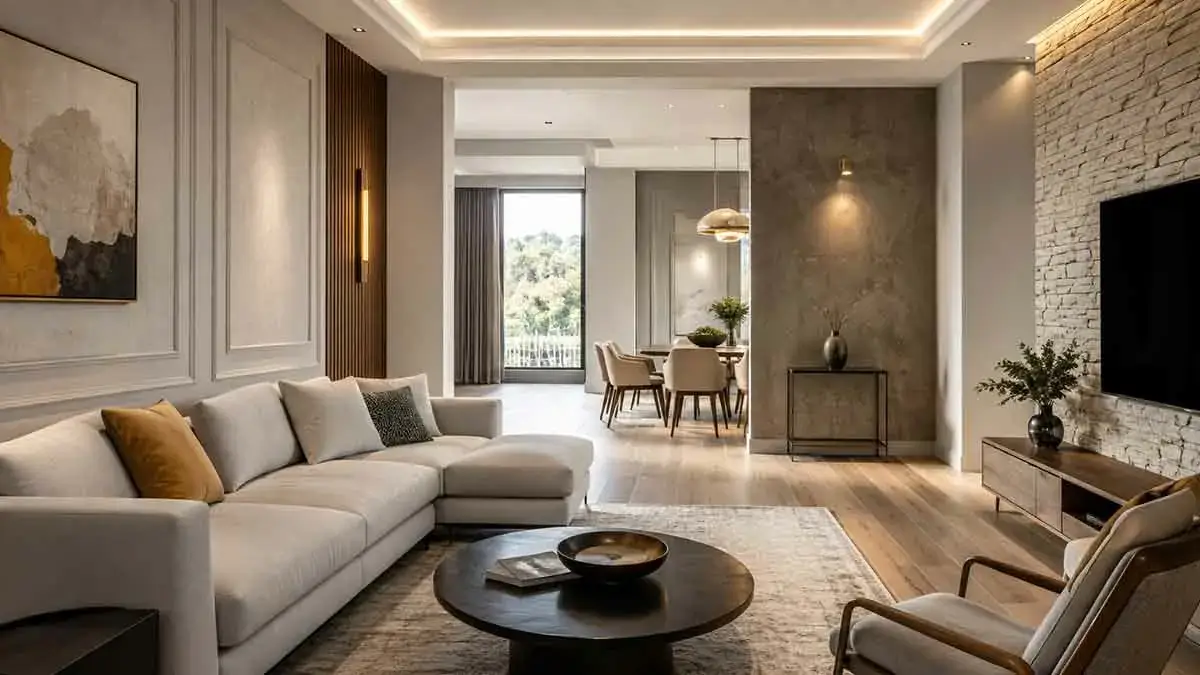
Interior wall finishes have a major impact on the appearance, comfort, durability, and character of a home. Walls occupy a large portion of every room, so changing their finish can transform a space without requiring a complete renovation.
Paint remains the most common option, but homeowners can also choose from wallpaper, decorative plaster, wood paneling, tile, stone veneer, brick, acoustic panels, cork, wall molding, and other specialty finishes. Each material offers different advantages in terms of appearance, maintenance, durability, moisture resistance, installation, and cost.
The best interior wall finish depends on the room, the condition of the existing walls, the level of moisture and wear, your preferred design style, and your budget.
This guide explains the most common interior wall finishes, where they work best, their advantages and limitations, and how to choose the right finish for each area of your home.
Table of Contents
What Are Interior Wall Finishes?
An interior wall finish is the final material, coating, or decorative treatment applied to an interior wall surface.
Common examples include:
- Paint
- Wallpaper
- Decorative plaster
- Wood paneling
- Wall tile
- Stone veneer
- Brick veneer
- Wainscoting
- Wall molding
- Acoustic panels
- Cork panels
- Textured coatings
Some wall finishes are primarily decorative, while others provide additional benefits such as moisture resistance, impact protection, sound absorption, or easier cleaning.
The appropriate finish depends on the purpose and conditions of the room.
Why Interior Wall Finishes Matter
A wall finish can influence much more than color.
The right treatment can:
- Refresh an outdated room
- Add architectural character
- Protect wall surfaces
- Introduce texture and visual depth
- Improve acoustic comfort
- Make a room feel brighter or darker
- Create an accent feature
- Make walls easier to clean
- Complement flooring, doors, trim, and furniture
Wall finishes can also be an efficient way to update an interior because many treatments can be installed without changing the underlying wall structure.
How to Choose an Interior Wall Finish
Start with the practical requirements of the room before choosing a color or pattern.
Consider:
- Room function
- Moisture exposure
- Cleaning requirements
- Expected traffic and contact
- Wall condition
- Desired appearance
- Installation complexity
- Maintenance requirements
- Material lifespan
- Total project budget
A decorative finish that works well in a formal dining room may not be appropriate for a bathroom or busy entryway.
Paint
Paint is the most versatile interior wall finish and is suitable for most rooms.
It is available in a wide range of colors and sheen levels, making it easy to coordinate with furniture, flooring, cabinetry, doors, and trim.
Advantages of Paint
- Relatively affordable
- Easy to update
- Available in many colors
- Multiple sheen options
- Suitable for most interior walls
- Simple routine maintenance
Disadvantages of Paint
- Can be marked or scratched
- May require periodic repainting
- Does not conceal major wall defects
- Higher-sheen finishes can emphasize imperfections
Paint is often the best choice when affordability, flexibility, and easy future changes are important.
Flat Paint
Flat paint has very little sheen and produces a non-reflective appearance.
It can help reduce the visual prominence of minor surface imperfections and is often used on ceilings and low-contact areas.
Its main limitation is that some flat finishes are less washable than higher-sheen products.
Matte Paint
Matte paint provides a soft, low-reflective appearance.
It can work particularly well in:
- Bedrooms
- Living rooms
- Dining rooms
- Feature walls
For areas that require regular cleaning, choose a washable matte product designed for that purpose.
Eggshell Paint
Eggshell provides a subtle sheen and is a popular choice for general interior walls.
It offers a useful balance between appearance and cleanability and can work well in:
- Living rooms
- Bedrooms
- Dining rooms
- Hallways
Satin Paint
Satin has more sheen than eggshell and is generally easier to clean.
It can be useful in:
- Kitchens
- Bathrooms
- Hallways
- Children’s rooms
- Higher-use areas
Because it reflects more light, satin paint can make wall imperfections more noticeable.
Semi-Gloss Paint
Semi-gloss provides a noticeably reflective surface and is generally easier to clean and more resistant to moisture than lower-sheen finishes.
It is commonly used for:
- Trim
- Doors
- Moldings
- Certain kitchen surfaces
- Certain bathroom applications
It may be too reflective for large wall areas if a soft appearance is desired.
High-Gloss Paint
High-gloss paint creates a highly reflective finish and can be used as a decorative feature.
It works particularly well for:
- Doors
- Trim
- Built-in features
- Small accent areas
Careful surface preparation is essential because gloss finishes tend to highlight imperfections.
Wallpaper
Wallpaper can introduce patterns, textures, and colors that are difficult to achieve with paint alone.
Options range from subtle neutral designs to highly decorative feature walls.
Advantages of Wallpaper
- Extensive design variety
- Strong visual impact
- Can add texture
- Some products can conceal minor surface irregularities
- Available in removable formats
Disadvantages
- Installation requires careful preparation
- Pattern alignment can be challenging
- Removing old wallpaper may be difficult
- Unsuitable products can be damaged by moisture
Always select wallpaper according to the room’s environmental conditions.
Vinyl Wallpaper
Vinyl wallpaper has a durable surface and is often easier to clean than some traditional wallcoverings.
It can be useful in:
- Kitchens
- Hallways
- Children’s rooms
- Higher-contact areas
Always verify the manufacturer’s recommendations before installing it in humid or wet locations.
Peel-and-Stick Wallpaper
Peel-and-stick wallpaper can provide a relatively simple way to change a room without committing to permanent wallpaper installation.
It can be useful for:
- Accent walls
- Temporary renovations
- Rental properties
- Small decorating projects
The wall surface must be clean, smooth, and compatible with the adhesive for reliable results.
Textured Wallpaper
Textured wallpaper adds dimensional interest and can reproduce the appearance of materials such as:
- Fabric
- Grasscloth
- Plaster
- Woven materials
- Other natural textures
It can be particularly effective when used on a single accent wall.
Grasscloth Wallcovering
Grasscloth is made from natural plant fibers and creates a warm, organic appearance.
It can add texture to:
- Living rooms
- Bedrooms
- Dining rooms
- Home offices
Because natural fibers can be more delicate than synthetic wallcoverings, cleaning and moisture exposure should be considered carefully.
Plaster Wall Finishes
Decorative plaster can create smooth, layered, or textured wall surfaces.
Common types include:
- Venetian plaster
- Lime plaster
- Polished plaster
- Textured plaster
Advantages of Plaster
- Distinctive appearance
- Can add depth and texture
- Works with traditional and modern interiors
- Can create a high-end architectural effect
Disadvantages
- Application can require specialized skill
- Repairs may be more difficult
- Some systems cost considerably more than paint
- Proper substrate preparation is important
Venetian Plaster
Venetian plaster is a decorative finish that can create a polished, layered appearance with subtle variations.
It can work particularly well on:
- Feature walls
- Entryways
- Dining rooms
- Living rooms
Its final appearance depends heavily on the application technique and finishing process.
Lime Plaster
Lime plaster is a traditional finish known for its natural appearance and subtle variations in texture and color.
It can complement:
- Historic interiors
- Rustic homes
- Mediterranean-inspired designs
- Natural-material interiors
Application and maintenance requirements vary according to the specific lime-plaster system.
Textured Wall Finishes
Textured finishes create a three-dimensional surface and can reduce the visual prominence of some minor wall irregularities.
Common textures include:
- Orange peel
- Knockdown
- Sand texture
- Hand-applied texture
- Decorative plaster
Consider the long-term design carefully because removing a textured finish can require substantial wall preparation.
Wood Wall Paneling
Wood paneling adds warmth, texture, and architectural character.
Common options include:
- Shiplap
- Tongue-and-groove boards
- Vertical slats
- Veneer panels
- Reclaimed wood
- Decorative wood panels
Advantages
- Adds warmth and texture
- Creates a strong visual feature
- Can complement many design styles
- Can provide architectural depth
Disadvantages
- Usually costs more than basic paint
- Requires accurate installation
- Natural wood can respond to humidity
- Extensive paneling may make a small room feel visually crowded
Shiplap Wall Paneling
Shiplap consists of horizontal boards with overlapping joints.
It is often associated with farmhouse and coastal interiors, but it can also work in contemporary spaces when paired with simple detailing and appropriate colors.
Use it selectively if you want architectural interest without overwhelming the room.
Vertical Wood Slat Walls
Vertical wood slat walls are a modern wall treatment that can add rhythm and texture.
They can:
- Emphasize ceiling height
- Create a focal point
- Visually divide open spaces
- Add warmth to contemporary interiors
- Be combined with acoustic backing materials
Wainscoting
Wainscoting covers part of a wall with panels, boards, or molding.
Common styles include:
- Raised panels
- Flat panels
- Beadboard
- Board and batten
It can protect lower wall areas while adding architectural detail.
Board and Batten
Board and batten uses vertical boards or strips to create a structured geometric pattern.
It can work well in:
- Bedrooms
- Hallways
- Dining rooms
- Entryways
The design can range from simple and modern to highly decorative.
Beadboard
Beadboard consists of narrow panels with repeating vertical grooves.
It can add traditional character to:
- Bathrooms
- Mudrooms
- Kitchens
- Bedrooms
- Hallways
For damp environments, use a product specifically designed for those conditions.
Wall Tile
Wall tile provides a durable surface that can be relatively easy to clean.
It is commonly used for:
- Bathroom walls
- Shower walls
- Kitchen backsplashes
- Laundry areas
- Decorative features
Common materials include ceramic, porcelain, glass, and natural stone.
Ceramic Wall Tile
Ceramic wall tile is available in many shapes, colors, patterns, and sizes.
It is a versatile choice for:
- Kitchens
- Bathrooms
- Backsplashes
- Decorative walls
Proper substrate preparation and installation are important for long-term performance.
Porcelain Wall Tile
Porcelain is a dense ceramic material with low water absorption.
It is particularly useful where moisture resistance and durability are important.
Porcelain can also reproduce the appearance of:
- Stone
- Marble
- Concrete
- Wood
Glass Wall Tile
Glass tile can reflect light and create a clean, contemporary appearance.
It is commonly used for:
- Kitchen backsplashes
- Shower features
- Decorative strips
- Accent walls
The type of glass and installation system should match the intended application.
Natural Stone Wall Finishes
Natural stone creates a distinctive surface with natural variations in color and texture.
Common options include:
- Marble
- Slate
- Limestone
- Travertine
- Granite
Before choosing stone, consider its weight, porosity, sealing requirements, cleaning needs, and compatibility with the wall substrate.
Stone Veneer
Interior stone veneer can provide the appearance of masonry without the same depth as full-depth stone construction.
It can be used for:
- Fireplace walls
- Living room features
- Entryways
- Accent walls
Installation requirements vary by product, so follow the manufacturer’s substrate and installation specifications.
Brick Wall Finishes
Brick veneer and thin brick products can create:
- Industrial interiors
- Rustic spaces
- Traditional designs
- Fireplace features
Brick is visually strong, so it often works best when used selectively rather than covering every wall.
Concrete-Look Wall Finishes
Concrete-look finishes can create a modern industrial appearance without necessarily using exposed structural concrete.
Possible approaches include:
- Decorative plaster
- Microcement
- Concrete panels
- Paint techniques
- Textured coatings
The best method depends on the desired appearance, durability, and installation requirements.
Microcement Wall Finishes
Microcement is a thin cement-based decorative coating that can create a continuous visual surface.
Depending on the product and installation system, it can be used on:
- Bathroom walls
- Kitchen surfaces
- Living areas
- Feature walls
Proper substrate preparation, application, and sealing are important, particularly in moisture-prone locations.
Fabric Wall Coverings
Fabric wallcoverings can introduce softness, texture, and acoustic benefits.
They may work well in:
- Bedrooms
- Libraries
- Home offices
- Formal living rooms
They generally require more careful cleaning than painted walls.
Cork Wall Panels
Cork provides a natural appearance and a resilient surface with some acoustic benefits.
It can work well in:
- Home offices
- Study areas
- Bedrooms
- Creative spaces
Cork is available in different colors, textures, and panel designs.
Acoustic Wall Panels
Acoustic wall panels are designed primarily to reduce sound reflections within a room.
They may use materials such as:
- Felt
- Fabric
- Wood
- Mineral-based products
- Specialized acoustic materials
They can be useful in:
- Home offices
- Media rooms
- Music rooms
- Open-plan spaces
Acoustic panels should be selected according to the actual acoustic problem rather than appearance alone.
Decorative Wall Molding
Decorative molding can add architectural detail without covering the entire wall.
Popular treatments include:
- Picture-frame molding
- Chair rails
- Decorative trim
- Panel molding
- Crown molding
Molding can be painted the same color as the wall for a subtle effect or contrasted for greater visual definition.
Accent Walls
An accent wall uses a different color, material, texture, or pattern to create a focal point.
Possible treatments include:
- Bold paint
- Wallpaper
- Wood paneling
- Stone
- Brick
- Decorative plaster
- Tile
- Slat walls
Choose an accent wall that naturally supports the room’s furniture arrangement, lighting, or architectural features.
Interior Wall Finishes by Room
Different rooms require different combinations of appearance and performance.
Living Room Wall Finishes
Living rooms offer considerable flexibility because they generally have fewer moisture concerns.
Popular choices include:
- Paint
- Wallpaper
- Wood paneling
- Decorative plaster
- Stone
- Brick
- Wall molding
The finish should coordinate with flooring, furniture, lighting, and architectural details.
Bedroom Wall Finishes
Bedrooms often benefit from finishes that create a calm and comfortable atmosphere.
Good options include:
- Matte paint
- Wallpaper
- Wood paneling
- Fabric wallcoverings
- Cork
- Decorative molding
Avoid excessive visual complexity if you want the room to feel restful.
Kitchen Wall Finishes
Kitchen walls should be easy to clean and suitable for exposure to cooking activity, humidity, and occasional splashes.
Common choices include:
- Washable paint
- Ceramic tile
- Porcelain tile
- Glass tile
- Appropriate wall panels
- Suitable wallpaper in lower-risk areas
Areas immediately behind sinks, cooktops, and other high-exposure zones may require more durable materials.
Bathroom Wall Finishes
Bathrooms require careful attention to moisture.
Common options include:
- Porcelain tile
- Ceramic tile
- Glass tile
- Waterproof wall systems
- Moisture-appropriate decorative finishes
Shower and wet areas require an appropriate waterproofing system beneath or behind the finished surface. A decorative finish should never substitute for proper waterproofing.
Home Office Wall Finishes
A home office can combine appearance with acoustic performance.
Options include:
- Paint
- Wallpaper
- Wood paneling
- Cork
- Acoustic panels
- Decorative molding
If video calls or concentration are important, consider how the wall treatment affects sound reflection and background appearance.
Hallway Wall Finishes
Hallways experience frequent contact, so durability and cleanability are important.
Suitable options include:
- Washable paint
- Durable wallpaper
- Wainscoting
- Board and batten
- Wall molding
- Wood paneling
A protective lower-wall treatment can help reduce visible scuffs.
Entryway Wall Finishes
Entryways are exposed to coats, bags, shoes, dirt, and frequent contact.
Practical choices include:
- Washable paint
- Wainscoting
- Board and batten
- Durable wallpaper
- Wood paneling
A durable finish on the lower portion of the wall can be particularly useful.
Dining Room Wall Finishes
Dining rooms provide an opportunity for more decorative treatments.
Consider:
- Wallpaper
- Venetian plaster
- Wainscoting
- Decorative molding
- Wood paneling
- Accent paint
Choose a finish that works with the dining table, lighting, flooring, and surrounding rooms.
Children’s Room Wall Finishes
Children’s rooms benefit from durable and washable surfaces.
Practical choices include:
- Washable paint
- Durable wallpaper
- Wainscoting
- Easy-to-clean wall panels
For high-contact areas, prioritize durability and cleanability over delicate decorative finishes.
Laundry Room Wall Finishes
Laundry rooms can experience humidity and occasional water exposure.
Suitable options may include:
- Moisture-appropriate paint
- Tile
- Washable wall panels
Adequate ventilation and moisture control are also important.
Basement Wall Finishes
Basements require special attention to moisture before any decorative treatment is installed.
Check for:
- Water intrusion
- Condensation
- Excess humidity
- Foundation moisture
- Plumbing leaks
Potential finishes include:
- Paint
- Tile
- Appropriate wall panels
- Basement-specific finishing systems
Never use a wall finish to conceal an unresolved moisture problem.
How Wall Finishes Affect Room Size
Wall color, pattern, and material can change how a room is perceived.
Light Colors
Light wall finishes can make a room appear brighter and more open.
Dark Colors
Dark finishes can create a more intimate and dramatic atmosphere.
Vertical Patterns
Vertical lines and slats can emphasize ceiling height.
Horizontal Patterns
Horizontal patterns can visually emphasize wall width.
Large Patterns
Large wallpaper patterns or strong textures can create impact but may overwhelm a small room.
How Wall Texture Affects a Room
Texture adds visual depth and changes how light interacts with the wall.
Smooth surfaces generally create a cleaner, more streamlined appearance. Textured finishes can make a room feel warmer and more layered.
The key is balance. Combining too many strong textures can make the interior feel visually busy.
How to Combine Different Wall Finishes
Different wall finishes can be combined successfully when they have a clear visual relationship.
Examples include:
- Paint with wood paneling
- Wallpaper with molding
- Tile with painted walls
- Stone with smooth plaster
- Acoustic panels with painted surfaces
Coordinate finishes through shared colors, complementary textures, or consistent architectural details.
Wall Finish Maintenance
Maintenance requirements vary significantly between materials.
Painted Walls
Dust regularly and clean marks using methods appropriate for the paint finish.
Wallpaper
Follow the manufacturer’s cleaning instructions because some wallpaper is much more washable than others.
Tile
Clean both the tile surface and grout according to the manufacturer’s recommendations.
Wood Paneling
Dust regularly and use cleaning products appropriate for the wood finish.
Natural Stone
Some stone surfaces require sealing and specialized cleaning products.
Decorative Plaster
Follow the specific care requirements of the plaster system and protective finish.
Always follow manufacturer instructions rather than assuming that one cleaning method works for every material.
Existing Wall Condition and Preparation
The condition of the wall is one of the most important factors in a successful wall-finishing project.
Inspect for:
- Cracks
- Holes
- Uneven surfaces
- Loose drywall
- Peeling paint
- Water damage
- Persistent moisture
- Mold
- Structural movement
A decorative finish should be applied over a stable and properly prepared substrate.
Wall Preparation
Preparation may include:
- Cleaning
- Removing loose material
- Patching holes
- Repairing cracks
- Sanding
- Priming
- Leveling
- Removing old wallpaper or other finishes
The required preparation depends on the existing wall and the new finish.
Interior Wall Finish Costs
The total cost of a wall-finishing project depends on more than the material price.
Consider:
- Material
- Wall area
- Surface preparation
- Labor
- Installation complexity
- Adhesives
- Grout
- Trim
- Primer
- Protective coatings
- Removal of existing finishes
Paint is generally one of the more accessible options, while custom plaster, natural stone, premium wallpaper, and specialty paneling can require significantly larger budgets.
Budget-Friendly Wall Finishes
Homeowners working with a limited budget can consider:
- Standard paint
- Accent paint
- Peel-and-stick wallpaper
- Simple wall molding
- Basic DIY paneling
- Affordable wallpaper
You do not need to treat every wall to create a noticeable improvement. A carefully selected accent wall can deliver significant visual impact with less material and labor.
Mid-Range Wall Finish Ideas
Mid-range projects may include:
- Quality wallpaper
- Wainscoting
- Board and batten
- Wood paneling
- Ceramic tile
- Decorative molding
- Feature walls
Compare products based on durability, maintenance, installation requirements, and expected lifespan rather than price alone.
Premium Interior Wall Finishes
Premium projects may include:
- Venetian plaster
- Natural stone
- Custom wood paneling
- High-end wallpaper
- Specialty wall treatments
- Custom molding
With premium materials, installation quality becomes especially important because errors can be expensive to correct.
DIY Interior Wall Finishes
Some wall-finishing projects are suitable for experienced DIY homeowners.
Potential DIY projects include:
- Painting
- Simple wallpaper installation
- Peel-and-stick wallpaper
- Basic wall molding
- Certain wood panel systems
- Some decorative wall treatments
More complex work may require specialized tools, substrate preparation, or professional experience.
When to Hire a Professional
Professional installation may be appropriate for:
- Decorative plaster
- Large tile installations
- Natural stone
- Complex wallpaper patterns
- Custom wood paneling
- Extensive wall repairs
- Waterproof wall systems
- Structural wall modifications
Professional preparation can be particularly important when the finish requires a very flat or stable substrate.
Common Interior Wall Finish Mistakes
Choosing Appearance Before Function
A finish may look attractive but perform poorly in the intended room.
Ignoring Moisture
Moisture-sensitive materials can fail when used in unsuitable environments.
Skipping Surface Preparation
Uneven, damaged, or contaminated walls can compromise the final appearance and durability.
Using Too Many Textures
Combining multiple strong patterns and materials can create visual clutter.
Ignoring Maintenance
Some decorative materials require considerably more care than standard paint.
Choosing Trends Without Considering Longevity
A highly fashionable finish may become dated faster than a simpler, more adaptable design.
Forgetting Existing Architecture
Wall finishes should work with doors, trim, flooring, ceilings, cabinetry, and other permanent elements.
Covering Moisture Problems
A new wall treatment should never be used to conceal leaks, condensation, or other unresolved moisture issues.
Using the Wrong Product in Wet Areas
Always verify that the material and installation system are approved for the intended moisture conditions.
Ignoring Lighting
Wall texture, color, and sheen can look significantly different under natural and artificial lighting.
How to Choose the Right Interior Wall Finish
Use a practical process rather than choosing a finish based only on appearance.
Step 1: Identify the Room
Determine how the room is used and what activities take place there.
Step 2: Evaluate the Wall Condition
Check for cracks, moisture, damage, unevenness, and previous finishes.
Step 3: Determine Performance Requirements
Consider:
- Moisture resistance
- Durability
- Cleanability
- Acoustic performance
- Impact resistance
- Maintenance
Step 4: Choose a Design Direction
Decide whether the desired appearance is:
- Modern
- Traditional
- Transitional
- Rustic
- Minimalist
- Industrial
- Contemporary
Step 5: Set the Budget
Include material, preparation, installation, trim, and finishing costs.
Step 6: Compare Suitable Materials
Shortlist finishes that satisfy the practical requirements of the room.
Step 7: Test Samples
View paint colors, wallpaper, wood, tile, or plaster samples under the actual room lighting before committing to a large area.
Step 8: Plan Transitions
Consider how the new wall treatment will meet:
- Doors
- Trim
- Ceilings
- Flooring
- Cabinets
- Adjacent walls
Step 9: Decide on Installation
Determine whether the project is appropriate for DIY work or requires a professional.
Step 10: Plan Long-Term Maintenance
Understand how the finished surface should be cleaned, repaired, and maintained.
Interior Wall Finish Checklist
Before starting an interior wall-finishing project, check:
- Room function
- Wall condition
- Moisture exposure
- Cleaning requirements
- Durability requirements
- Desired design style
- Budget
- Material options
- Color and texture
- Surface preparation
- Existing trim and architecture
- Transitions
- Manufacturer specifications
- Installation requirements
- Maintenance requirements
- Required material quantity
Final Thoughts
Interior wall finishes are one of the most effective ways to change the appearance and character of a home. Paint offers flexibility and affordability, while wallpaper, wood paneling, decorative plaster, tile, stone, molding, cork, and acoustic treatments provide additional options for texture, durability, architectural detail, and specialized performance.
The best finish depends on where it will be used. Living rooms and bedrooms allow considerable design flexibility, while kitchens and bathrooms require greater attention to cleaning and moisture. Hallways and entryways benefit from durable surfaces, and basements should be evaluated carefully for moisture before any wall treatment is installed.
Rather than choosing a finish based only on color or current trends, consider the room’s function, wall condition, durability, maintenance, installation requirements, moisture exposure, and total cost. A well-planned interior wall finish can improve both the visual quality and everyday functionality of a home while creating a more cohesive overall design.