
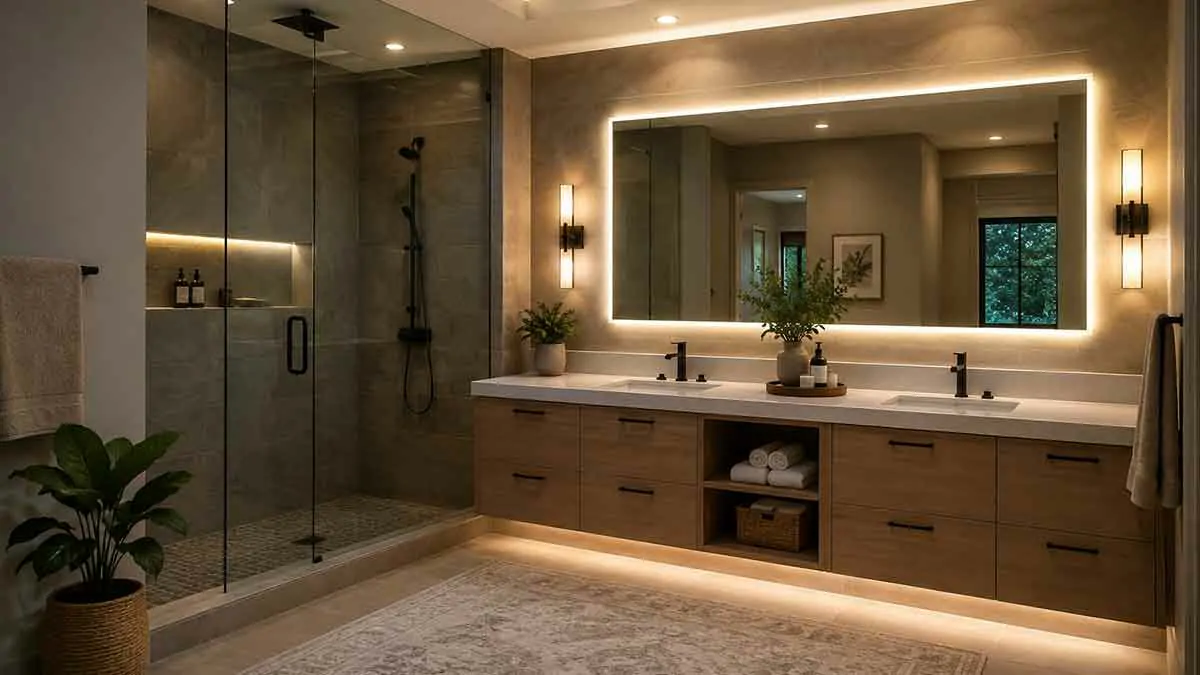
Bathroom lighting plays an important role in how the room looks and functions. A well-lit bathroom can make daily routines easier, improve visibility around the vanity, create a more comfortable atmosphere, and make a small space feel brighter and more open.
The best bathroom lighting ideas combine several types of lighting instead of relying on a single ceiling fixture. Ambient lighting provides general illumination, task lighting helps with activities such as shaving and applying makeup, and accent lighting can add visual interest.
Bathroom lighting also requires more careful planning than lighting in many other rooms because fixtures may be exposed to humidity and water. The location of each fixture, its suitability for the environment, and the applicable electrical requirements should be considered before installation.
In this guide, we will explain the most useful bathroom lighting options, how to position them, how to choose fixtures, and how to create a practical lighting plan for bathrooms of different sizes and styles.
Table of Contents
Why Bathroom Lighting Matters
Bathroom lighting affects both functionality and appearance.
Poor lighting can create shadows around the face, make grooming more difficult, and leave corners of the room too dark.
Good lighting can help with:
- Shaving
- Applying makeup
- Hair styling
- Cleaning
- Showering
- Getting ready in the morning
- Creating a relaxing atmosphere
Lighting also influences how bathroom finishes appear.
The color of tile, paint, countertops, cabinets, and fixtures can look different depending on the light source.
For this reason, lighting should be considered during the bathroom design process rather than added as an afterthought.
Types of Bathroom Lighting
A balanced bathroom lighting plan generally uses three layers.
Ambient Lighting
Ambient lighting provides overall illumination.
Examples include:
- Ceiling fixtures
- Recessed lights
- Flush-mount fixtures
- Chandeliers where appropriate
Task Lighting
Task lighting provides focused illumination for activities that require better visibility.
Common locations include:
- Vanity
- Mirror
- Shower
- Makeup area
Accent Lighting
Accent lighting is primarily decorative or architectural.
It can highlight:
- Shelves
- Wall features
- Artwork
- Architectural details
- Decorative tile
Using multiple layers creates a more flexible and comfortable bathroom.
Bathroom Ambient Lighting
Ambient lighting should provide enough general illumination for normal movement and everyday activities.
The fixture type should match the bathroom’s size and ceiling height.
For example, a compact bathroom may only require a carefully positioned ceiling fixture combined with vanity lighting, while a larger bathroom may benefit from several recessed fixtures.
Avoid placing all ambient lights in one location if doing so creates dark areas.
Bathroom Task Lighting
Task lighting is particularly important around the vanity.
The face should be illuminated as evenly as possible to reduce harsh shadows.
This is useful for:
- Shaving
- Applying makeup
- Grooming
- Hair styling
- Skin care
A lighting fixture positioned only above the head can create shadows beneath the eyes and chin.
Side lighting or a properly designed illuminated mirror can often provide more balanced facial illumination.
Bathroom Accent Lighting
Accent lighting can add depth and atmosphere.
Possible applications include:
- Lighting inside niches
- Shelf lighting
- Under-vanity lighting
- Wall-washing
- Architectural lighting
Accent lighting should complement the primary lighting rather than replace it.
Vanity Lighting Ideas
The vanity is one of the most important areas to illuminate.
Good vanity lighting should provide sufficient brightness without producing excessive glare.
Popular approaches include:
- Vertical wall sconces
- Lighting on both sides of the mirror
- An illuminated mirror
- A fixture above the mirror
- A combination of side and overhead lighting
The best arrangement depends on the mirror size, vanity width, ceiling height, and bathroom layout.
Install Lights on Both Sides of the Mirror
Placing fixtures on both sides of a mirror can provide balanced illumination across the face.
This approach can reduce shadows compared with using only a single overhead light.
The fixtures should be positioned carefully so that they illuminate the user without causing uncomfortable glare.
Use an Illuminated Bathroom Mirror
An illuminated mirror combines reflection and lighting in one fixture.
Many models use integrated LEDs around or behind the mirror.
Potential benefits include:
- Clean appearance
- Even illumination
- Space efficiency
- Modern design
- Reduced need for separate vanity fixtures
However, the quality of illumination varies between products.
Look for a mirror that provides appropriate brightness and a useful color quality for grooming tasks.
Install Lighting Above the Mirror
A light above the mirror can provide useful vanity illumination, especially when side-mounted fixtures are not practical.
However, a fixture mounted too high or too far forward can create shadows on the face.
Choose a fixture that distributes light broadly rather than producing a narrow beam.
Use Recessed Bathroom Lights
Recessed lights provide a clean appearance and can work well as ambient lighting.
They are particularly useful when a minimalist design is desired.
However, recessed lights should be positioned according to the areas that need illumination rather than simply spaced evenly across the ceiling.
A recessed light directly above the user’s head at the vanity may create unflattering shadows, so vanity lighting should be planned separately.
Add Shower Lighting
Shower areas can benefit from dedicated lighting when the ceiling and electrical system allow it.
Good shower lighting can improve visibility and make the space feel more comfortable.
Because the shower is a wet environment, fixtures must be appropriate for their specific location and installed according to applicable electrical requirements.
Do not select a fixture solely because it is labeled for bathroom use. Its suitability for the specific wet location matters.
Use Ceiling Lights
Ceiling fixtures are a simple way to provide general illumination.
Common choices include:
- Flush-mount fixtures
- Semi-flush fixtures
- Recessed lights
- Surface-mounted LED fixtures
The right choice depends on ceiling height, bathroom size, design style, and required light distribution.
Consider Wall Sconces
Wall sconces can combine functional and decorative lighting.
They are especially useful around vanities and mirrors.
Sconces are available in many styles, including:
- Modern
- Traditional
- Industrial
- Transitional
- Minimalist
Choose a fixture with appropriate dimensions so that it does not overwhelm a small vanity or mirror.
Add Under-Vanity Lighting
Under-vanity lighting can provide soft indirect illumination.
It can be particularly useful at night because it can illuminate the floor without requiring bright overhead lighting.
LED strips are commonly used for this application.
Under-vanity lighting also works well with floating vanities because the light can emphasize the space beneath the cabinet.
Use Cove or Indirect Lighting
Indirect lighting can create a softer atmosphere by reflecting light from ceilings or walls.
It can be incorporated into:
- Ceiling details
- Recessed ledges
- Vanity areas
- Architectural features
Indirect lighting is generally more useful as a secondary layer than as the only light source.
Add Bathroom Accent Lighting
Accent lighting can be used to highlight specific design features.
Examples include:
- Shower niches
- Decorative tile
- Open shelving
- Artwork
- Architectural walls
Avoid adding accent lighting everywhere.
A few carefully selected features usually produce a cleaner result.
Choose the Right Light Color Temperature
Color temperature affects how a bathroom feels.
Common lighting ranges include:
Warm White
Warmer light can create a relaxing and comfortable atmosphere.
It can work well in bathrooms with:
- Natural wood
- Warm tile
- Beige finishes
- Traditional designs
Neutral White
Neutral light can provide a balanced appearance and is often useful for everyday bathroom tasks.
Cool White
Cooler light can create a crisp, bright appearance.
It may work well in contemporary spaces, but excessive cool light can make some bathrooms feel harsh.
For many bathrooms, a neutral-to-warm range provides a comfortable balance between appearance and functionality.
Choose the Right Brightness
Brightness should be appropriate for the size and function of the bathroom.
A very bright light is not automatically better.
Too much brightness can create glare, while insufficient lighting can leave important areas difficult to see.
The total lighting plan should consider:
- Room size
- Ceiling height
- Surface reflectivity
- Number of fixtures
- Fixture output
- Task requirements
Follow the fixture manufacturer’s specifications and consider professional advice when designing a larger or more complex lighting system.
Use Dimmable Bathroom Lighting
Dimmers provide greater control over the bathroom environment.
Bright lighting can be useful during grooming and cleaning, while lower levels may be more comfortable in the evening.
If you install dimmable lighting, make sure the fixtures, lamps, dimmer, and control system are compatible.
Choose the Right Bathroom Light Fixture
When selecting a fixture, consider:
- Bathroom size
- Ceiling height
- Moisture exposure
- Light output
- Color temperature
- Fixture dimensions
- Bulb or LED type
- Energy consumption
- Cleaning requirements
- Overall design
A fixture should be selected based on both appearance and performance.
Bathroom Lighting for Small Bathrooms
Small bathrooms benefit from lighting that maximizes brightness without creating visual clutter.
Consider:
- A large illuminated mirror
- Recessed ceiling lights
- Wall sconces
- Under-vanity lighting
- Light-colored finishes
- Reflective surfaces
Avoid installing oversized fixtures that dominate the room.
A combination of well-positioned ambient and vanity lighting can make a compact bathroom feel more open.
Bathroom Lighting for Large Bathrooms
Large bathrooms may require several lighting zones.
Consider separating:
- Vanity lighting
- Shower lighting
- General ceiling lighting
- Bathtub area lighting
- Accent lighting
Separate switches or controls can make these zones more flexible.
A large bathroom also provides more opportunity for decorative fixtures, provided they are appropriate for the space and installation location.
Bathroom Lighting for a Modern Bathroom
Modern bathrooms often work well with simple, streamlined fixtures.
Popular choices include:
- Linear vanity lights
- Integrated LED mirrors
- Recessed ceiling lights
- Minimalist sconces
- Under-vanity lighting
- Indirect lighting
Keep the lighting design consistent with the bathroom’s hardware and architectural details.
Bathroom Lighting for a Traditional Bathroom
Traditional bathrooms can benefit from decorative fixtures that complement classic finishes.
Options may include:
- Decorative sconces
- Classic vanity fixtures
- Ceiling-mounted fixtures
- Glass-shade lights
The goal is to combine traditional appearance with appropriate modern lighting performance.
Bathroom Lighting for a Minimalist Bathroom
A minimalist bathroom benefits from lighting that blends into the architecture.
Consider:
- Recessed lighting
- Integrated mirror lighting
- Concealed LED strips
- Simple wall fixtures
- Indirect illumination
Avoid unnecessary decorative fixtures if they conflict with the clean design.
Bathroom Lighting for a Low Ceiling
Low ceilings can make a bathroom feel smaller.
Choose fixtures with a shallow profile, such as:
- Flush mounts
- Recessed lights
- Slim LED fixtures
- Integrated lighting
Avoid large hanging fixtures that reduce visual clearance.
Bathroom Lighting for a Bathroom With No Windows
A bathroom without natural light needs a carefully planned artificial lighting system.
Use several layers rather than relying on one bright fixture.
A practical combination may include:
- Ceiling lighting
- Vanity lighting
- Shower lighting
- Optional accent lighting
A lighter wall and ceiling palette can also help distribute available light.
Make a Small Bathroom Feel Brighter
Lighting can significantly improve the appearance of a compact bathroom.
Consider:
- Installing a large mirror.
- Adding side lighting around the vanity.
- Using light-colored surfaces.
- Installing under-vanity lighting.
- Reducing dark corners.
- Using reflective finishes selectively.
- Adding appropriate shower lighting.
- Using multiple lighting layers.
The goal is to distribute light rather than simply increase brightness.
Bathroom Lighting and Mirrors
Mirrors and lighting work together.
A mirror can reflect light and make a bathroom appear brighter, but poor fixture placement can also create glare or unwanted reflections.
When planning the vanity area, consider:
- Mirror size
- Mirror height
- Fixture position
- User height
- Light direction
- Reflection angles
Integrated mirror lighting can simplify the design, but separate fixtures may provide more flexibility.
Bathroom Lighting and Color
Lighting changes how colors appear.
A paint color or tile that looks warm under one light source may appear cooler under another.
Before choosing final finishes, view samples under the actual lighting conditions whenever possible.
This is particularly important when combining:
- White tile
- Gray walls
- Natural wood
- Colored cabinets
- Metallic fixtures
Bathroom Lighting Safety Considerations
Bathroom electrical installations require special attention because water and electricity can create serious hazards.
Important considerations include:
- Appropriate fixture ratings
- Correct installation location
- Proper wiring
- Ground-fault protection where required
- Local electrical requirements
- Moisture and water exposure
- Manufacturer instructions
Electrical work should be performed by a qualified professional when required by local regulations or when the work exceeds your experience.
Do not install a standard indoor fixture in a wet area simply because it fits the design.
The fixture must be suitable for its intended environment.
Common Bathroom Lighting Mistakes
Using Only One Light Source
A single ceiling fixture often leaves the vanity or shower poorly illuminated.
Placing the Only Vanity Light Directly Above the Mirror
Overhead-only lighting can create shadows on the face.
Ignoring the Shower Area
A dark shower can reduce visibility and make the room feel less balanced.
Choosing Fixtures Only for Appearance
A beautiful fixture is not useful if it provides inadequate light or is unsuitable for the installation location.
Using Excessively Cool Light
Very cool lighting can create a harsh appearance in some bathrooms.
Installing Too Many Recessed Lights
More fixtures do not necessarily produce better lighting.
Poor placement can create glare and unnecessary visual clutter.
Ignoring Fixture Ratings
Always verify that fixtures are appropriate for the moisture conditions of their location.
Forgetting About Controls
Separate switches or dimmers can make a multi-layer lighting system much easier to use.
How to Plan Bathroom Lighting Step by Step
Step 1: Evaluate the Bathroom
Identify the room size, ceiling height, windows, vanity, shower, bathtub, and other important areas.
Step 2: Identify the Main Tasks
Determine where you need the best visibility, particularly around the vanity and shower.
Step 3: Plan Ambient Lighting
Choose the fixtures that will provide general illumination.
Step 4: Add Task Lighting
Design dedicated lighting for the vanity, mirror, and other areas where detailed tasks are performed.
Step 5: Add Accent Lighting
Use accent lighting selectively to highlight architectural or decorative features.
Step 6: Choose Color Temperature
Select a comfortable light color that works with the bathroom’s finishes and intended atmosphere.
Step 7: Determine Fixture Locations
Position lights to minimize shadows and glare.
Step 8: Check Electrical and Moisture Requirements
Confirm fixture suitability, wiring requirements, protection, and applicable local regulations.
Step 9: Choose Controls
Consider separate switches, dimmers, or other controls for different lighting zones.
Step 10: Test the Lighting Plan
Before finalizing the installation, verify that the vanity, shower, floor, and other important areas receive appropriate illumination.
Final Thoughts
The best bathroom lighting ideas combine functionality, comfort, safety, and design.
Start with ambient lighting for the entire room, then add task lighting where visibility matters most. Vanity lighting deserves particular attention because poorly positioned fixtures can create shadows that make grooming difficult.
For a more flexible bathroom, consider dimmers, separate lighting zones, under-vanity illumination, and accent lighting. In small bathrooms, mirrors, reflective surfaces, and carefully positioned fixtures can help create a brighter and more spacious appearance.
Most importantly, bathroom lighting should be planned according to the location and moisture exposure of each fixture. Electrical safety, appropriate fixture ratings, and correct installation are more important than appearance alone.
With a well-planned combination of ambient, task, and accent lighting, a bathroom can become brighter, more functional, comfortable, and visually appealing.