
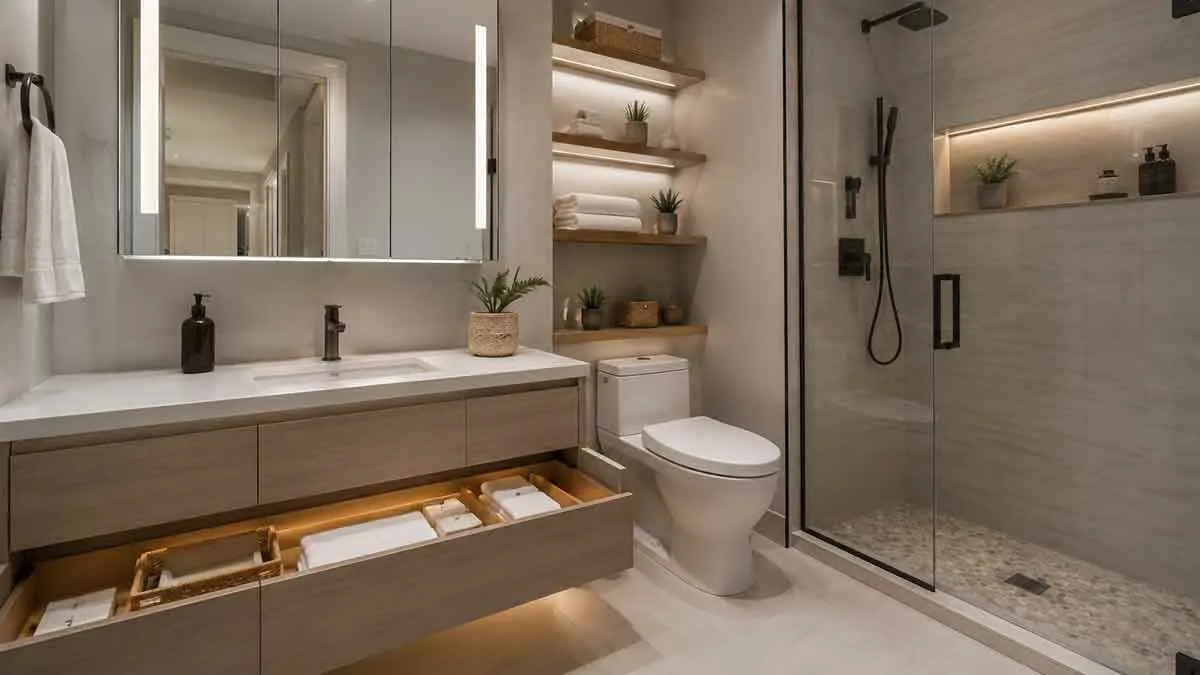
Good bathroom storage can make the room easier to use, easier to clean, and less cluttered. Whether you have a large primary bathroom or a small powder room, the right storage solutions can help keep toiletries, towels, cleaning supplies, and everyday essentials organized.
The best bathroom storage ideas do not simply add more cabinets. They make better use of the available walls, corners, vanity space, and unused areas while keeping frequently used items easy to access.
A successful bathroom storage plan should also consider the size of the room, moisture exposure, household needs, and the available floor and wall space. In a small bathroom, vertical and recessed storage can be particularly valuable because they provide capacity without taking up much floor area.
In this guide, we will explain practical bathroom storage solutions, from vanities and medicine cabinets to recessed niches, floating shelves, over-the-toilet storage, baskets, drawers, and space-saving ideas for small bathrooms.
Table of Contents
Why Bathroom Storage Matters
Bathroom storage affects more than appearance.
A well-organized bathroom makes everyday routines easier by keeping frequently used items accessible and reducing unnecessary clutter.
Effective storage can help organize:
- Toiletries
- Towels
- Toilet paper
- Hair-care products
- Skincare products
- Cleaning supplies
- Personal-care items
- Spare bathroom products
- Small appliances
- Decorative accessories
Storage should be designed around how the bathroom is actually used.
Items used every day should be easy to reach, while less frequently used products can be placed in higher or less accessible areas.
Assess Your Bathroom Storage Needs
Before purchasing storage furniture or installing shelves, determine what you actually need to store.
Start by grouping bathroom items into categories.
For example:
- Daily toiletries
- Towels
- Cleaning products
- Toilet paper
- Hair tools
- Extra personal-care supplies
- First-aid items
- Guest supplies
Then identify where each category should be stored.
Avoid creating storage simply because an empty wall is available. The goal is to create useful storage rather than filling the bathroom with unnecessary cabinets and shelves.
Use a Bathroom Vanity for Storage
A vanity is often the main storage feature in a bathroom.
The area beneath the sink can provide valuable space for toiletries, towels, and cleaning supplies.
When choosing a vanity, consider:
- Width
- Depth
- Drawer configuration
- Cabinet capacity
- Plumbing location
- Available floor space
- Countertop requirements
A larger vanity is not automatically better. In a compact bathroom, preserving comfortable movement may be more important than maximizing cabinet volume.
Choose a Vanity With Drawers
Drawers can make bathroom storage easier to organize than a large open cabinet.
They provide convenient access to smaller items and reduce the need to search through deep storage areas.
Use different drawers for different categories, such as:
- Skincare
- Hair accessories
- Personal-care products
- Towels
- Everyday toiletries
Drawer dividers can further improve organization.
Use a Medicine Cabinet
A medicine cabinet can combine a mirror with concealed storage.
It is particularly useful for smaller bathrooms because it uses the wall area above the vanity.
A medicine cabinet can store:
- Toothbrushes
- Skincare products
- Small toiletries
- Personal-care items
- Frequently used medications where appropriate
Keep potentially hazardous products away from children and follow appropriate storage instructions for medications and chemicals.
Install a Recessed Medicine Cabinet
A recessed medicine cabinet sits partially or completely inside the wall.
This reduces the amount of storage projecting into the room and can create a cleaner appearance.
Before installing one, check the wall depth and confirm that plumbing, wiring, or structural components will not interfere with the installation.
Add a Tall Bathroom Storage Cabinet
A tall cabinet can take advantage of vertical space.
This is particularly useful when floor area is limited.
A tall cabinet can store:
- Towels
- Toilet paper
- Cleaning supplies
- Extra toiletries
- Household bathroom products
Choose a cabinet with a footprint appropriate for the room.
A narrow vertical cabinet can often provide substantial storage without making the bathroom feel crowded.
Use Vertical Wall Storage
Walls provide some of the most valuable unused storage space in many bathrooms.
Consider:
- Wall-mounted shelves
- Tall cabinets
- Floating shelves
- Narrow storage towers
- Hooks
- Wall-mounted baskets
Vertical storage is especially useful in bathrooms where floor space is limited.
Install Floating Shelves
Floating shelves can provide accessible storage without the visual weight of a large cabinet.
They work well for:
- Towels
- Toiletries
- Baskets
- Decorative items
- Frequently used products
Use them selectively.
Too many open shelves can create visual clutter and require frequent cleaning.
Use Recessed Bathroom Shelves
Recessed shelves can provide storage within the wall cavity rather than extending into the room.
They can be installed in suitable areas near:
- Vanity
- Toilet
- Shower
- Bathtub
The wall structure and utilities must be checked before creating a recessed storage area.
In wet locations, the recess must be integrated into the appropriate waterproofing system.
Add a Shower Niche
A shower niche provides dedicated storage for bathing products.
Instead of placing bottles on the shower floor or using a hanging organizer, a niche can keep products organized within the wall.
A shower niche can include:
- One large compartment
- Multiple shelves
- Different sections for different products
Its location should be planned before the shower wall is finished.
Proper waterproofing around the niche is essential.
Use Corner Storage
Corners are frequently underused in bathrooms.
Corner storage can include:
- Corner shelves
- Corner cabinets
- Shower corner shelves
- Freestanding corner units
- Small baskets
Corner solutions are particularly useful when the main walls are already occupied by fixtures.
Add Over-the-Toilet Storage
The wall above a toilet can provide useful vertical storage.
Options include:
- Wall-mounted cabinets
- Open shelving
- Freestanding storage units
- Narrow cabinets
- Decorative shelves
Avoid installing storage where it interferes with toilet use or maintenance.
Wall-mounted options can create a cleaner appearance and leave the floor easier to clean.
Use the Space Above the Door
The wall area above a bathroom door is often overlooked.
A shelf or shallow cabinet in this location can store items that are not used frequently.
Possible items include:
- Extra towels
- Spare toilet paper
- Guest supplies
- Backup toiletries
Because this area can be difficult to reach, it should be reserved for occasional-use items.
Install Wall-Mounted Cabinets
Wall-mounted cabinets can provide concealed storage without using much floor space.
They can be installed above or beside:
- Vanities
- Toilets
- Laundry areas
- Other suitable wall sections
Before installation, confirm that the wall can support the cabinet and that it will not interfere with doors, mirrors, lights, or other fixtures.
Use Bathroom Hooks
Hooks are a simple storage solution for towels, robes, and clothing.
They require very little wall space and are often easier to use than towel bars.
Place hooks in locations that are convenient but do not interfere with bathroom doors, shower access, or other fixtures.
Add Towel Storage
Towels can consume significant storage space.
Depending on the bathroom, you can use:
- Open shelves
- Linen cabinets
- Wall-mounted racks
- Baskets
- Vanity drawers
- Tall storage cabinets
- Towel ladders
Store frequently used towels in accessible locations and reserve higher shelves for extra linens.
Use a Towel Ladder
A towel ladder can provide vertical storage while taking up relatively little floor or wall space.
It can hold several towels and also add a decorative element.
However, ensure the ladder is stable and positioned where it will not interfere with normal bathroom movement.
Add a Narrow Storage Tower
A narrow storage tower can fit into small gaps between fixtures or beside a vanity.
It can provide additional space for:
- Towels
- Toilet paper
- Toiletries
- Cleaning products
- Decorative items
Measure the available space carefully before purchasing one.
Use Rolling Bathroom Carts
A rolling cart provides flexible storage that can be moved when necessary.
It can be useful for:
- Toiletries
- Towels
- Hair-care products
- Cleaning supplies
- Extra bathroom items
A cart is especially practical in rental properties because it usually does not require permanent installation.
Organize Under the Sink
The space beneath the sink is often difficult to use efficiently because of plumbing.
Use organizers such as:
- Stackable bins
- Pull-out baskets
- Small shelves
- Door-mounted organizers
- Cleaning-product holders
Keep plumbing connections accessible so storage does not prevent maintenance or leak inspection.
Use Pull-Out Storage
Pull-out organizers can make deep cabinets easier to use.
Instead of reaching into the back of a cabinet, the storage tray can be pulled toward you.
Pull-outs can be useful for:
- Cleaning products
- Toiletries
- Hair-care supplies
- Bathroom paper products
Choose organizers that fit the cabinet dimensions and can support the intended load.
Add Drawer Organizers
Bathroom drawers can quickly become disorganized when small items are mixed together.
Use compartments for:
- Toothbrush accessories
- Cosmetics
- Razors
- Hair accessories
- Skincare products
- Small personal-care items
Clear or adjustable organizers can make it easier to see what is available.
Use Baskets and Bins
Baskets and bins are useful for grouping similar items.
For example, separate containers can be used for:
- Extra toiletries
- Towels
- Hair products
- Guest supplies
- Cleaning products
Labels can help family members return items to the correct location.
Use moisture-appropriate materials in areas where baskets may regularly be exposed to humidity or water.
Organize Bathroom Countertops
Countertops should provide enough space for everyday use without becoming permanent storage.
Keep only frequently used items within easy reach.
Less frequently used products can be stored inside:
- Drawers
- Cabinets
- Medicine cabinets
- Baskets
- Shelves
A clear countertop can make the bathroom feel cleaner and more spacious.
Create Dedicated Toiletry Storage
Grouping toiletries by use can make bathroom routines faster.
You might create separate storage areas for:
- Daily skincare
- Hair products
- Oral care
- Shaving supplies
- Bath products
- Guest toiletries
Avoid keeping duplicate products in several locations unless there is a practical reason to do so.
Store Towels Efficiently
Towels can be folded or rolled depending on the available storage.
For deep shelves, stacking may work well.
For open shelves or baskets, rolled towels can make better use of the available height and provide easy access.
Do not overfill storage spaces because compressed towels can make the area difficult to use.
Organize Cleaning Supplies
Cleaning products should be stored separately from personal-care products whenever possible.
Use a dedicated cabinet, bin, or pull-out organizer.
Keep cleaning chemicals in their original containers and follow their storage instructions.
If children are present, use appropriate child-safety measures for hazardous products.
Bathroom Storage Ideas for Small Bathrooms
Small bathrooms require storage solutions that use space efficiently without obstructing movement.
Consider:
- Recessed medicine cabinets
- Wall-mounted shelves
- Floating vanities
- Tall narrow cabinets
- Over-the-toilet storage
- Shower niches
- Wall hooks
- Corner shelves
- Rolling carts
- Under-sink organizers
Prioritize vertical and recessed storage whenever possible.
Avoid adding large floor cabinets that make the room difficult to navigate.
Bathroom Storage Ideas for Large Bathrooms
Larger bathrooms provide more flexibility, but excessive storage can still create unnecessary clutter.
Consider:
- Large double vanities
- Linen cabinets
- Built-in storage
- Tall cabinets
- Open shelving
- Freestanding furniture
- Dedicated towel storage
A larger bathroom may also allow you to create separate storage zones for different household members.
Bathroom Storage Ideas Without Cabinets
You do not need traditional cabinets to create useful bathroom storage.
Alternatives include:
- Floating shelves
- Baskets
- Hooks
- Towel ladders
- Rolling carts
- Wall-mounted racks
- Recessed niches
- Over-the-toilet shelves
- Narrow storage towers
These solutions can also be useful when renovating a rental bathroom where permanent modifications are limited.
Bathroom Storage Ideas for a Rental
Rental bathrooms often require removable or low-impact storage solutions.
Consider:
- Freestanding carts
- Tension shelves where appropriate
- Over-the-door organizers
- Adhesive hooks rated for the intended load
- Baskets
- Freestanding cabinets
- Countertop organizers
Always verify the installation method and property restrictions before attaching anything permanently to walls.
Affordable Bathroom Storage Ideas
Improving storage does not always require expensive remodeling.
Budget-friendly options include:
- Baskets
- Drawer dividers
- Wall hooks
- Floating shelves
- Small rolling carts
- Under-sink organizers
- Over-the-toilet shelving
- Stackable bins
Start with the areas that create the most clutter instead of purchasing multiple storage products at once.
Bathroom Storage Ideas for Families
A family bathroom needs storage that can accommodate multiple people’s belongings.
Create separate zones where practical.
For example:
- One drawer for each household member
- Shared towel storage
- Dedicated children’s storage
- Separate cleaning-product storage
- Accessible everyday toiletries
Use clearly defined storage areas to reduce the likelihood of items being left on countertops.
Bathroom Storage Mistakes to Avoid
Adding Storage Without Measuring
A cabinet or shelf that is too deep can interfere with movement.
Measure available width, depth, and height before purchasing.
Blocking Fixtures
Storage should not interfere with the toilet, vanity, shower, bathtub, or bathroom door.
Overloading Open Shelves
Too many items can make open storage look cluttered.
Ignoring Moisture
Not every storage material is suitable for humid bathroom conditions.
Choose materials and finishes appropriate for the location.
Making Everything Open Storage
Open shelving provides accessibility but exposes everything to view and may require more frequent cleaning.
Wasting Vertical Space
Leaving large unused areas above cabinets or doors can mean losing valuable storage capacity.
Storing Cleaning Products With Personal Items
Keep potentially hazardous cleaning chemicals appropriately separated and secured.
Blocking Plumbing Access
Storage under sinks should not make it difficult to inspect or repair plumbing.
How to Organize Bathroom Storage Step by Step
Step 1: Remove Unnecessary Items
Start by getting rid of expired, empty, or unused products.
Step 2: Group Similar Items
Create categories for toiletries, towels, cleaning supplies, and other products.
Step 3: Measure Available Storage
Measure cabinets, drawers, shelves, and unused wall areas.
Step 4: Identify High-Priority Storage Problems
Determine which categories currently create the most clutter.
Step 5: Assign Storage Zones
Give each category a dedicated location.
Step 6: Use Vertical and Recessed Space
Take advantage of walls and suitable unused areas.
Step 7: Add Organizers
Use drawer dividers, bins, baskets, and pull-outs where they provide genuine benefits.
Step 8: Keep Daily Items Accessible
Place frequently used products in easy-to-reach locations.
Step 9: Store Occasional Items Higher
Use upper shelves and less accessible areas for backup supplies and seasonal items.
Step 10: Maintain the System
Return products to their designated locations and periodically remove items that are no longer needed.
Final Thoughts
The best bathroom storage ideas make the room more functional without making it feel crowded.
Start by identifying what needs to be stored and how frequently each item is used. Then use the available vanity, walls, corners, vertical space, and recessed areas to create organized storage zones.
For small bathrooms, wall-mounted solutions, recessed medicine cabinets, shower niches, narrow cabinets, hooks, and floating shelves can provide valuable storage while preserving floor space. Larger bathrooms offer more options, but the same principle applies: storage should be practical, accessible, and easy to maintain.
You do not need an expensive renovation to improve bathroom organization. Simple additions such as drawer organizers, baskets, hooks, shelves, and under-sink storage can make a noticeable difference.
With careful planning and efficient use of available space, almost any bathroom can become more organized, less cluttered, and easier to use every day.