
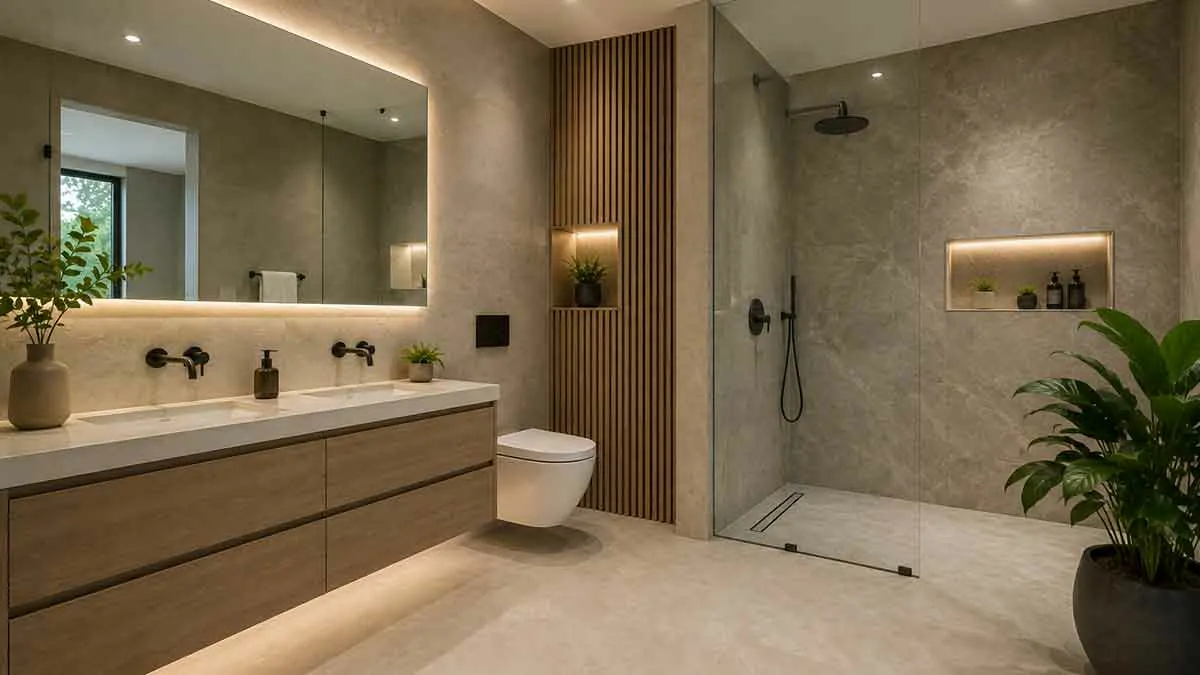
Choosing the right bathroom wall material can have a major impact on the appearance, durability, moisture resistance, and maintenance requirements of the space. Bathroom walls are regularly exposed to humidity, water splashes, condensation, cleaning products, and temperature changes, so the material needs to perform well in a demanding environment.
There are many bathroom wall options available, ranging from traditional ceramic tile and porcelain tile to waterproof wall panels, natural stone, painted drywall, glass, and other modern materials. Each option offers different advantages in terms of appearance, installation, maintenance, cost, and moisture resistance.
The best bathroom wall material depends on where it will be installed and how much moisture the surface will experience. Shower walls, for example, require a much more moisture-resistant system than a wall outside the wet area.
In this guide, we will explain the most popular bathroom wall options, their advantages and disadvantages, where they work best, and how to choose the right material for your bathroom renovation.
Table of Contents
What to Consider When Choosing Bathroom Wall Options
Before selecting a wall material, consider how much moisture and direct water exposure the surface will receive.
Important factors include:
- Water resistance
- Moisture resistance
- Durability
- Cleaning requirements
- Installation complexity
- Material cost
- Labor cost
- Appearance
- Maintenance
- Repairability
- Compatibility with the existing wall structure
The bathroom can generally be divided into different zones.
A wall inside a shower receives substantially more water exposure than a wall near the vanity or bathroom entrance.
This distinction is important because a material that works well on a dry bathroom wall may not be appropriate for a continuously wet area.
Ceramic Bathroom Wall Tile
Ceramic tile is one of the most common bathroom wall materials.
It is available in a wide variety of colors, shapes, sizes, textures, and patterns, making it suitable for almost any bathroom style.
Advantages of Ceramic Tile
Ceramic tile can provide:
- Good moisture resistance
- Wide design flexibility
- Easy cleaning
- Many price options
- Good durability
- Easy replacement of individual damaged tiles
It can be used for shower walls, backsplashes, vanity walls, and other bathroom surfaces when properly installed.
Disadvantages of Ceramic Tile
The main disadvantage is the grout.
Grout joints can collect dirt and may require regular cleaning. Poor installation or damaged grout can also contribute to moisture problems.
Tile installation can also require more labor than some large-format wall panel systems.
Best For
Ceramic tile is a versatile option for homeowners who want a traditional bathroom wall material with extensive design choices.
Porcelain Bathroom Wall Tile
Porcelain tile is closely related to ceramic tile but is generally denser and less porous.
It is available in many styles, including stone-look, marble-look, concrete-look, and wood-inspired designs.
Advantages of Porcelain Tile
Porcelain can offer:
- High durability
- Low water absorption
- Strong moisture resistance
- Extensive design options
- Easy cleaning
- Long service life
Large porcelain tiles can also reduce the number of grout joints on a bathroom wall.
Disadvantages of Porcelain Tile
Porcelain can be more expensive than basic ceramic tile.
It may also require specialized tools and experienced installation because the material can be harder to cut.
Best For
Porcelain is particularly suitable for shower walls and other areas where durability and moisture resistance are important.
Natural Stone Bathroom Walls
Natural stone can give a bathroom a distinctive, high-end appearance.
Common choices include:
- Marble
- Granite
- Slate
- Travertine
- Limestone
Every piece of natural stone has its own color and pattern, creating a more natural and unique appearance.
Advantages of Natural Stone
Natural stone can provide:
- Premium appearance
- Unique patterns
- Long-term durability
- Natural texture
- Wide design possibilities
Disadvantages of Natural Stone
Some types of natural stone are porous and require sealing.
Depending on the material, stone may also be susceptible to staining, scratching, or etching.
Natural stone can also have higher material and installation costs than standard ceramic tile.
Best For
Natural stone is appropriate for homeowners who want a distinctive, premium bathroom design and are willing to perform the required maintenance.
Marble Bathroom Walls
Marble is one of the most recognizable luxury bathroom materials.
It can create an elegant appearance on shower walls, vanity walls, and other areas.
Advantages of Marble
Marble offers:
- Distinctive natural patterns
- Luxury appearance
- Multiple color options
- Strong visual impact
Large marble slabs or marble-look surfaces can create a continuous appearance with fewer visible joints.
Disadvantages of Marble
Marble requires more care than many ceramic or porcelain products.
It can be vulnerable to scratching and chemical damage, and certain substances can cause etching or staining.
Proper cleaning products and maintenance are important.
Best For
Marble is best suited to homeowners who prioritize appearance and are comfortable with the additional care associated with natural stone.
Glass Bathroom Wall Options
Glass can create a clean and contemporary bathroom appearance.
It can be used in shower enclosures, wall features, backsplashes, and decorative applications.
Glass can also help reflect light, making a compact bathroom feel brighter.
Advantages of Glass
Glass can provide:
- Modern appearance
- Easy cleaning
- Reflective qualities
- Visual openness
- Many design possibilities
Disadvantages of Glass
Water spots and fingerprints can be visible.
Large glass installations may also require careful professional installation.
Best For
Glass works particularly well as an accent material or in contemporary bathrooms where visual openness is important.
Waterproof Bathroom Wall Panels
Waterproof wall panels are an alternative to traditional tile.
They are available in different materials, patterns, textures, and finishes.
Many systems are designed to reduce the number of joints compared with traditional tile.
Advantages of Wall Panels
They can provide:
- Fewer grout joints
- Faster installation in some applications
- Easy cleaning
- Modern appearance
- Large continuous surfaces
Disadvantages
The quality and water resistance of wall panels vary considerably.
Some products require specific installation systems, sealants, or compatible accessories.
Always follow the manufacturer’s installation requirements.
Best For
Wall panels can be useful for homeowners who want a low-maintenance alternative to traditional tiled walls.
Acrylic Bathroom Wall Panels
Acrylic panels are lightweight and available in various colors and patterns.
They are often used around showers and bathtubs.
Advantages of Acrylic
Acrylic can provide:
- Smooth surface
- Easy cleaning
- Low grout requirements
- Relatively simple maintenance
- Multiple appearance options
Disadvantages of Acrylic
The surface can scratch depending on the product and cleaning method.
Improper installation or inadequate sealing can also create moisture problems.
Best For
Acrylic can be a practical option for shower surrounds and bathroom renovations where easy maintenance is a priority.
PVC Bathroom Wall Panels
PVC wall panels can provide a relatively affordable way to cover bathroom walls.
They are available in numerous decorative designs.
Advantages of PVC Panels
PVC can offer:
- Low material cost
- Lightweight construction
- Easy cleaning
- Moisture resistance
- Many decorative styles
Disadvantages
Product quality varies.
Some inexpensive panels may look less premium than tile or stone, and installation details around seams and edges are important.
Best For
PVC panels can be useful for budget-conscious renovations when a suitable quality product is selected.
Fiberglass Bathroom Wall Panels
Fiberglass wall systems have traditionally been used for shower and bathtub surrounds.
They are designed to tolerate moisture and can provide a relatively simple surface to clean.
Advantages
Fiberglass can provide:
- Moisture resistance
- Lightweight construction
- Relatively simple maintenance
- Affordable options
- Practical shower applications
Disadvantages
Design choices may be more limited than with tile or premium wall panels.
The surface can also become damaged or worn over time depending on use and cleaning.
Best For
Fiberglass can be a practical choice for functional bathrooms where affordability and easy maintenance are priorities.
Solid Surface Bathroom Walls
Solid surface materials can create a smooth, continuous bathroom wall with minimal visible joints.
They are commonly used for shower walls, surrounds, and vanity applications.
Advantages
Solid surface can provide:
- Few visible seams
- Easy cleaning
- Modern appearance
- Repairable surface in some systems
- Extensive color options
Disadvantages
Solid surface can be more expensive than basic tile or plastic wall panels.
Installation may also require specialized fabrication.
Best For
Solid surface is suitable for homeowners who want a premium, low-maintenance bathroom wall system.
Painted Bathroom Walls
Paint remains one of the simplest bathroom wall options outside direct wet areas.
It is particularly useful on walls that do not receive continuous water exposure.
Advantages of Paint
Paint offers:
- Low material cost
- Easy color changes
- Simple installation
- Wide color selection
- Easy touch-ups
Disadvantages
Standard interior paint may not be appropriate for high-moisture areas.
Walls exposed to repeated water splashes may require more suitable materials or coatings.
Best For
Paint works well on bathroom walls outside the shower and other direct wet zones when an appropriate bathroom-rated product is used.
Moisture-Resistant Drywall
Moisture-resistant drywall can be used in suitable bathroom areas where direct water exposure is limited.
It provides a smooth surface that can be painted or finished with other materials.
However, moisture-resistant drywall should not automatically be treated as a complete waterproofing solution for shower walls.
Wet areas require an appropriate waterproof wall assembly designed for the specific application.
Cement Backer Board for Bathroom Walls
Cement backer board is commonly used as part of tiled bathroom wall assemblies.
It provides a stable substrate for tile and is designed for areas where moisture exposure is expected.
However, cement board itself should not be assumed to be completely waterproof.
Proper waterproofing, joints, penetrations, and transitions are critical to the overall wall assembly.
Best For
Cement backer board can be appropriate behind tile in showers and other wet areas when installed as part of a properly designed waterproof system.
Waterproof Membranes Behind Bathroom Walls
The material visible on the bathroom wall is only one part of the moisture-management system.
In shower areas, waterproofing behind or beneath the finished surface is essential.
Depending on the system, waterproofing may involve:
- Sheet membranes
- Liquid-applied membranes
- Waterproof backer systems
- Properly sealed joints
- Waterproof treatment around penetrations
The specific system should follow the manufacturer’s installation requirements and applicable building standards.
Wood Bathroom Wall Options
Wood can add warmth and natural character to a bathroom.
However, wood requires careful consideration because prolonged moisture exposure can cause swelling, movement, staining, or deterioration.
Wood-inspired porcelain, ceramic, or vinyl products can provide a similar visual effect with different moisture characteristics.
If real wood is used, select an appropriate product and finish and avoid unnecessary exposure to standing water.
Best For
Wood is generally more suitable for decorative or lower-moisture areas than direct shower applications.
Decorative Bathroom Wall Panels
Decorative panels are available in designs that imitate:
- Marble
- Stone
- Concrete
- Wood
- Tile
- Textured surfaces
They can provide a strong visual effect without the installation process associated with individual tiles.
The important consideration is whether the specific panel is rated and installed for the intended moisture environment.
Bathroom Wallpaper
Bathroom wallpaper can add color and pattern without the cost of extensive tile installation.
However, it should generally be reserved for walls outside direct wet areas.
Choose products designed for bathrooms or higher-humidity environments and ensure the room has adequate ventilation.
Wallpaper should not be treated as a substitute for a waterproof shower wall system.
Beadboard Bathroom Walls
Beadboard can provide a traditional or cottage-style appearance.
It can work particularly well on lower sections of bathroom walls or in areas away from direct water exposure.
Use a suitable moisture-resistant product and finish where required.
Beadboard can be combined with painted walls, tile, or other materials to create visual contrast.
Brick Bathroom Walls
Exposed brick can create a distinctive industrial or rustic bathroom design.
However, untreated brick is porous and can absorb moisture.
If brick is used in a bathroom, especially in a humid environment, its condition and suitability should be evaluated carefully.
A properly selected finish or brick-look tile can provide a similar appearance with different maintenance requirements.
Concrete Bathroom Walls
Concrete can create a modern industrial appearance.
It can be used as a finished wall material or replicated through tile and decorative panels.
Advantages
Concrete can provide:
- Contemporary appearance
- Strong visual character
- Minimalist design
- Durable surface when properly finished
Disadvantages
Concrete can be difficult and expensive to install or modify.
Cracking, staining, and sealing requirements should also be considered.
Microcement Bathroom Walls
Microcement is a decorative cement-based finish that can create a continuous, minimalist appearance.
It is often used to achieve a modern bathroom design with fewer visible joints.
However, the performance of microcement depends heavily on the complete installation system, substrate preparation, waterproofing, and protective finish.
It should not be assumed that any microcement product is automatically waterproof.
Best For
Microcement can work well for contemporary bathrooms when installed by professionals familiar with bathroom applications.
Bathroom Wall Options for Shower Areas
Shower walls require the greatest attention to water management.
Suitable systems can include:
- Porcelain tile
- Ceramic tile
- Waterproof wall panels
- Acrylic shower panels
- Fiberglass surrounds
- Solid surface panels
- Natural stone when properly installed and maintained
The visible material is only part of the system.
Proper waterproofing, sealing, drainage, and installation are essential regardless of the finish selected.
Bathroom Wall Options for Low-Moisture Areas
Walls outside the direct shower area provide more flexibility.
Depending on the room and ventilation, options can include:
- Bathroom paint
- Moisture-resistant drywall
- Decorative panels
- Beadboard
- Wallpaper
- Ceramic tile
- Porcelain tile
- Natural stone
- Wood-look materials
These areas can be used to introduce colors and decorative finishes without covering every wall in tile.
Best Bathroom Wall Options for Easy Maintenance
If easy cleaning is a priority, consider surfaces with fewer joints and relatively smooth finishes.
Potential options include:
- Large-format porcelain tile
- Large-format ceramic tile
- Waterproof wall panels
- Acrylic panels
- Solid surface
- Fiberglass surrounds
Reducing the number of grout joints can make routine cleaning easier.
However, installation quality remains critical.
Best Bathroom Wall Options for a Budget Renovation
For a budget-conscious renovation, consider:
- Basic ceramic tile
- Standard bathroom paint
- PVC wall panels
- Fiberglass surrounds
- Affordable acrylic panels
- Selective tile rather than full-wall tile
Keeping existing walls where they remain structurally sound can also reduce renovation costs.
Do not reduce spending on waterproofing or essential substrate preparation simply to lower the project price.
Best Bathroom Wall Options for Small Bathrooms
Small bathrooms can benefit from materials and designs that reduce visual clutter.
Consider:
- Light-colored tile
- Large-format tile
- Gloss or reflective surfaces
- Simple wall panels
- Consistent wall finishes
- Limited grout lines
A continuous wall treatment can make a small bathroom appear more cohesive.
Large mirrors and appropriate lighting can further enhance the sense of space.
How to Choose Bathroom Wall Colors and Finishes
Wall color has a significant influence on the bathroom’s appearance.
Light Colors
White, cream, beige, and soft gray can make a small bathroom feel brighter and more open.
Dark Colors
Deep gray, navy, green, or charcoal can create contrast and a more dramatic appearance.
Glossy Finishes
Glossy surfaces can reflect light and make a bathroom feel brighter, but they may also show water spots more easily.
Matte Finishes
Matte surfaces provide a softer appearance and can hide some fingerprints and water marks better than highly polished surfaces.
The best choice depends on the lighting, size, and overall design of the bathroom.
Bathroom Wall Installation Considerations
Before installation begins, evaluate the existing wall structure.
Important considerations include:
- Wall condition
- Moisture damage
- Plumbing
- Electrical wiring
- Stud locations
- Surface flatness
- Waterproofing requirements
- Material weight
- Ventilation
- Manufacturer installation requirements
If existing walls show signs of water damage, the underlying problem should be identified and repaired before installing new finishes.
Covering moisture damage without addressing the source can lead to larger problems later.
Common Bathroom Wall Mistakes to Avoid
Using Non-Waterproof Materials in Wet Areas
A decorative material that works on a dry wall may not be suitable for a shower.
Assuming Tile Is Automatically Waterproof
Tile itself does not replace a properly designed waterproofing system.
Ignoring Grout and Seams
Water can enter through poorly installed joints, penetrations, or transitions.
Choosing Materials Only for Appearance
A wall material must match the moisture conditions of its location.
Using the Wrong Cleaning Products
Some natural stone and decorative finishes can be damaged by acidic or abrasive cleaners.
Installing Heavy Materials Without Proper Support
Large stone slabs and other heavy materials may require specialized substrates and installation methods.
Ignoring Ventilation
High humidity can damage unsuitable wall materials and finishes.
Covering Existing Water Damage
Always identify and repair the source of moisture before installing new wall finishes.
How to Choose Bathroom Wall Materials Step by Step
Step 1: Divide the Bathroom Into Moisture Zones
Identify shower walls, splash-prone areas, and relatively dry walls.
Step 2: Inspect the Existing Walls
Look for cracks, water damage, mold, loose surfaces, or other problems.
Step 3: Set Your Budget
Include both materials and professional installation where necessary.
Step 4: Choose the Required Performance
Determine how much water resistance, durability, and maintenance performance you need.
Step 5: Compare Materials
Compare tile, wall panels, stone, paint, and other suitable options.
Step 6: Consider the Design
Choose colors, textures, patterns, and finishes that work with the vanity, flooring, fixtures, and lighting.
Step 7: Check Installation Requirements
Verify substrate, waterproofing, adhesives, sealants, ventilation, and other requirements.
Step 8: Consider Long-Term Maintenance
Think about cleaning, sealing, grout maintenance, repairs, and replacement.
Step 9: Order Samples
View samples in the actual bathroom lighting before making a final decision.
Step 10: Install the Complete Wall System Correctly
Follow the manufacturer’s instructions and applicable building requirements rather than focusing only on the visible finish.
Final Thoughts
There are many excellent bathroom wall options, but the right choice depends on the location, moisture exposure, budget, design preferences, and maintenance requirements.
Ceramic and porcelain tile remain versatile choices for many bathrooms, while waterproof panels, acrylic, fiberglass, and solid surface systems can provide simpler maintenance with fewer joints. Natural stone can create a premium appearance, while paint, beadboard, wallpaper, and decorative panels offer more flexibility on walls outside direct wet areas.
The most important consideration is not simply how the wall looks. A bathroom wall should be appropriate for its moisture environment and installed as part of a properly designed wall and waterproofing system.
Before choosing a material, evaluate the existing wall condition, determine where direct water exposure occurs, compare installation requirements, and consider long-term maintenance. With the right combination of materials and proper installation, bathroom walls can remain attractive, durable, and functional for many years.