
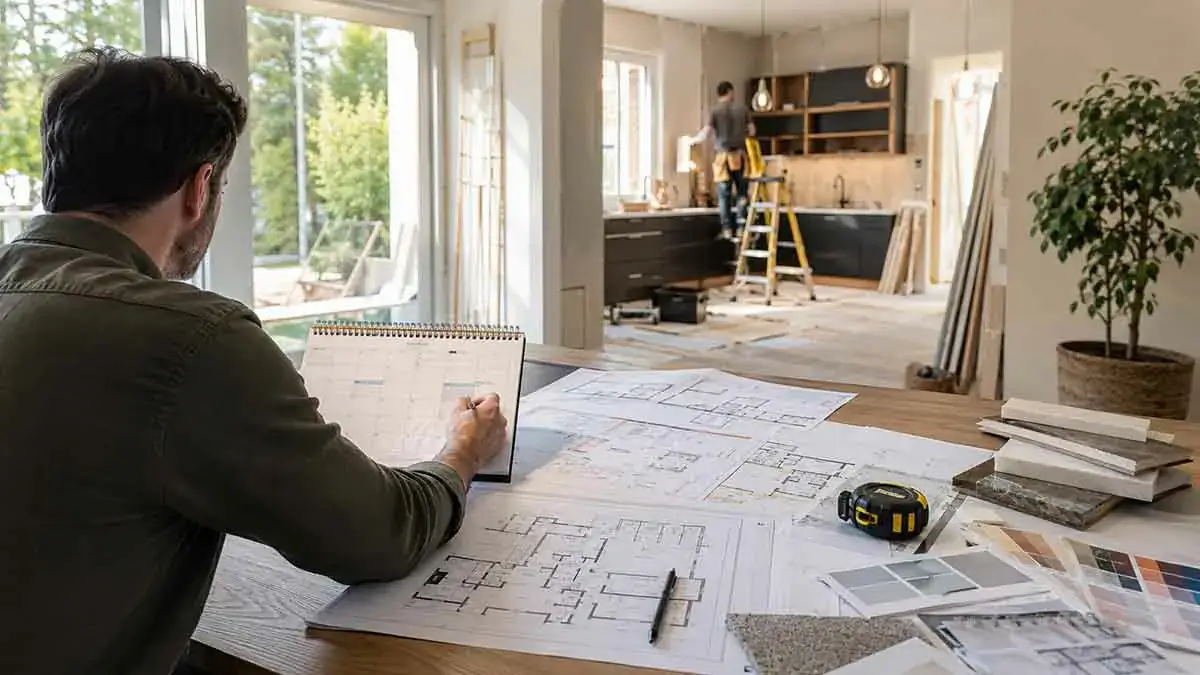
Renovating an older home can transform a dated property into a safer, more comfortable, and more efficient place to live. However, older houses often require a different approach than newer homes.
A property may have outdated electrical wiring, aging plumbing, inefficient insulation, moisture problems, structural issues, or building materials that are no longer commonly used. Cosmetic improvements can make a house look newer, but they should not distract from problems hidden behind walls, ceilings, floors, or exterior surfaces.
The best way to renovate an older home is to understand its existing condition before deciding what to repair, restore, replace, or upgrade.
This guide explains how to renovate an older home, including inspections, structural repairs, electrical and plumbing upgrades, insulation, windows, heating and cooling, interior improvements, budgeting, project sequencing, and common mistakes to avoid.
Table of Contents
Why Older Homes Require a Different Renovation Approach
Older homes can have construction methods, materials, and building systems that differ substantially from those used in modern houses.
Before renovating, it is important to understand that the visible condition of a house does not always reveal the condition of the systems behind the finished surfaces.
An older property may require attention to:
- Structural framing
- Foundation
- Roofing
- Electrical wiring
- Plumbing
- Heating and cooling
- Insulation
- Ventilation
- Windows and doors
- Moisture management
- Exterior materials
- Interior finishes
The goal is not necessarily to make everything new.
A successful renovation should identify which components need immediate attention, which can be repaired, which should be upgraded, and which original features are worth preserving.
1. Start With a Complete Home Assessment
Before planning cosmetic improvements, assess the overall condition of the property.
Walk through the house and look for visible signs of problems involving:
- Cracks in walls, ceilings, or foundations
- Water stains or damp areas
- Roof damage
- Peeling paint
- Soft or damaged flooring
- Drafty windows and doors
- Outdated electrical components
- Leaking plumbing fixtures
- Uneven floors
- Poor ventilation
- Signs of pests or deterioration
Create a list of everything that needs attention.
Then divide the list into three categories.
Safety and Structural Issues
These should receive the highest priority.
Examples include:
- Serious structural deterioration
- Unsafe electrical conditions
- Major water intrusion
- Significant roof damage
- Dangerous stairs or railings
- Serious foundation concerns
- Hazardous building materials
Functional and Efficiency Improvements
These can improve comfort and reduce operating costs.
Examples include:
- Insulation
- Air sealing
- HVAC upgrades
- Plumbing improvements
- Electrical capacity
- Efficient windows
- Ventilation
- Lighting
Cosmetic Improvements
These include:
- Painting
- Flooring finishes
- Cabinet finishes
- Decorative lighting
- Trim
- Hardware
- Interior colors
This approach prevents you from spending heavily on appearance while important underlying problems remain unresolved.
2. Get Professional Inspections When Necessary
An older home can contain problems that are difficult to identify during a normal visual inspection.
Depending on the property’s age and condition, professional assessments may be useful for:
- Structural systems
- Electrical systems
- Plumbing
- HVAC
- Roofing
- Foundation
- Moisture
- Pest damage
- Potentially hazardous materials
You do not necessarily need every type of inspection for every house.
The appropriate inspections depend on the home’s condition and the renovation you are planning.
For example, if you plan to remove walls, a structural professional may need to determine whether they support the building.
If you are renovating a bathroom, plumbing and moisture conditions deserve particular attention.
3. Research the History of the House
Before renovating, learn as much as possible about the property.
Useful information may include:
- Approximate construction date
- Previous renovations
- Structural modifications
- Previous roofing work
- Electrical upgrades
- Plumbing replacements
- HVAC installations
- Building permits
- Original floor plans
- Historic restrictions, where applicable
Previous renovation work can explain why different materials or systems exist in the same house.
It can also help identify work that may have been completed without proper documentation.
Understanding the history of the property can make it easier to distinguish original construction from later modifications.
4. Check for Moisture Problems
Water is one of the most important issues to investigate in an older home.
Look for:
- Water stains
- Damp walls
- Musty odors
- Peeling paint
- Mold-like growth
- Damaged flooring
- Condensation
- Rot around windows
- Basement or crawl-space moisture
Check the sources of moisture rather than simply repairing visible damage.
Potential sources include:
- Roof leaks
- Plumbing leaks
- Foundation seepage
- Poor drainage
- Damaged gutters
- Condensation
- Poor bathroom ventilation
- Exterior water intrusion
Painting over a water stain without fixing the source can allow the underlying problem to continue.
Moisture should be addressed before installing new finishes that could hide the problem.
5. Inspect the Foundation and Structure
Structural problems should be addressed before major cosmetic renovations.
Look for signs such as:
- Significant cracks
- Sagging floors
- Uneven floors
- Bowed walls
- Sticking doors or windows
- Separation around openings
- Deteriorated framing
- Signs of settlement
Not every crack indicates a serious structural problem.
However, unexplained or significant structural symptoms should be assessed by an appropriate professional.
This is particularly important before removing walls or changing the layout.
6. Evaluate the Roof
The roof protects the entire house from weather and moisture.
Before investing in major interior renovations, determine the condition of:
- Roofing materials
- Flashing
- Roof penetrations
- Gutters
- Downspouts
- Roof decking where accessible
- Attic ventilation
If the roof is approaching the end of its useful life, replacing it may be a higher priority than installing expensive interior finishes.
A new kitchen cannot compensate for ongoing water intrusion from an aging roof.
7. Inspect Old Electrical Wiring
Electrical systems in older homes may not have been designed for modern household demands.
Older electrical systems can present issues involving:
- Damaged wiring
- Insufficient circuits
- Outdated electrical components
- Improper modifications
- Lack of appropriate grounding
- Overloaded circuits
- Insufficient outlets
- Inadequate capacity for modern appliances
An electrical professional can assess the existing system and determine what upgrades are appropriate.
Avoid treating electrical work as a cosmetic renovation task.
If the electrical system needs significant upgrading, plan it before walls are closed.
8. Upgrade the Electrical System Strategically
An older home may not need a complete electrical replacement.
The appropriate solution depends on the condition and configuration of the existing system.
Potential improvements can include:
- Additional circuits
- New outlets
- Improved grounding
- Updated electrical panels where necessary
- Dedicated circuits for major appliances
- Improved lighting
- Better placement of switches
- Electrical provisions for HVAC equipment
- Modern safety devices
Think about how you use the house today rather than simply restoring the electrical system to its historical configuration.
Modern kitchens, home offices, HVAC equipment, appliances, and entertainment systems can require more electrical capacity than the original house was designed to provide.
9. Evaluate the Plumbing
Older plumbing systems may have aging pipes, inefficient fixtures, leaks, or materials that require replacement.
Check:
- Supply pipes
- Drain lines
- Shutoff valves
- Water pressure
- Visible leaks
- Corrosion
- Fixtures
- Water heaters
- Drainage performance
If walls or floors are already going to be opened, consider whether aging plumbing should be addressed at the same time.
Replacing accessible old components during a renovation can sometimes prevent having to reopen finished surfaces later.
10. Check the HVAC System
Older heating and cooling systems may be inefficient, unreliable, or poorly matched to the home’s current needs.
Evaluate:
- Age of the equipment
- Heating performance
- Cooling performance
- Ductwork
- Airflow
- Thermostat
- Ventilation
- Maintenance history
- Energy consumption
Do not automatically assume that replacing the HVAC equipment alone will solve comfort problems.
Poor insulation, air leakage, inadequate ductwork, and uneven airflow can also affect indoor comfort.
11. Improve Insulation
Many older homes have less insulation than modern homes or have insulation that has deteriorated or been disturbed over time.
Potential areas include:
- Attic
- Exterior walls
- Floors above unconditioned spaces
- Basement ceilings
- Crawl spaces
- Around certain penetrations
Improving insulation can help reduce heat transfer and improve indoor comfort.
However, insulation should be planned together with moisture management and ventilation.
Adding insulation without understanding the building envelope can sometimes create moisture-related problems.
12. Improve Air Sealing
Older homes can have significant air leakage around:
- Windows
- Doors
- Electrical penetrations
- Plumbing penetrations
- Attic openings
- Basement areas
- Recessed fixtures
- Duct penetrations
Air sealing can improve comfort and reduce unwanted air movement.
It should be coordinated with insulation and ventilation improvements rather than treated as an isolated project.
The objective is to control unintended air leakage while maintaining appropriate ventilation for indoor air quality.
13. Consider Replacing Old Windows
Windows can contribute to:
- Heat loss
- Heat gain
- Drafts
- Condensation
- Noise
- Higher energy use
If existing windows are severely deteriorated or inefficient, replacement may be worthwhile.
However, window replacement should be evaluated as part of the home’s overall envelope.
For example, improving insulation and air sealing may provide significant benefits even when all windows do not need immediate replacement.
If original windows have architectural or historic value, repair or restoration may also be worth considering before replacement.
14. Preserve Character Where It Makes Sense
Older homes often have architectural features that are difficult or impossible to reproduce accurately.
These may include:
- Original hardwood floors
- Wood trim
- Interior doors
- Built-in cabinets
- Decorative molding
- Staircases
- Fireplaces
- Original hardware
- Architectural windows
Before replacing an original feature, determine whether it can be repaired or restored.
Preserving distinctive details can maintain the character of the house while allowing modern systems and finishes to be introduced elsewhere.
15. Do Not Preserve Everything at Any Cost
Preserving an older home’s character does not mean keeping every outdated component.
Some elements may be:
- Unsafe
- Severely deteriorated
- Inefficient
- Difficult to maintain
- Incompatible with modern requirements
- More expensive to repair than reasonably replace
The goal should be to balance preservation with safety, functionality, comfort, and practicality.
A successful renovation can retain important architectural character while upgrading the systems that make the home work for modern life.
16. Plan the Kitchen Carefully
Older kitchens often have layouts and storage systems that do not match modern cooking habits.
Before renovating, evaluate:
- Cabinet condition
- Storage capacity
- Work surfaces
- Appliance locations
- Lighting
- Electrical outlets
- Plumbing
- Ventilation
- Traffic flow
- Available workspace
If the existing layout works well, updating cabinets, surfaces, appliances, and lighting may be enough.
If the layout is inefficient, a more substantial remodel may be justified.
Avoid moving plumbing or walls simply because a different arrangement looks attractive. Every structural or mechanical change should solve a real functional problem.
17. Renovate Bathrooms With Hidden Systems in Mind
Bathrooms contain several systems in a relatively small space.
A bathroom renovation may involve:
- Plumbing
- Drainage
- Electrical work
- Waterproofing
- Ventilation
- Flooring
- Wall finishes
- Fixtures
- Lighting
In an older home, pay particular attention to moisture and plumbing conditions.
If you are opening walls or floors, inspect the components that will become inaccessible after the renovation.
It can be more efficient to address aging infrastructure while surfaces are already exposed.
18. Improve Ventilation
Older homes may have ventilation systems that are inadequate for modern bathrooms and kitchens.
Proper ventilation can help control:
- Moisture
- Humidity
- Cooking odors
- Indoor pollutants
- Condensation
Bathrooms should have appropriate exhaust ventilation, while kitchens need effective ventilation suited to the cooking equipment.
Improving ventilation should be coordinated with air sealing and insulation work so the home’s overall airflow remains appropriate.
19. Be Careful With Old Building Materials
Older homes may contain materials that require special handling.
Depending on the property’s age and location, examples can include:
- Lead-based paint
- Asbestos-containing materials
- Certain older insulation products
- Older flooring materials
- Other potentially hazardous construction materials
Do not disturb suspicious materials simply because they are in the way.
If you suspect that a material could contain a hazardous substance, have it evaluated by an appropriately qualified professional before demolition or removal.
20. Check Local Building and Permit Requirements
Older homes can be subject to the same current building requirements that apply to other renovation projects.
Depending on the work, permits or approvals may be required for:
- Structural modifications
- Electrical work
- Plumbing
- HVAC
- Additions
- Major exterior changes
- Certain window or door modifications
Do not assume that an old house is exempt from current requirements.
Check with the relevant local authority before beginning regulated work.
21. Decide What Should Be Repaired and What Should Be Replaced
One of the most important decisions in an older home is determining which components can be restored.
For each major element, ask:
- Is it structurally sound?
- Is it safe?
- Can it be repaired effectively?
- Will repair provide acceptable long-term performance?
- Is replacement significantly more practical?
- Does the component have architectural value?
- What is the total cost of repair versus replacement?
For example, an old solid-wood door may be worth restoring, while severely damaged plumbing behind a wall may be better replaced.
The decision should be based on condition, performance, cost, and long-term goals.
22. Create a Realistic Renovation Budget
Older homes often require larger contingencies because hidden conditions can be difficult to predict.
Your budget should include:
- Labor
- Materials
- Demolition
- Permits
- Professional services
- Waste disposal
- Temporary accommodation where necessary
- Equipment
- Repairs
- Contingency funds
Do not spend the entire budget on visible improvements.
Reserve funds for problems that may only become apparent after demolition begins.
23. Prioritize the Renovation
If the budget is limited, do not try to renovate everything simultaneously.
A practical priority system is:
Priority 1: Safety and structural integrity
Priority 2: Water and building protection
Priority 3: Building performance
Priority 4: Essential systems
Priority 5: Function
Priority 6: Appearance
This approach helps ensure that the most important work receives funding first.
24. Plan the Renovation in the Right Sequence
Renovating an older home requires careful sequencing.
A typical order may include:
- Assessment and planning
- Structural and safety work
- Roof and moisture repairs
- Demolition
- Structural modifications
- Plumbing and electrical rough-ins
- HVAC and ventilation work
- Insulation and air sealing
- Wall and ceiling repairs
- Flooring and cabinetry
- Painting
- Fixtures and final installations
- Final inspection and punch list
The exact sequence depends on the project.
The important principle is to complete hidden and structural work before expensive finishes.
25. Avoid Renovating Room by Room Without a Bigger Plan
Room-by-room renovations can be useful, but older homes often have interconnected systems.
For example, renovating one room may affect:
- Electrical circuits
- Plumbing routes
- HVAC distribution
- Flooring transitions
- Wall finishes
- Structural changes
- Future renovation plans
Before completing one room, consider whether nearby areas will eventually need related work.
A whole-house assessment can prevent you from installing a new finish today only to remove it later for another project.
26. Work With Professionals for Specialized Projects
An older home can require several types of specialists.
Depending on the project, you may need:
- General contractor
- Structural engineer
- Electrician
- Plumber
- HVAC professional
- Roofing professional
- Architect
- Building inspector
- Hazardous-material specialist
- Energy professional
You do not necessarily need all of these professionals for every renovation.
The right team depends on the condition of the home and the complexity of the planned work.
27. Plan for Unexpected Discoveries
Expect some uncertainty when opening walls, floors, and ceilings in an older property.
You may discover:
- Hidden water damage
- Deteriorated framing
- Unexpected wiring
- Damaged pipes
- Missing insulation
- Previous unplanned modifications
- Pest damage
- Structural problems
This is why contingency planning is particularly important.
When an unexpected issue appears, determine whether it is:
An immediate safety problem
A problem that will become expensive if delayed
A functional problem
A cosmetic issue
Then prioritize accordingly.
28. Balance Modern Comfort With Original Character
A successful older-home renovation does not necessarily have to make the house look completely new.
You can combine:
- Updated electrical systems
- Improved insulation
- Better HVAC performance
- Modern plumbing
- Improved ventilation
- Efficient appliances
with:
- Original floors
- Trim
- Doors
- Built-ins
- Staircases
- Architectural details
This approach can improve performance without eliminating the property’s identity.
29. Consider Energy Efficiency During Every Major Upgrade
Older homes often offer multiple opportunities to improve energy performance.
Consider efficiency when replacing:
- Windows
- HVAC equipment
- Water heaters
- Appliances
- Lighting
- Insulation
- Doors
Also consider air sealing and smart controls where appropriate.
If you are already opening walls or ceilings, it may be a practical opportunity to improve hidden components rather than reopening the same area later.
However, energy improvements should be designed as part of the overall building system rather than implemented as isolated upgrades.
30. Document the Renovation
Keep records of the work you complete.
Save:
- Contractor agreements
- Invoices
- Receipts
- Permits
- Inspection records
- Product information
- Warranties
- Maintenance information
- Before-and-after photographs
- Updated drawings where available
Photographs taken before walls are closed can be especially useful.
They can help you remember where pipes, wiring, insulation, and structural components are located during future repairs.
Common Mistakes When Renovating an Older Home
Several mistakes can undermine an otherwise good renovation.
Starting With Cosmetic Improvements
Painting and decorating should not come before major structural, moisture, or safety issues.
Assuming Everything Needs to Be Replaced
Some original components can be repaired or restored.
Ignoring Moisture
Water problems can damage newly renovated areas and create long-term building issues.
Underestimating the Budget
Older homes can reveal hidden conditions during demolition.
Removing Character Without Care
Replacing original features unnecessarily can reduce the architectural identity of the property.
Ignoring Modern Electrical and Plumbing Demands
Restoring an old system without considering modern usage may leave the house inadequate for everyday life.
Closing Walls Without Inspecting Hidden Systems
If walls are already open, inspect the systems inside before covering them again.
Skipping Professional Advice
Structural, electrical, plumbing, HVAC, and hazardous-material issues can require specialized expertise.
Renovating Without a Whole-House Strategy
A room may be renovated successfully but later require demolition because another planned project affects the same systems.
Choosing Finishes Before Solving Building Problems
Expensive finishes cannot compensate for structural damage, water intrusion, or failing infrastructure.
How Much Does It Cost to Renovate an Older Home?
There is no single cost for renovating an older house.
The total depends on:
- Size of the property
- Location
- Age and condition
- Structural requirements
- Electrical upgrades
- Plumbing condition
- HVAC requirements
- Insulation
- Windows
- Kitchen and bathroom scope
- Material choices
- Labor costs
- Permits
- Professional services
- Hidden problems
A cosmetic renovation can be relatively straightforward, while a whole-house renovation involving structural and mechanical upgrades can become a major investment.
The most reliable approach is to inspect the property first and then obtain detailed estimates based on the actual scope of work.
When budgeting for an older home, avoid assuming that the visible renovation work represents the entire financial commitment.
Should You Renovate an Older Home or Replace It?
In some cases, homeowners may wonder whether extensive renovation is worthwhile.
Consider:
- Structural condition
- Location
- Property value
- Renovation cost
- Long-term plans
- Layout
- Architectural character
- Cost of comparable replacement properties
- Potential future maintenance
A structurally sound older home in a desirable location may justify extensive renovation.
A property with severe structural problems and limited practical value may require a different financial analysis.
The decision should be based on the complete project economics rather than renovation cost alone.
Final Thoughts
Learning how to renovate an older home starts with understanding what you already have.
Do not begin with paint colors, flooring, or kitchen cabinets. Begin with the structure, roof, moisture conditions, electrical system, plumbing, HVAC, insulation, ventilation, and overall condition of the building.
Once essential problems have been addressed, you can improve energy efficiency, functionality, comfort, and appearance while preserving the features that make the house distinctive.
The best older-home renovations combine modern performance with appropriate preservation.
Take the time to inspect the property, prioritize the work, create a realistic budget, plan the construction sequence, and keep a contingency reserve for unexpected discoveries.
A thoughtful renovation can give an older home a new life without erasing the qualities that made the property worth preserving in the first place.
Frequently Asked Questions
What should I renovate first in an older home?
Start with safety, structural integrity, moisture protection, roofing, electrical, plumbing, and other essential systems. Cosmetic improvements should generally come after major underlying problems are addressed.
Should I replace everything in an old house?
No. Some original components can be repaired or restored. Evaluate each component based on condition, safety, performance, cost, and architectural value.
How much contingency should I have when renovating an older home?
A larger contingency may be appropriate than for a straightforward modern renovation because hidden conditions can be more difficult to predict. The appropriate amount depends on the home’s condition and project complexity.
Is it worth renovating an older home?
It can be, particularly when the property has a sound structure, desirable location, useful layout, or distinctive architectural features. The decision should be based on the total renovation cost and long-term goals.
Should I replace old windows during a renovation?
Not automatically. Evaluate the condition and performance of the existing windows alongside insulation, air sealing, and the overall building envelope.
How do I improve energy efficiency in an older home?
Common opportunities include insulation, air sealing, efficient windows, HVAC improvements, efficient appliances, and better lighting. The right combination depends on the home’s existing condition.
Should I upgrade electrical wiring in an older home?
If the electrical system is outdated, damaged, inadequate for modern loads, or otherwise unsafe, professional evaluation and appropriate upgrades may be necessary.
Can I keep original features while modernizing an older home?
Yes. Many successful renovations preserve features such as original flooring, trim, doors, built-ins, and architectural details while upgrading electrical, plumbing, HVAC, insulation, and other systems.
What is the biggest challenge when renovating an older home?
Uncertainty is often one of the biggest challenges. Hidden conditions behind walls, floors, and ceilings can change the scope, cost, or schedule after construction begins.
Should I renovate an older home all at once?
Not necessarily. A phased renovation can work well when the budget or living arrangements make a whole-house project impractical. However, create a long-term plan first so individual projects do not conflict with future work.