
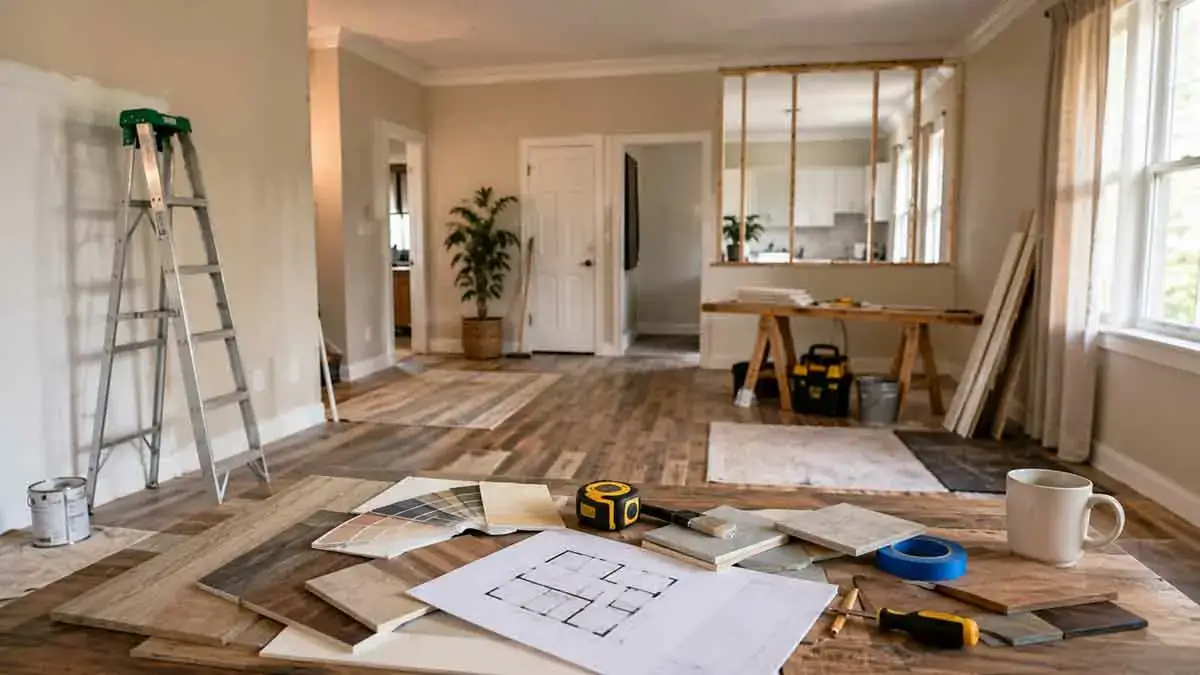
Affordable home renovations can improve the appearance, comfort, functionality, and efficiency of a house without requiring the cost of a major remodel. The key is not simply to spend less, but to spend your renovation budget where it creates the most meaningful improvement.
A limited budget can quickly become difficult to manage when too many projects are started at the same time. Structural changes, expensive materials, unnecessary replacements, and frequent design changes can turn a simple renovation into a much larger project.
The better approach is to assess the condition of your home, identify essential repairs, prioritize high-impact improvements, and preserve anything that is still functional.
Affordable renovations can include simple projects such as painting, updating lighting, replacing hardware, improving storage, repairing flooring, refreshing bathrooms, and making selected energy-efficiency improvements.
This guide explains where to start with affordable home renovations, which projects to prioritize, how to control costs, when DIY makes sense, and how to avoid turning a low-budget renovation into an expensive one.
Table of Contents
What Makes a Home Renovation Affordable?
An affordable renovation is not necessarily the project with the lowest initial price.
A renovation provides better value when it solves an important problem, improves the home’s functionality, avoids unnecessary construction, and uses durable materials appropriate for the project.
An affordable renovation may:
- Solve an important maintenance problem
- Improve comfort or functionality
- Preserve the existing layout
- Reuse functional components
- Require limited specialized labor
- Improve energy efficiency
- Reduce future maintenance
- Be completed in manageable phases
- Avoid unnecessary structural changes
For example, repainting a room may be inexpensive, but repairing a leaking roof may provide far greater financial value because it prevents potentially expensive damage.
The objective should therefore be value, durability, and priorities—not simply the lowest possible price.
1. Start With a Home Improvement Assessment
Before purchasing materials, walk through the entire property and identify what needs attention.
Look at:
- Walls and ceilings
- Floors
- Doors and trim
- Windows
- Lighting
- Cabinets
- Kitchen
- Bathrooms
- Storage
- Insulation
- HVAC
- Plumbing
- Roof
- Exterior surfaces
- Drainage and moisture
Then divide your findings into three categories.
Must Fix
These are issues that affect safety, water protection, structural integrity, or essential functionality.
Examples include:
- Active leaks
- Damaged electrical components
- Serious plumbing problems
- Roof deterioration
- Structural damage
- Significant moisture problems
Should Improve
These projects can improve comfort, efficiency, usability, or maintenance.
Examples include:
- Better lighting
- Additional storage
- Insulation improvements
- Air sealing
- Flooring repairs
- HVAC improvements
Nice to Have
These are generally optional or primarily cosmetic improvements.
Examples include:
- Decorative fixtures
- Premium finishes
- Accent walls
- Trend-based design elements
- High-end hardware
This classification prevents a limited budget from being consumed by cosmetic upgrades while more important problems remain unresolved.
2. Set a Realistic Renovation Budget
Determine how much you can comfortably spend before starting the project.
Your budget should account for more than materials.
Consider:
- Materials
- Labor
- Tools
- Delivery
- Permits
- Demolition
- Waste disposal
- Professional services
- Equipment rental
- Unexpected repairs
Do not assign every available dollar to planned work.
A contingency reserve gives you financial flexibility when you encounter hidden damage, price changes, or necessary repairs.
For a small project, the contingency amount may be relatively modest, while older homes and projects involving demolition or multiple systems may require a larger reserve.
3. Prioritize High-Impact, Low-Cost Improvements
Some improvements can noticeably change a room without requiring major construction.
Good examples include:
- Painting
- Replacing outdated light fixtures
- Updating cabinet hardware
- Repairing damaged trim
- Refreshing grout and caulk
- Replacing damaged switch plates
- Improving storage
- Replacing worn faucets
- Repairing flooring
- Deep cleaning and restoring surfaces
These projects are especially effective when the home’s existing layout is already functional.
Before changing the structure of a room, determine whether relatively simple improvements can solve the problem.
4. Paint Before Rebuilding
Paint is one of the most accessible ways to change the appearance of a home.
A carefully selected color can make a room feel:
- Brighter
- Cleaner
- More modern
- More cohesive
- Visually larger
You do not have to repaint the entire house.
Start with rooms where the paint is damaged, heavily worn, outdated, or inconsistent with the rest of the home.
Before painting, repair:
- Cracks
- Holes
- Surface damage
- Loose paint
- Water-related damage
Do not use new paint to conceal an active moisture problem. Address the underlying cause first.
5. Update Cabinet Hardware
Replacing cabinet handles and knobs can provide a noticeable visual improvement for relatively little cost.
This approach works well in:
- Kitchens
- Bathrooms
- Laundry rooms
- Entryway storage
Whenever possible, choose replacement hardware that matches the existing hole spacing.
This avoids unnecessary drilling, patching, and refinishing.
If the cabinets themselves are structurally sound, changing the hardware may be enough to give them a more updated appearance.
6. Refresh Cabinets Instead of Replacing Them
Cabinet replacement can consume a significant portion of a kitchen renovation budget.
If existing cabinets are structurally sound, consider:
- Thorough cleaning
- Repainting
- Refinishing
- Replacing cabinet doors
- Updating hardware
- Adding drawer organizers
- Improving interior storage
First determine what is actually wrong with the cabinets.
If the problem is appearance, refinishing may be sufficient.
If the problem is storage, organizers may solve it.
If the problem is structural damage or an unsuitable layout, replacement may make more sense.
7. Improve Lighting
Lighting can have a significant effect on how a room looks and functions.
Affordable improvements may include:
- Replacing outdated fixtures
- Adding task lighting
- Installing under-cabinet lighting
- Replacing inefficient bulbs
- Adding lamps
- Improving lighting in dark areas
- Using motion-activated lighting where appropriate
Think about lighting in three layers.
Ambient Lighting
Provides general illumination throughout the room.
Task Lighting
Provides focused light for activities such as cooking, reading, working, or grooming.
Accent Lighting
Highlights architectural, decorative, or display features.
Improving the lighting plan can sometimes make an older room feel significantly more modern without changing its structure.
8. Upgrade Light Switches and Outlet Covers
Old, yellowed, cracked, or mismatched switch plates and outlet covers can make an otherwise refreshed room look unfinished.
Replacing damaged or outdated covers is a simple improvement.
However, if an electrical outlet, switch, or wiring appears damaged or behaves abnormally, treat it as an electrical issue rather than a cosmetic one.
Have the appropriate professional evaluate electrical problems when necessary.
9. Repair Flooring Before Replacing It
Replacing flooring throughout a home can become expensive quickly.
Before removing an existing floor, determine whether it can be repaired or restored.
Depending on the material, options may include:
- Refinishing hardwood
- Replacing individual damaged boards
- Replacing broken tiles
- Repairing transitions
- Cleaning grout
- Deep-cleaning carpets
- Repairing minor surface damage
If replacement is necessary, compare the total installed cost, not just the material price.
Installation, underlayment, removal, disposal, delivery, and preparation can significantly affect the final cost.
10. Improve Bathroom Appearance Without Changing the Layout
A bathroom can often receive a significant visual update without moving walls or plumbing.
Affordable improvements may include:
- New faucet
- Updated mirror
- Improved lighting
- New cabinet hardware
- Fresh paint
- Updated accessories
- Regrouting
- Recaulking
- Replacing worn fixtures
- Updating shower hardware
Keeping the existing locations of the toilet, shower, sink, and other major fixtures can reduce construction complexity.
If the bathroom already functions well, focus your budget on surfaces, fixtures, storage, and lighting instead of changing the entire layout.
11. Refresh the Kitchen Without a Full Remodel
A complete kitchen remodel can quickly become one of the most expensive home improvement projects.
A more affordable approach may include:
- Painting cabinets
- Replacing cabinet hardware
- Updating lighting
- Replacing a damaged countertop
- Adding or refreshing a backsplash
- Replacing an outdated faucet
- Improving pantry organization
- Replacing selected appliances
Keeping the existing kitchen layout can help avoid additional:
- Plumbing work
- Electrical changes
- Demolition
- Cabinet reconfiguration
- Flooring repairs
If the kitchen functions well, improving its finishes may provide much of the desired result without the cost of a complete remodel.
12. Improve Storage
Better storage can improve functionality without expanding the home.
Affordable options include:
- Closet organizers
- Shelving
- Drawer organizers
- Wall-mounted storage
- Entryway hooks
- Pantry organizers
- Under-bed storage
- Bathroom shelves
- Utility-room storage
Use vertical space where appropriate.
In many cases, improving storage is more practical and affordable than adding square footage.
13. Improve Doors and Trim
Interior doors, baseboards, casing, and other trim contribute significantly to the finished appearance of a home.
Affordable improvements include:
- Repainting doors
- Repairing damaged trim
- Updating door hardware
- Tightening loose hinges
- Replacing worn handles
- Improving door alignment
- Sealing visible gaps where appropriate
There is no need to replace every interior door simply because it looks dated.
If the doors are structurally sound, cleaning, repairing, and repainting them may provide a substantial improvement at a lower cost.
14. Improve Caulking and Grout
Small deteriorated details can make a home appear older and less maintained.
Inspect:
- Bathroom caulk
- Shower joints
- Sink edges
- Kitchen backsplash joints
- Tile grout
- Window trim
- Areas around fixtures
Replacing deteriorated caulk and refreshing damaged grout can improve both appearance and moisture resistance.
However, cosmetic repairs should never be used to conceal active leaks, damaged substrates, or serious moisture problems.
15. Make Affordable Energy-Efficiency Improvements
Some relatively affordable improvements can make a home more comfortable and reduce energy waste.
Depending on the property, consider:
- Air sealing
- Attic insulation
- Weatherstripping
- Efficient lighting
- Programmable thermostats
- Smart thermostats
- Efficient appliances
- Appropriate window improvements
The best opportunities are often improvements that address a known source of heat loss or unnecessary energy use.
If insulation is accessible during another renovation, coordinating the work can also be more practical than completing it separately later.
16. Use Weatherstripping Around Doors and Windows
Air leakage around exterior doors and operable windows can create drafts and reduce comfort.
Weatherstripping and appropriate sealing can help reduce unwanted air movement.
Check:
- Exterior doors
- Operable windows
- Door frames
- Window frames
However, sealing should not be used as a substitute for repairing damaged frames, water intrusion, rot, or other building problems.
The goal is to improve the building envelope without hiding underlying defects.
17. Improve Exterior Appearance
You do not need a complete exterior renovation to make a noticeable improvement.
Affordable projects may include:
- Repainting the front door
- Updating house numbers
- Replacing exterior light fixtures
- Cleaning siding
- Cleaning walkways
- Repairing damaged trim
- Improving basic landscaping
- Repainting selected surfaces
Focus on visible areas first.
The entrance, front door, walkway, and immediate landscaping often have a disproportionate effect on the perceived condition of the property.
18. Improve Curb Appeal Strategically
Small exterior changes can improve curb appeal without requiring a major landscaping project.
Consider:
- Cleaning the entrance
- Trimming overgrown plants
- Adding simple landscaping
- Improving outdoor lighting
- Repairing walkways
- Painting the front door
- Replacing damaged exterior hardware
Do not invest heavily in decorative landscaping while basic exterior maintenance remains unfinished.
19. Do Some Work Yourself
DIY can reduce labor costs when the task is appropriate for your skills and experience.
Potential DIY projects include:
- Painting
- Basic decorating
- Cabinet hardware
- Simple shelving
- Some demolition
- Basic landscaping
- Certain finishing tasks
Specialized work is different.
Electrical, plumbing, structural, roofing, HVAC, and gas-related work may require qualified professionals depending on the project and local regulations.
Before doing work yourself, consider not only the labor savings but also:
- Your time
- Tools
- Equipment
- Materials
- Safety
- Potential mistakes
- Cost of professional corrections
A DIY project is only economical when it can be completed safely and correctly.
20. Reuse What You Already Have
One of the simplest ways to reduce renovation costs is to avoid replacing functional components unnecessarily.
Depending on their condition, you may be able to reuse:
- Cabinets
- Doors
- Hardware
- Appliances
- Shelving
- Furniture
- Light fixtures
- Flooring
Cleaning, repairing, refinishing, or repainting an existing component can sometimes provide most of the improvement you want.
Before replacing something, ask whether its condition actually requires replacement.
21. Buy Materials Strategically
When purchasing renovation materials, compare the complete cost rather than focusing only on the initial price.
Consider:
- Purchase price
- Installation cost
- Delivery
- Waste
- Maintenance
- Durability
- Expected lifespan
- Replacement difficulty
A slightly more expensive material can sometimes be the better financial choice if it lasts longer or requires less maintenance.
Avoid purchasing large quantities before confirming measurements, product compatibility, and installation requirements.
22. Avoid Unnecessary Layout Changes
Changing walls, plumbing, electrical systems, or room configurations can quickly increase renovation costs.
If the current layout is functional, consider improving the existing space instead.
For example, keeping the same kitchen layout can reduce the need for:
- Plumbing relocation
- Electrical changes
- Additional demolition
- New cabinet configurations
- Floor repairs
A renovation can produce a major visual and functional improvement without changing the structure of the home.
23. Renovate in Phases
If your budget cannot cover every desired project, divide the work into logical phases.
Phase 1: Essential Repairs
- Roof problems
- Plumbing problems
- Electrical problems
- Moisture
- Structural issues
Phase 2: Efficiency
- Insulation
- Air sealing
- HVAC improvements
- Windows where appropriate
Phase 3: High-Use Rooms
- Kitchen
- Bathroom
- Living areas
Phase 4: Cosmetic Improvements
- Paint
- Trim
- Decorative lighting
- Hardware
- Other finishing details
Phasing allows you to spread costs over time while maintaining a long-term plan.
However, coordinate phases carefully when one project affects another.
24. Renovate One Room at a Time
When money is limited, concentrating your budget on one room can produce a more complete result than making small changes throughout the entire house.
Choose a room based on:
- Frequency of use
- Current condition
- Functional problems
- Expected renovation cost
- Impact on daily life
For example, repairing and improving a poorly functioning bathroom may provide more practical value than repainting several rooms that are already in reasonable condition.
25. Avoid Trend-Driven Spending
A renovation does not need to follow every current design trend.
Expensive permanent features can become visually outdated faster than expected.
For long-lasting components, consider relatively timeless choices for:
- Flooring
- Cabinets
- Countertops
- Tile
- Doors
- Built-in features
Use inexpensive and easily replaceable items to introduce current styles.
This makes future updates easier without requiring another major renovation.
26. Do Not Ignore Maintenance Problems
Affordable renovation should not mean cosmetic work only.
If your home has:
- A leaking gutter
- Damaged exterior caulking
- A plumbing leak
- Roof deterioration
- Poor drainage
- Rot
- Moisture intrusion
address the underlying problem before spending heavily on appearance.
Preventive maintenance can be one of the most cost-effective forms of home improvement because it reduces the risk of larger repairs later.
27. Compare Repair vs. Replacement
When something is damaged or outdated, compare repair and replacement before making a decision.
Ask:
- How old is the item?
- Is the underlying structure sound?
- What will the repair cost?
- How long is the repair expected to last?
- What would replacement cost?
- Would replacement improve efficiency?
- How difficult would future replacement be?
This approach is useful for:
- Cabinets
- Flooring
- Appliances
- Doors
- Windows
- Fixtures
- Lighting
The cheapest immediate option is not always the lowest-cost option over the life of the product.
28. Avoid Cheap Materials That Create Future Costs
A low purchase price does not necessarily mean a low total cost.
Very inexpensive materials may:
- Wear out quickly
- Require frequent maintenance
- Be difficult to install
- Perform poorly
- Need replacement sooner
Focus on durability where replacement would be difficult, disruptive, or expensive.
You can save more aggressively on decorative elements that are inexpensive and easy to change later.
29. Get Multiple Contractor Estimates
For work that requires professional assistance, compare multiple detailed estimates when practical.
Give contractors the same scope of work so their proposals can be compared more accurately.
Review:
- Labor
- Materials
- Permits
- Demolition
- Disposal
- Timeline
- Payment schedule
- Warranty
- Exclusions
Do not automatically choose the lowest estimate.
A low bid that excludes important work can ultimately cost more than a higher but more complete proposal.
30. Track Every Renovation Expense
Small purchases can add up quickly during a renovation.
Track:
- Paint
- Hardware
- Tools
- Materials
- Delivery
- Contractor payments
- Fixtures
- Disposal
- Unexpected repairs
A simple spreadsheet can show how much of your budget has already been committed and how much remains available.
Regular tracking also helps you decide whether optional improvements can still fit within the project.
Affordable Renovation Ideas by Budget
Your available budget should determine the scale of the project.
Very Small Budget
Focus on:
- Paint
- Hardware
- Cleaning
- Caulking
- Grout
- Switch plates
- Basic storage
- Minor repairs
Moderate Budget
Consider:
- Lighting upgrades
- Cabinet refinishing
- Flooring repairs
- Bathroom refreshes
- Kitchen updates
- Closet organization
- Exterior improvements
- Selected energy-efficiency upgrades
Larger but Controlled Budget
Consider:
- Multiple room renovations
- HVAC improvements
- Window upgrades
- Kitchen improvements
- Bathroom renovation
- Insulation improvements
- Larger flooring projects
The key principle is to match the scope of the project to the budget, rather than allowing the project to determine how much you spend.
The Best Order for Affordable Home Renovations
A practical sequence is:
- Fix safety problems
- Stop leaks and moisture problems
- Address structural issues
- Repair essential systems
- Improve insulation and energy efficiency
- Repair damaged surfaces
- Improve lighting and storage
- Update kitchens and bathrooms
- Paint and refresh finishes
- Add decorative improvements
The exact order may vary by property.
The important principle is to complete work that protects the home before spending heavily on cosmetic improvements.
Common Affordable Renovation Mistakes
Starting With Expensive Cosmetic Upgrades
Premium finishes should not consume the budget while essential repairs remain unresolved.
Trying to Renovate Everything at Once
A smaller completed project is often more useful than several unfinished projects.
Choosing Materials Only by Price
Consider installation, maintenance, durability, and replacement costs.
Ignoring Energy Efficiency
Some relatively affordable efficiency improvements can provide benefits long after the renovation is complete.
Doing Specialized Work Without the Necessary Expertise
Electrical, plumbing, structural, HVAC, roofing, and gas-related mistakes can create significant safety and financial problems.
Changing the Layout Unnecessarily
Keeping a functional layout is often one of the easiest ways to control renovation costs.
Failing to Maintain a Contingency
Even inexpensive renovations can uncover unexpected repairs.
Making Too Many Changes During Construction
Late decisions can create additional labor, material waste, delays, and change orders.
Final Thoughts
The best affordable home renovations begin with prioritization rather than shopping.
Start by assessing the condition of your home, identifying essential repairs, establishing a realistic budget, and determining which improvements will have the greatest practical impact.
Simple projects such as painting, lighting, hardware, storage, flooring repairs, cabinet refinishing, and selected energy-efficiency improvements can significantly improve a home without requiring major construction.
When larger work is necessary, control costs by preserving functional layouts, reusing sound components, comparing contractor estimates, selecting materials carefully, and completing the renovation in logical phases.
Most importantly, affordable does not mean choosing the cheapest option available.
The best renovation value comes from spending money where it improves safety, durability, efficiency, functionality, comfort, and long-term usability.
A well-planned low-budget renovation can often achieve more than an expensive project with poor priorities.
Frequently Asked Questions
What is the cheapest way to renovate a house?
Painting, repairing existing surfaces, updating hardware, improving lighting, adding storage, and completing minor repairs are among the more affordable ways to improve a home.
How can I renovate my home with a small budget?
Start with essential repairs and then focus on high-impact improvements such as paint, lighting, cabinet hardware, storage, flooring repairs, and selected energy-efficiency upgrades.
Should I renovate one room at a time?
Yes. Renovating one room at a time can make a limited budget easier to manage and allows you to complete each project before moving to the next.
Is it cheaper to renovate or remodel?
Renovation is often less expensive when the existing layout works because it can avoid major structural, plumbing, and electrical changes. However, the actual cost depends on the scope, materials, labor, and condition of the property.
What home improvements provide good value for the money?
There is no universal answer, but improvements that address neglected maintenance, improve functionality, enhance energy efficiency, or upgrade frequently used spaces can provide strong practical value.
Can I renovate a kitchen cheaply?
Yes. Keeping the existing layout and updating cabinets, hardware, lighting, countertops, faucets, storage, or selected appliances can cost considerably less than a complete kitchen remodel.
Can I renovate a bathroom without replacing everything?
Yes. New paint, lighting, hardware, mirrors, fixtures, grout, and caulk can refresh a bathroom while keeping the existing layout and major plumbing connections.
Should I do renovation work myself?
DIY can make sense for suitable tasks such as painting, basic decorating, and some finishing work. Specialized electrical, plumbing, structural, HVAC, roofing, or gas-related work may require qualified professionals.
How can I prevent an affordable renovation from becoming expensive?
Define the scope before starting, avoid unnecessary layout changes, compare detailed contractor estimates, select materials carefully, track expenses, and maintain a contingency reserve.
Should I renovate my whole house at once?
Not necessarily. If your budget is limited, phasing the work can make the renovation more manageable while allowing you to prioritize essential repairs and high-impact improvements first.