
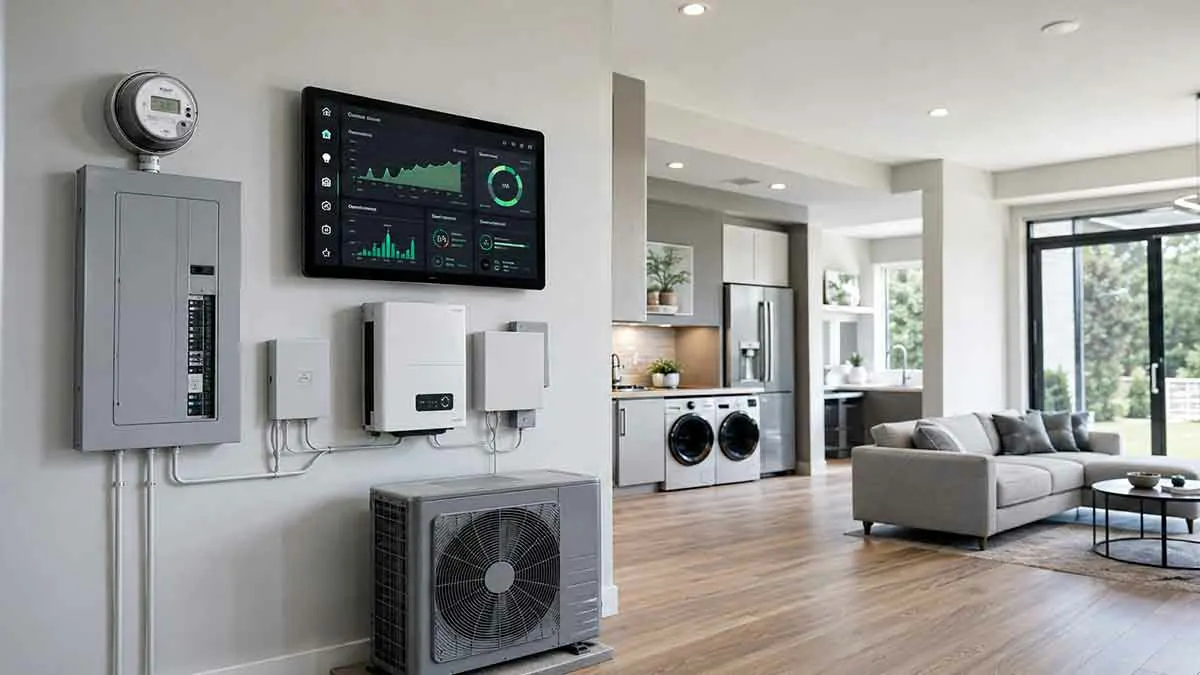
Whole-home energy monitoring gives homeowners a detailed view of how much electricity the entire property consumes over time. Unlike a traditional utility bill, which typically provides consumption for a billing period, a whole-home energy monitor can show when electricity is being used and how consumption changes throughout the day.
This information can help identify major energy-use patterns, detect unusual consumption, compare seasonal demand, and evaluate whether energy-efficiency improvements are producing meaningful results.
Whole-home monitoring is particularly useful when you want to understand the overall electrical behavior of a property before deciding whether more detailed circuit-level or appliance-level monitoring is necessary.
However, installing a monitor does not automatically reduce energy consumption. The value comes from using the information to identify opportunities, investigate unusual patterns, and make informed improvements.
This guide explains how whole-home energy monitoring works, what it can measure, how to use the data, what to consider before installation, and how to avoid common monitoring mistakes.
Table of Contents
What Is Whole-Home Energy Monitoring?
Whole-home energy monitoring measures electricity consumption across the property rather than focusing on one appliance or circuit.
The system typically monitors electricity entering the home and records consumption data over time.
Depending on the equipment, the monitor may provide:
- Real-time electricity use
- Historical consumption
- Daily and monthly trends
- Energy-use graphs
- Peak consumption information
- Estimated energy costs
- Alerts for unusual usage
This provides a broader view of household electricity consumption than an individual smart plug.
How Whole-Home Energy Monitoring Works
Many whole-home energy monitors use sensors installed around electrical conductors near the home’s main electrical panel.
These sensors measure electrical activity and transmit the information to a monitoring device or connected application.
The system may then display information through:
- Smartphone applications
- Web dashboards
- Dedicated displays
- Smart home platforms
Some systems require professional installation because accessing the electrical panel can involve electrical hazards.
Follow the manufacturer’s installation requirements and applicable electrical regulations.
What Can a Whole-Home Energy Monitor Measure?
Depending on the system, a whole-home monitor may provide information about:
- Total electricity consumption
- Current electrical demand
- Energy consumption by hour
- Daily consumption
- Monthly consumption
- Historical trends
- Estimated costs
- Peak usage periods
Some advanced systems can also provide estimates about individual appliances, but these estimates should not automatically be treated as direct measurements.
Benefits of Whole-Home Energy Monitoring
Whole-home monitoring can help homeowners:
- Understand overall electricity consumption
- Identify high-use periods
- Detect unusual energy patterns
- Compare seasonal consumption
- Evaluate efficiency improvements
- Understand household energy habits
- Decide whether more detailed monitoring is needed
It is particularly useful when you want an overall picture before investing in more specialized measurement equipment.
1. Start With Your Utility Bills
Before installing a monitoring system, review your existing electricity bills.
Record:
- Monthly kWh consumption
- Total electricity cost
- Billing periods
- Electricity rates
- Time-of-use pricing
- Seasonal changes
This provides a reference point for comparing data from the new monitoring system.
2. Establish a Baseline
A baseline represents normal energy consumption before making an efficiency improvement.
For example:
Before HVAC replacement → After HVAC replacement
or:
Before attic insulation → After attic insulation
A baseline becomes more useful when you compare similar weather and occupancy conditions.
3. Monitor Real-Time Electricity Use
One of the advantages of whole-home monitoring is the ability to view electricity consumption as it happens.
Real-time data can help reveal the effect of:
- Starting an air conditioner
- Turning on an electric oven
- Running a clothes dryer
- Charging an electric vehicle
- Using electric heating
This makes the relationship between household activities and electricity demand easier to understand.
4. Track Daily Energy Consumption
Daily consumption can reveal patterns that are hidden by monthly utility bills.
Look for recurring increases associated with:
- Cooking
- Laundry
- HVAC operation
- EV charging
- Increased occupancy
Do not assume that a single high-use day represents a problem. Look for repeated patterns.
5. Analyze Energy Use by Time of Day
Time-of-day analysis can show when electricity consumption is highest.
Common high-use periods may include:
- Morning
- Afternoon
- Evening
- Overnight
Understanding these patterns can help determine whether changing the timing of certain loads could reduce energy costs.
6. Review Peak Electricity Demand
Some monitoring systems show periods of unusually high electrical demand.
Peak demand may occur when several major loads operate simultaneously.
Examples include:
- HVAC
- Electric water heating
- Electric cooking
- Clothes drying
- EV charging
Understanding peak periods can be particularly useful for homes with rate structures affected by demand or time of use.
7. Compare Weekday and Weekend Consumption
Household routines often change during weekends.
Compare energy use between:
- Weekdays
- Weekends
- Holidays
- Vacation periods
Higher weekend consumption may be caused by greater occupancy, additional cooking, entertainment, laundry, or longer HVAC operation.
8. Compare Seasonal Energy Use
Whole-home monitoring can reveal seasonal changes in electricity demand.
Compare:
- Winter
- Spring
- Summer
- Fall
A significant seasonal increase may be associated with heating, cooling, lighting, or other weather-dependent loads.
9. Compare Energy Use With Weather
Weather should be considered when interpreting energy data.
For example, higher electricity consumption during a heat wave may be expected because air conditioning operates more frequently.
Compare:
Electricity consumption + outdoor temperature + HVAC operation
This provides more meaningful information than looking at consumption alone.
10. Track Heating and Cooling Demand
HVAC systems can account for a substantial portion of household energy consumption.
Whole-home monitoring can help identify periods when heating or cooling demand increases.
Compare consumption with:
- Outdoor temperature
- Thermostat settings
- Occupancy
- HVAC runtime
- Season
If energy consumption changes unexpectedly under similar conditions, investigate further.
11. Identify Major Energy Loads
Whole-home monitoring provides an overall consumption figure, but the next step is determining which systems are likely responsible for major loads.
Potential major loads include:
- Electric heating
- Air conditioning
- Heat pumps
- Electric water heaters
- Clothes dryers
- Electric ovens
- EV chargers
A whole-home monitor may not directly identify every appliance. Circuit-level monitoring may be required for more precise measurements.
12. Identify Continuous Energy Consumption
Some household systems operate frequently or continuously.
Examples include:
- Refrigerators
- Network equipment
- Pumps
- Heating or cooling equipment
- Water-heating systems
If the monitor shows persistent consumption when the home appears inactive, investigate which systems may be responsible.
Do not disconnect equipment simply because it consumes electricity. Some systems are designed to operate continuously.
13. Detect Unusual Energy Patterns
Unexpected changes can provide an early warning that something has changed.
Possible causes include:
- Equipment problems
- A new appliance
- HVAC operation
- Changes in occupancy
- Unusual weather
- Equipment being left on
Monitoring cannot automatically diagnose the cause, but it can identify patterns worth investigating.
14. Monitor Energy Use Overnight
Overnight consumption can provide useful information because household activity is usually lower.
A persistent overnight load may be normal if caused by:
- Refrigeration
- Networking equipment
- HVAC systems
- Water heating
- Security systems
However, unexpected changes in overnight consumption may justify further investigation.
15. Track Electric Vehicle Charging
EV charging can create a significant temporary increase in household electricity demand.
Whole-home monitoring can show:
- Charging start times
- Charging periods
- Overall energy increase
- Effects on daily consumption
If the utility offers time-of-use rates, this information can help evaluate whether charging at different times could reduce costs.
16. Track Electric Water Heating
Electric water heaters can represent a significant household electrical load.
Monitoring can help identify periods of higher electricity consumption associated with hot-water demand.
If consumption appears unusually high, investigate:
- Water-heater settings
- Household hot-water use
- Equipment condition
- Insulation around appropriate components
- Possible faults
17. Evaluate Appliance Usage
Whole-home monitoring can show the overall change in electricity consumption when major appliances operate.
Potential loads include:
- Ovens
- Dryers
- Dishwashers
- Refrigerators
- Freezers
- Washing machines
For precise appliance-level measurements, use an appropriate meter or energy-monitoring device rather than relying solely on whole-home data.
18. Measure Standby Energy
Some electronic equipment consumes electricity while appearing inactive.
Examples include:
- Televisions
- Game consoles
- Computers
- Networking equipment
- Smart home devices
Whole-home monitoring can sometimes reveal whether the home’s background electricity consumption remains high when most equipment is off.
Individual measurement may be needed to identify the exact devices responsible.
19. Monitor Changes After Efficiency Improvements
Whole-home monitoring can help evaluate improvements such as:
- Attic insulation
- Air sealing
- HVAC replacement
- Heat pump installation
- Window improvements
- Efficient appliances
- Smart thermostat installation
Compare similar periods before and after the improvement.
Consider weather, occupancy, and equipment usage before attributing the entire change to one improvement.
20. Use Historical Energy Data
Historical data allows you to identify longer-term trends.
Review:
- Daily patterns
- Weekly patterns
- Monthly consumption
- Seasonal changes
- Year-over-year comparisons
Long-term data is generally more useful than isolated readings.
21. Understand kWh
Electricity consumption is commonly measured in kilowatt-hours (kWh).
The basic relationship is:
Energy = Power × Time
For example, a device drawing 1 kilowatt for 2 hours uses approximately:
2 kWh
A whole-home monitor combines the electricity consumed by many devices and systems.
22. Understand Energy Cost Estimates
Some monitoring systems estimate electricity costs based on consumption.
However, estimated costs may differ from the actual utility bill because billing can include:
- Energy charges
- Fixed charges
- Delivery fees
- Taxes
- Time-of-use rates
- Other adjustments
Use monitor-based cost estimates as a guide rather than assuming they exactly match the final bill.
23. Consider Time-of-Use Electricity Rates
Some utilities charge different rates during different periods.
If your plan uses time-of-use pricing, monitoring can help identify when major loads occur.
Potentially flexible loads may include:
- EV charging
- Laundry
- Dishwashing
- Water heating
Only change operating schedules when the equipment and household requirements allow it.
24. Set Energy Alerts
Some whole-home monitoring systems allow alerts for unusual consumption.
Possible alerts include:
- High daily consumption
- Unexpected overnight usage
- Continuous energy demand
- Sudden changes in consumption
Alerts can help you investigate problems before they become recurring patterns.
25. Use a Mobile Energy Monitoring App
Many modern monitors provide mobile applications.
Depending on the system, the app may show:
- Current consumption
- Historical data
- Energy trends
- Estimated costs
- Alerts
Choose a system with an interface that makes the data easy to understand and act upon.
26. Consider Circuit-Level Monitoring
Whole-home monitoring answers:
How much electricity is the house using?
Circuit-level monitoring can help answer:
Which circuit is using it?
Circuit monitoring may be useful for major loads such as:
- HVAC
- EV charging
- Water heating
- Electric heating
- Kitchen equipment
You do not necessarily need circuit monitoring from the beginning. Start with whole-home data and add more detail if a specific question remains unanswered.
27. Whole-Home Monitoring vs Smart Plugs
Whole-home monitoring and smart plugs serve different purposes.
Whole-Home Monitoring
Best for:
- Total household consumption
- Peak demand
- Daily trends
- Seasonal analysis
- Major changes in electricity use
Smart Plugs
Best for:
- Individual compatible appliances
- Electronics
- Standby consumption
- Small electrical loads
Using both can provide broader information while allowing detailed investigation of selected devices.
28. Choose the Right Whole-Home Monitor
When comparing systems, consider:
- Measurement accuracy
- Real-time data
- Historical data
- Mobile application
- Alerts
- Circuit monitoring options
- Cost-estimation features
- Smart home compatibility
- Data export
- Privacy practices
Do not pay for advanced features that you are unlikely to use.
29. Consider Installation Requirements
Some whole-home monitors require installation near or inside the electrical panel.
Electrical panels contain hazardous voltages.
If installation requires panel access or electrical modifications, use a qualified electrician and follow local electrical requirements.
Do not open or modify an electrical panel unless you are appropriately qualified to do so.
30. Consider Electrical Panel Compatibility
Before purchasing a monitor, verify compatibility with:
- Electrical panel type
- Electrical service configuration
- Voltage
- Number of conductors
- Available installation space
- Electrical system requirements
Follow the manufacturer’s compatibility documentation.
31. Consider Data Privacy
Connected energy monitors may collect detailed information about household electricity patterns.
That information can potentially reveal:
- Occupancy patterns
- Daily routines
- Appliance operation
- Vacation periods
Review the manufacturer’s privacy policy, data-storage practices, account security, and sharing policies before connecting a monitor to your home network.
32. Consider Internet and Connectivity Requirements
Some monitors depend on Wi-Fi or another network connection.
Before installation, determine:
- Whether internet access is required
- Whether local data remains available during outages
- How historical data is stored
- What happens if the manufacturer’s cloud service is unavailable
A monitor should remain useful even when temporary connectivity problems occur, where possible.
33. Protect Monitoring Equipment From Unnecessary Access
Connected energy-monitoring devices should be treated like other smart-home equipment.
Use:
- Strong account credentials
- Updated software
- Secure home Wi-Fi
- Available security features
Limit account access to people who need it.
34. Use Monitoring Before Making Major Upgrades
Monitoring can help establish priorities before spending money on efficiency projects.
For example, if HVAC appears to account for a large portion of electricity consumption, investigate HVAC efficiency before focusing on minor electronic loads.
The goal is to direct investment toward meaningful energy-saving opportunities.
35. Verify Energy Savings After Improvements
After completing an efficiency upgrade, continue monitoring.
Compare:
Before → Improvement → After
Use comparable periods and consider weather and occupancy.
This helps determine whether the improvement produced a measurable change.
36. Avoid Relying on Estimates Alone
Whole-home monitors can provide valuable information, but some systems estimate appliance-level consumption rather than measuring every appliance directly.
Treat estimated device breakdowns as indicators rather than exact measurements unless the system uses dedicated sensors for those loads.
For important decisions, use direct measurements when practical.
37. Review Energy Data Regularly
A monitor is most useful when reviewed consistently.
A monthly review can help identify:
- New consumption patterns
- Seasonal changes
- Unusual increases
- Effects of efficiency improvements
- Opportunities for further action
The goal is to turn monitoring into an ongoing feedback process.
Whole-Home Energy Monitoring Checklist
Before Installation
- Review utility bills
- Establish a baseline
- Determine what information you need
- Check electrical compatibility
- Review installation requirements
- Compare monitoring features
- Check privacy policies
- Verify connectivity requirements
After Installation
- Monitor daily consumption
- Review peak usage
- Compare weekdays and weekends
- Compare seasons
- Track HVAC demand
- Monitor overnight consumption
- Set useful alerts
- Investigate unusual patterns
For Energy Improvements
- Identify major loads
- Prioritize meaningful opportunities
- Record the date of improvements
- Compare similar periods
- Consider weather and occupancy
- Measure results afterward
Common Whole-Home Energy Monitoring Mistakes
Expecting the Monitor to Save Energy Automatically
Monitoring provides information. Savings require action.
Focusing on One High-Use Day
Short-term spikes may be caused by weather or unusual household activity.
Ignoring Electricity Rates
Reducing kWh and reducing the total bill are related but not always identical.
Assuming Appliance Estimates Are Exact
Some systems estimate individual appliance consumption.
Use direct measurement when greater accuracy is necessary.
Monitoring Every Device
Whole-home monitoring is primarily valuable for understanding broad patterns.
Detailed monitoring should be added only where it supports a useful decision.
Ignoring Weather
HVAC energy consumption can change dramatically with outdoor conditions.
Installing Electrical Equipment Without Proper Qualifications
Panel-mounted monitoring equipment can involve electrical hazards.
Use qualified installation when required.
Collecting Data Without Reviewing It
Data has little value if you never use it to identify problems or guide improvements.
When Should You Add Circuit-Level Monitoring?
Whole-home monitoring may be sufficient when you only need to understand:
- Overall consumption
- Seasonal trends
- Daily patterns
- Peak usage
Consider circuit-level monitoring when you need to answer questions such as:
- How much electricity does my HVAC system use?
- How much electricity does my EV charger consume?
- Is my electric water heater responsible for a large load?
- Which circuit is causing an unexpected energy increase?
Start with the simplest monitoring method that can answer your question.
How to Use Whole-Home Monitoring to Reduce Energy Costs
A practical process is:
Step 1: Measure
Record normal household electricity consumption.
Step 2: Establish a Baseline
Collect enough data to understand typical patterns.
Step 3: Identify Major Loads
Determine which systems are likely responsible for the largest consumption.
Step 4: Investigate
Look for unnecessary operation, unusual patterns, or efficiency problems.
Step 5: Prioritize
Focus on improvements with meaningful savings potential.
Step 6: Implement
Make a targeted change.
Step 7: Measure Again
Compare energy consumption after the improvement.
Step 8: Refine
Use the results to determine what should be improved next.
Final Thoughts
Whole-home energy monitoring provides a useful overview of how electricity moves through a property throughout the day, week, and year.
Instead of relying only on a monthly utility bill, homeowners can use real-time and historical data to identify peak consumption, understand seasonal patterns, investigate unusual energy use, and evaluate efficiency improvements.
The most effective approach is to begin with whole-home monitoring and add circuit-level or appliance-level measurement only when additional detail is needed.
A monitor itself does not reduce energy consumption. Its value comes from turning electricity data into better decisions about HVAC operation, appliances, insulation, energy habits, and future efficiency investments.
When used consistently, whole-home energy monitoring can become a practical tool for understanding household energy consumption and reducing unnecessary energy costs over time.